Guide
What to See in Cortona: Etruscan Treasures and Renaissance Art
Cortona is one of Italy’s great Etruscan cities, a place where more than two thousand years of history fold into its lanes, squares, and long views. From the MAEC, home to treasures like the Tabula Cortonensis and the famous Etruscan Chandelier, to the masterworks of Beato Angelico and Luca Signorelli, every stop belongs to a different age. Wander the old town and you can trace the path that runs alongside the ancient Etruscan walls, reach the Sodo Tumuli, and climb all the way up to the Girifalco Fortress, where the view opens out across the Valdichiana. In Cortona, art, archaeology, nature, and landscape sit close together in a compact space, best discovered slowly, one step at a time.
To find your bearings without wasting a morning, here are the sights grouped by theme (museums, squares, Etruscan traces, churches, viewpoints) and, more to the point, the order that makes sense and how long each one takes. Nearly all of Cortona is walked on foot and uphill, so knowing where to start is the difference between a relaxed visit and a breathless chase.
Perché Cortona merita una sosta
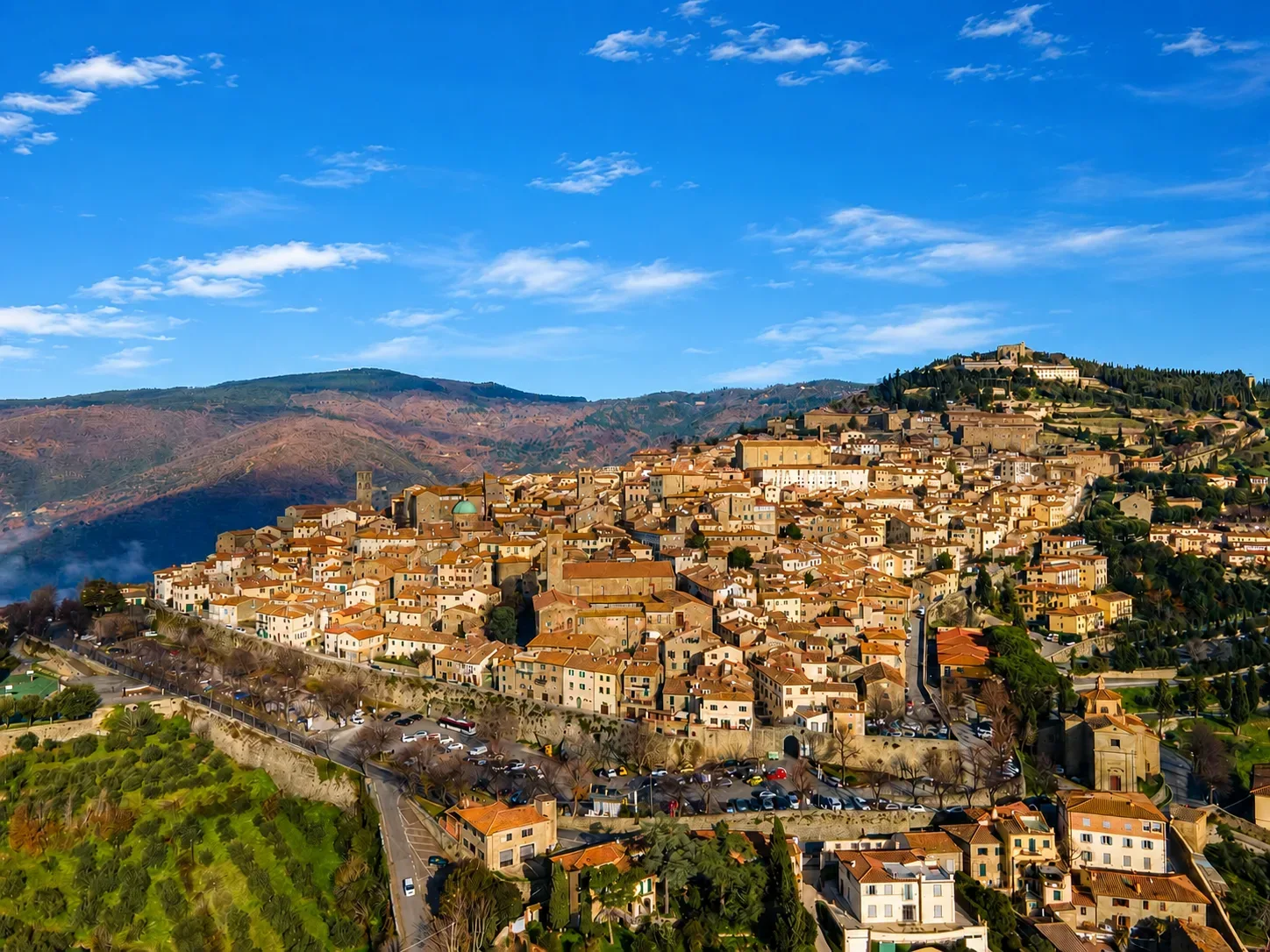
Cortona is a town of just over twenty thousand people in the province of Arezzo, south of the city and close to the Umbrian border.1 It was one of the twelve cities of the Etruscan League, and that inheritance is still what sets it apart.2 Founded as an Umbrian settlement, it was later drawn into the Etruscan world and took the name Curtun, the name we still know it by today. With Romanization it became a municipium and then, under the Empire, a colony, keeping the Latin name Cortona.3 The historical gazetteers list it at once as an inhabited place, a city, and an archaeological site, and you still feel that triple identity as you walk the lanes.4
The old town, perched on its hill, climbs the whole way up. The best place to begin is Piazza della Repubblica, the beating heart of local life and easy to reach from the car parks tucked against the walls. From there you cross Piazza Signorelli, home to the MAEC, the Teatro Signorelli, and the tourist office, then carry on — almost on the level — toward the Duomo and the Diocesan Museum. Climb higher and you reach the highest point in town: the Girifalco Fortress, with a view that sweeps across the whole valley. Head down from the centre instead and you make for the Sant’Agostino centre.
Buono a sapersi prima di salire
- For parking, leave the car in the lots outside the walls and continue on foot, since much of the centre is restricted to traffic and the inner streets are narrow and steep.
- On minimum time, allow at least 2 hours to catch the essentials, while the museums and an unhurried visit are better suited to half a day or a full one.
- You’ll want comfortable shoes, because the slopes never let up and the cobbles are hard going. A climb to the Fortress takes you from the town’s altitude of roughly 494 metres5 up to the highest point, where the views open out in every direction.2
Musei e capolavori, il cuore etrusco e artistico
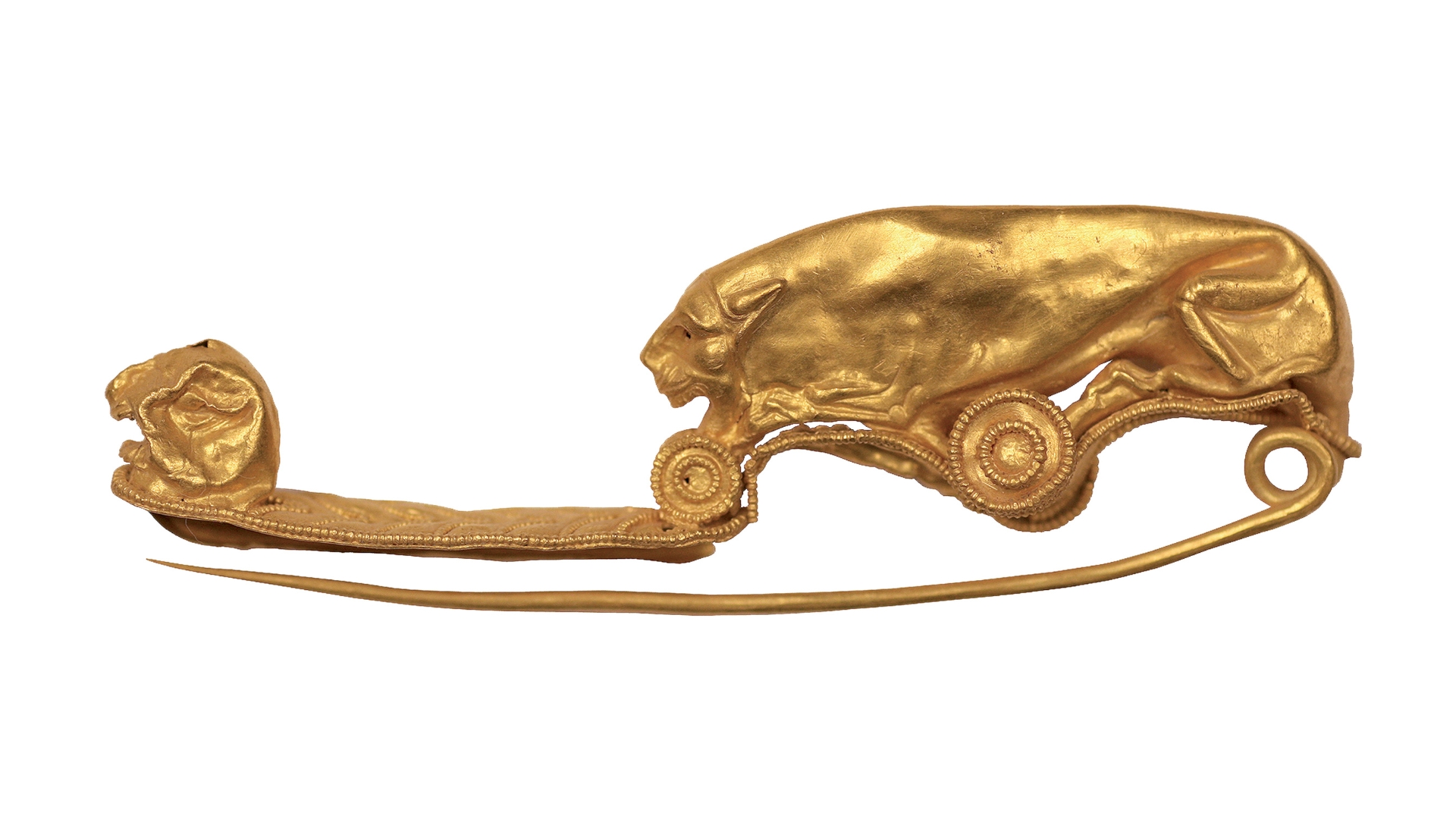
If Cortona has a soul, this is where you meet it. The sheer density of Etruscan finds and of painting from the fifteenth to the twentieth century justifies the trip on its own, and it’s the place to start your planning.
Il Museo MAEC
The MAEC – Museum of the Etruscan Academy and the City of Cortona is the ideal first stop for getting your bearings in the town’s history before you explore its streets. Housed in the historic Palazzo Casali, in the heart of Cortona, it brings together the collections of the Etruscan Academy, founded in the eighteenth century, and the archaeological finds unearthed across the Cortona area. The route runs through the town’s story from prehistory to the Etruscan and Roman ages and on into later periods, giving a broad picture of the city’s cultural and artistic evolution. Visit it early: it lets you understand Cortona’s role in northern Etruria and, out on your walk, recognise the meaning of the walls, the ancient gates, the necropolises, and the Sodo tumuli.
La Tabula Cortonensis
This is the one Etruscan document you shouldn’t miss, an inscribed bronze tablet that remains one of the longest and most debated texts in all of Etruscan epigraphy. It’s worth the pause simply to gauge how much an ancient language still says to us, and how much it still keeps to itself. All the details are in the entry on the Tabula Cortonensis.
Il Lampadario etrusco
A large sixteen-nozzle bronze chandelier, finely worked, and among the best-known pieces in the MAEC collection. It’s the kind of find that on its own explains why Cortona was a wealthy, refined city. The full story is on the page about Cortona’s Etruscan Chandelier.
Il Museo Diocesano
Small but extraordinarily rich, it holds some of the masterworks that make Cortona an open-air museum. It’s a few minutes from the main square and rewards a slow visit. It’s worth planning ahead by first reading the guide to the Diocesan Museum of Cortona.
L’Annunciazione del Beato Angelico
Kept in the Diocesan Museum itself, it’s one of the town’s most loved works, a luminous panel that many visitors call the high point of the day. So you don’t drift past it, read the entry on Beato Angelico’s Annunciation.
I capolavori di Luca Signorelli
Cortona is Luca Signorelli’s birthplace, and several of his works can be seen across the Diocesan Museum and the churches of the centre. Following Signorelli’s trail is a way to cross the town, tying art to place. The whole route is on the page devoted to Luca Signorelli in Cortona.
I mosaici di Gino Severini
The twentieth century enters town with Gino Severini, the Cortona-born Futurist, whose works and mosaics dot a handful of local spots and tell of a less obvious Cortona. To find out where to look, start with the entry on Gino Severini in Cortona.
Le piazze e il centro medievale
After the museums, the town is best enjoyed on foot. Piazza della Repubblica is Cortona’s front room, presided over by the Palazzo Comunale and its broad staircase, a meeting point and a natural stage for everyday life. From here it’s a few steps to Piazza Signorelli, with Palazzo Casali (home to the MAEC) and the Teatro Signorelli, and then down along narrow streets where the medieval fabric has survived intact, as on Via Janelli with its famous jettied houses.
It’s in this stonework that you understand why Cortona is described at once as an inhabited place and an archaeological site,4 since the Roman and medieval stones often rest on far older foundations. Walk without hurrying, look up, slip into the side lanes. There’s no single “attraction” to tick off here, there’s an atmosphere to soak up.
Sulle tracce degli Etruschi, mura, porte e tumuli
This is the Cortona few people really tell you about, and it’s what makes it most distinctive. The city was one of the twelve lucumonies of the Etruscan dodecapolis,1 and its perimeter still keeps stretches of cyclopean walls, built from huge squared blocks that run along the hill. Porta Bifora and the surviving fragments of the walls are rare evidence of just how ancient and powerful “Curtun” once was.3
Outside the walls, down on the plain toward the Valdichiana, stand the great burial tumuli of Sodo, the so-called “Meloni,” monumental Etruscan tombs with stepped altars. A short distance away, the Tanella di Pitagora is a small, captivating chamber tomb. Together they make up an archaeological itinerary worth half a day of its own, one that gives depth to everything else you see. Keep them in mind if you have two days, because they’re the part of Cortona that stays with anyone who loves ancient history.
Chiese e panorami, dalla città al colle
As you climb, you meet the town’s spiritual backbone. The Duomo, the Church of San Domenico, the Church of San Francesco and, higher still, the Basilica of Santa Margherita punctuate the ascent with pauses for art and for quiet. Lower down, just outside the gate, the Sanctuary of Santa Maria delle Grazie al Calcinaio is a Renaissance gem well worth the detour.
At the top of the hill, the Girifalco Fortress closes the visit in the finest way. It’s not just a viewpoint but the apex of the defensive system that runs from the Etruscan walls up to the Medici ramparts, the spot where the town’s layered history becomes legible at a glance. From here, at the summit, the view opens in every direction across the Valdichiana and as far as Lake Trasimeno.2 It’s the photo you’ll take home.
Quanto tempo serve e gli itinerari pronti per ogni durata
Here’s where it pays to take advice from people who live Cortona every day. Below are four options depending on how much time you have, all designed to cut out needless climbing and group the nearby stops together.
Cortona in 2 ore (il minimo per non pentirsi) Start from Piazza della Repubblica and head to Piazza Signorelli, on the same level and just 20 metres away, to admire Palazzo Casali and the Teatro Signorelli. Carry on about 150 metres to the Diocesan Museum, where you can see Beato Angelico’s Annunciation, with the Duomo directly opposite. From here drop down to the characteristic medieval houses of Via Jannelli, then climb back up Via Roma and, once through the arch, you’ll find yourself back in Piazza della Repubblica. A short loop of a walk, with a few uphill stretches.
Mezza giornata At this point take on a steeper climb toward the Church of San Francesco, one of the most atmospheric and secluded spots in the old town. Then continue to the Church of San Marco to admire, on the lower façade, the great mosaic Gino Severini made in 1961. The work depicts the Evangelist with the lion and is marked by neo-Cubist forms and intense colours, blending religious tradition with the artist’s modern language.
If you’ve still got the energy, push on to the Basilica of Santa Margherita. To reach it, take the loveliest route: the Via Crucis, which climbs the flank of the hill from Porta Berarda. The path is lined with fourteen stone shrines bearing mosaics made from Severini’s designs, in which the scenes of the Passion are told through pared-down figures, geometric forms, and vivid colours. The climb is demanding, but the route, the Basilica, and the view at the top repay the effort many times over. On the way back, treat yourself to a well-earned coffee in the square.
Un giorno intero Give the morning to the museums and the medieval centre, taking your time over the MAEC, the Diocesan Museum, the Duomo, and the town’s most characterful streets.
In the early afternoon climb toward the Girifalco Fortress. From the old town, reach Porta Berarda and take Via Santa Margherita: it’s the most striking route, though also quite steep. The road climbs alongside Gino Severini’s Via Crucis, marked by the stone shrines with their mosaics of the Passion of Christ, up to the Basilica of Santa Margherita. From the Basilica forecourt, tackle the last short uphill stretch to the Fortress, at the highest point in Cortona. Comfortable shoes are advised and, in the warmer months, a bottle of water. From the Fortress your gaze takes in the old town, the Valdichiana and, on the clearest days, Lake Trasimeno.
In the late afternoon head down to the Sanctuary of Santa Maria delle Grazie al Calcinaio, one of the most important examples of Renaissance architecture in the area, designed by Francesco di Giorgio Martini. The Sanctuary sits outside the walls and lower than the centre: after the long climb to the Fortress, it’s better reached by car or taxi. On foot you’d have to reckon with a fairly long descent and, above all, the climb back up to Cortona afterward, plus some stretches along the road.
The interior visit needs careful planning: the Sanctuary doesn’t keep continuous tourist hours and may well be found closed. Visits are generally possible by appointment and outside religious services. It’s worth contacting the Sanctuary in advance to check availability and arrange entry. Even when the inside isn’t accessible, it’s still worth the trip to admire the exterior, the great dome, and the harmony of its Renaissance forms set against the landscape.
A day like this pulls together art, archaeology, and landscape, but it calls for a good pace and a little planning in advance, above all for the visit to the Calcinaio.
Due giorni The second day belongs to the Etruscans outside the walls. Begin at the Sodo archaeological area, at the foot of Cortona, where you’ll find Tumulus I and Tumulus II, known locally as “Meloni” for their rounded shape. These monumental princely tombs, dating between the late seventh and the sixth century B.C., attest to the standing of Cortona’s ancient aristocratic families. Tumulus II is especially important, with its extraordinary decorated monumental altar.
Then continue to the Tanella di Pitagora, a Hellenistic-era Etruscan tomb that belonged to the Cusu family. Despite the name, it has nothing to do with the philosopher Pythagoras: the label grew out of an old mix-up between Cortona and Crotone. Bear in mind that the Tanella can’t usually be visited up close: the area is protected by a gate, and the monument can only be seen from outside and at some distance. Close access is possible only during particular guided tours or organised events.
The Sodo archaeological area is easy to reach by car or, for those who love slow travel, by e-bike across the Valdichiana countryside.
In 2026 Sodo keeps the following hours:
- From 1 April to 18 October: daily, 10:00–14:00 and 16:00–19:00.
- From 19 October to 31 March: Friday, Saturday, and Sunday, 10:00–14:00.
- Closed 25 December and 1 January.
Even so, it’s wise to check the hours before your visit, especially in winter and on public holidays. This is also the ideal day to carry on and explore the area around Cortona.
Oltre Cortona, tesori a meno di un’ora
One of the reasons to stay a few nights is the location. Cortona is an excellent base for reaching some of the loveliest places in central Italy. Within roughly ninety kilometres lies a density of UNESCO World Heritage sites that’s hard to match: the historic centre of Pienza at 33 km, the Val d’Orcia at 42 km, Siena at 53 km, Assisi with the Basilica of San Francesco at 56 km, San Gimignano at 79 km, and the historic centre of Florence, with the Ponte Vecchio, at 81 km.6
Closer still are other destinations. Arezzo, with Piazza Grande and the frescoes of Piero della Francesca, is about 30 km away; Perugia, with its Etruscan and medieval centre, is around 50 km. Toward the Valtiberina you can reach Sansepolcro, Piero della Francesca’s birthplace, while heading into Umbria the various spots around Lake Trasimeno open up: Castiglione del Lago, Passignano, Tuoro, and the islands reachable by boat during the sailing season.
That means from Cortona you can build a different day out every time without going far: a day between Pienza and the Val d’Orcia, a visit to Arezzo or Sansepolcro on the trail of Piero della Francesca, a day between Perugia and Assisi, or a more relaxed itinerary among the villages and shores of Trasimeno. Florence, too, is reachable by train from the nearby stations of Camucia-Cortona and Terontola-Cortona. So the Etruscan hill town becomes the ideal base camp, and every evening you return to Cortona’s calm.
Dove dormire per visitare Cortona con calma
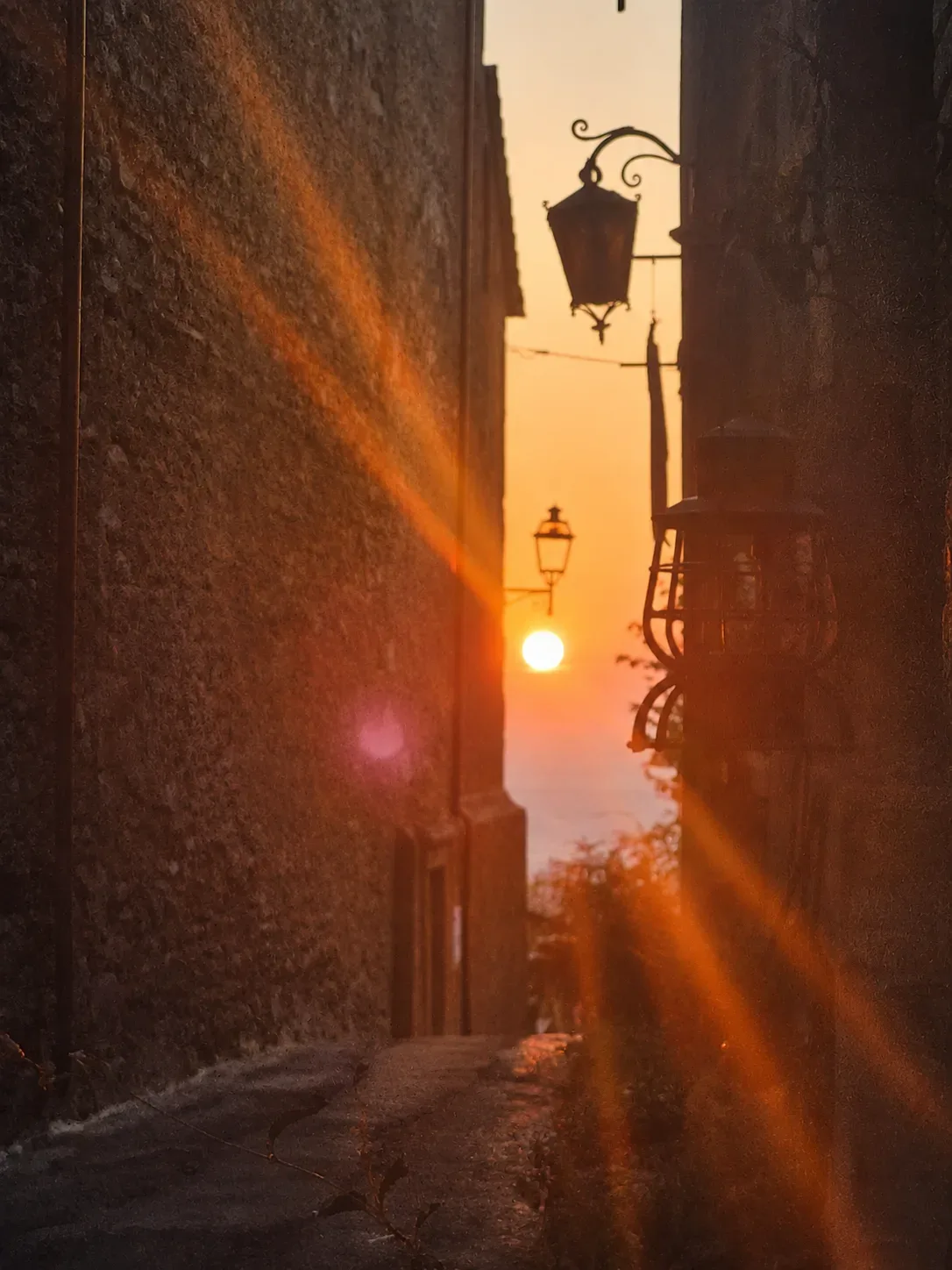
Visiting Cortona well means being able to enjoy it at the best hours, early in the morning and at sunset, when the squares empty out and the hill turns to gold. That’s why it pays to stay a short walk from the old town, sidestepping the biggest headache for anyone arriving by car, namely the climb and parking inside the walls.
Hotel Villa Santa Margherita is the ideal starting point for taking Cortona at your own pace. A few minutes on foot from the old town, it offers 22 rooms, private parking, a large garden, and a panoramic terrace looking out over the Valdichiana, the same landscape you admire from the Girifalco Fortress. For anyone keen to explore beyond the walls, e-bike hire is also available, perfect for reaching the hills, the scenic routes, and the valley’s archaeological sites at an unhurried pace. After a day among museums, lanes, and long views, the hotel offers a quiet setting to unwind, with the ease of leaving the car parked and walking into the old town.
Fonti
Footnotes
-
Cortona — Wikipedia. it.wikipedia.org ↩ ↩2
-
Cortona — Wikivoyage. en.wikivoyage.org ↩ ↩2 ↩3
-
Cortona — Pleiades (storia antica). pleiades.stoa.org ↩ ↩2
-
Cortona — World Historical Gazetteer. whgazetteer.org ↩ ↩2
-
Cortona — dati (Wikidata). wikidata.org ↩
-
Patrimoni UNESCO vicino a Cortona. whc.unesco.org ↩