Guide
A Slow Weekend in Tuscany: Why Choose Cortona
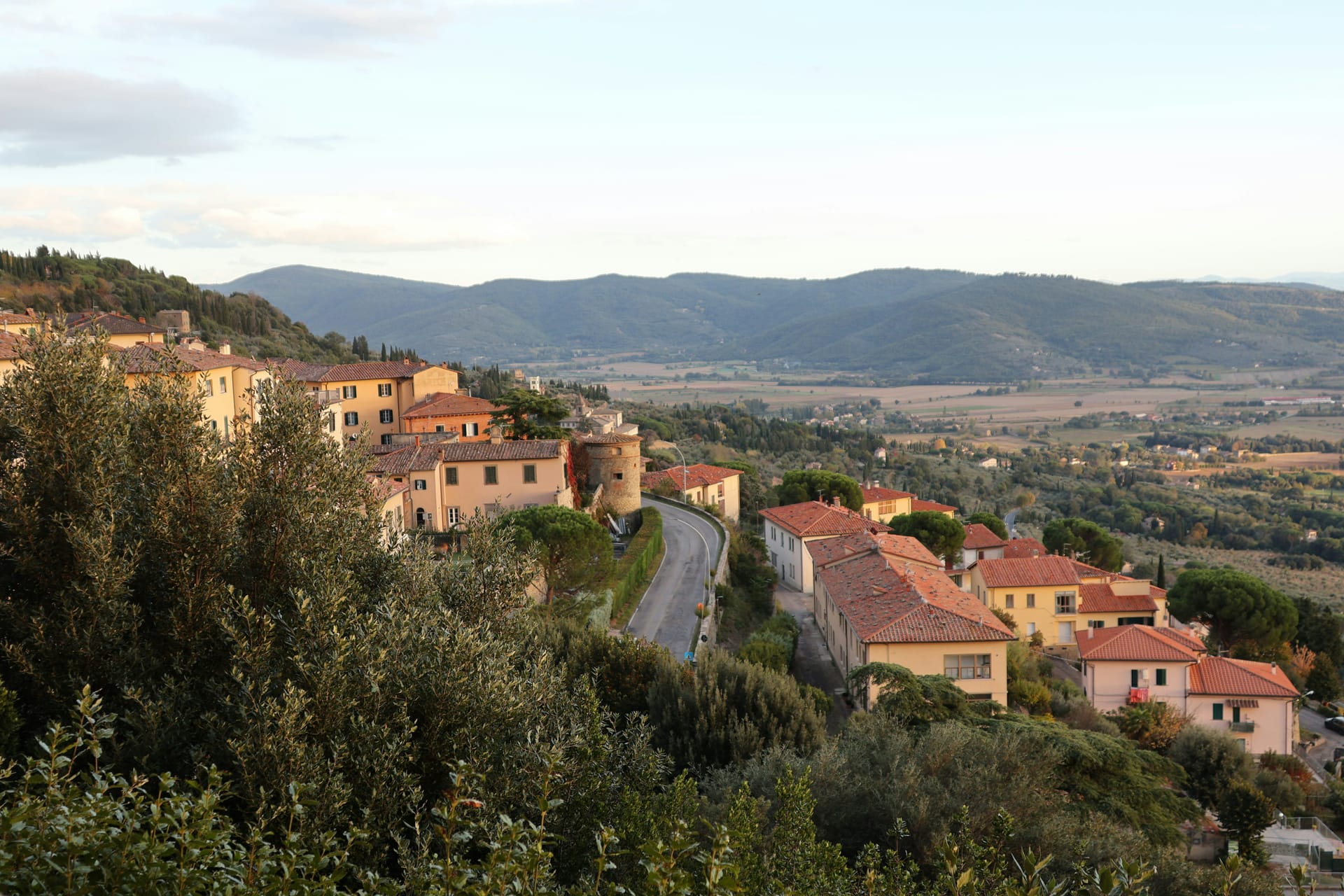
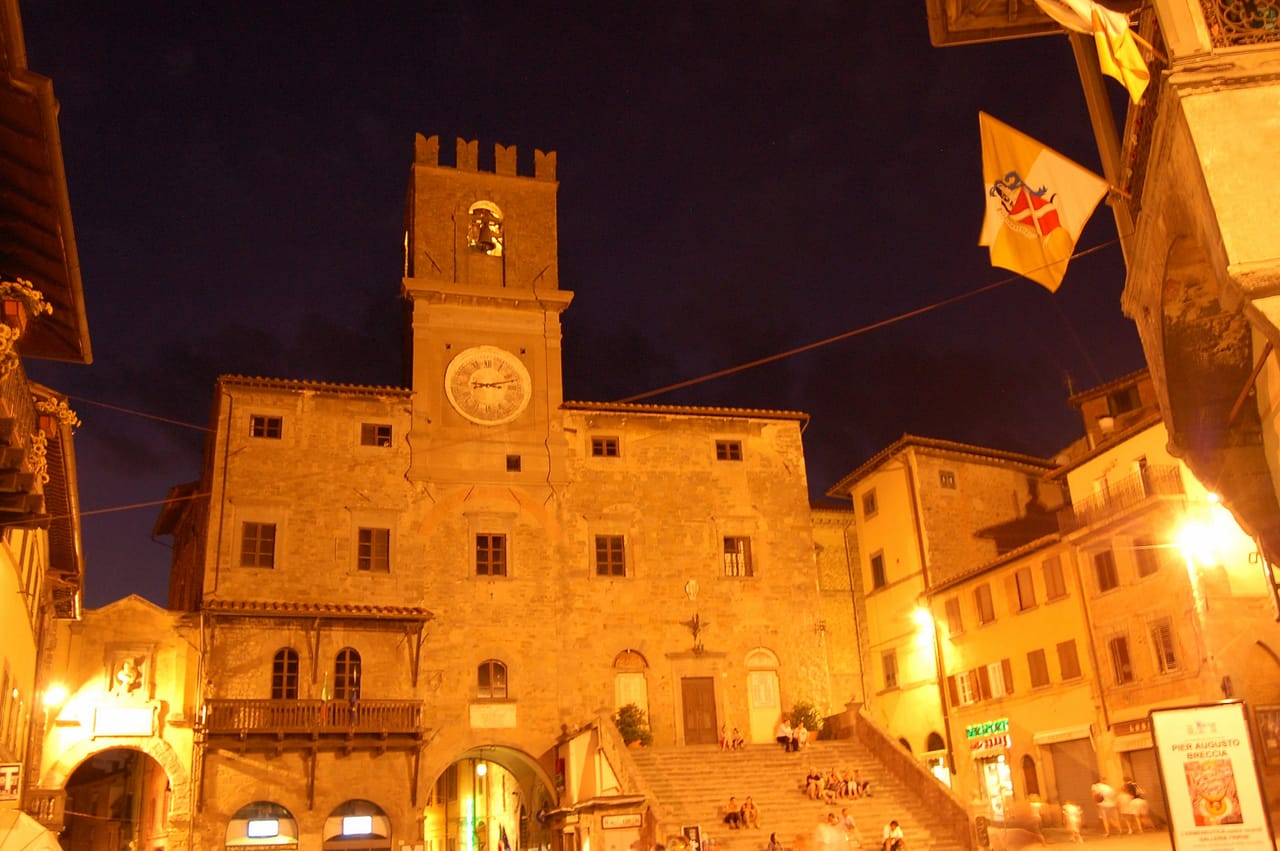
At six in the evening, once the last coach pulls away toward the car park and the tour groups thin out, Cortona changes its voice. Swifts wheel above Piazza della Repubblica, the shop windows quiet down, and the town belongs again to the people who live here and to those who chose to stay the night. That is the moment you feel the gap between a day trip and a slow weekend in Tuscany. The day trip ends when the visitors head home; the weekend begins right there.
If you are planning a slow weekend in Tuscany and already know you want quiet, a human pace and a town that is genuinely lived in, one question remains. Why Cortona rather than one of the other villages that top every list? This page is here to answer that choice. It gives you what you need to decide whether this is your destination, before you even start thinking about what to do once you arrive.
What actually makes a Tuscan weekend “slow”
Plenty of guides slap the word “slow” on any village with a square and a sunset. But the word carries real weight, and it pays to pin down the criteria before you choose, because they are the same ones that separate a genuinely restorative escape from a weekend spent queuing between souvenir stalls.
A Tuscan weekend is truly slow when five things come together. The first is a town that stays alive outside peak hours, lived in year-round and still busy after the last bus leaves. The second is human scale, a centre you cross on foot without ever touching the car. The third is historical depth, the layers you can read on the walls and not just the view worth photographing. The fourth is manageable tourist pressure, a world away from the numbers the Val d’Orcia pulls in on summer weekends. The fifth is sorted logistics, meaning you arrive, park and use the town as a base without the hassle.
Hold on to these five criteria. In the next section I apply them to Cortona one by one.
Cortona against the five criteria
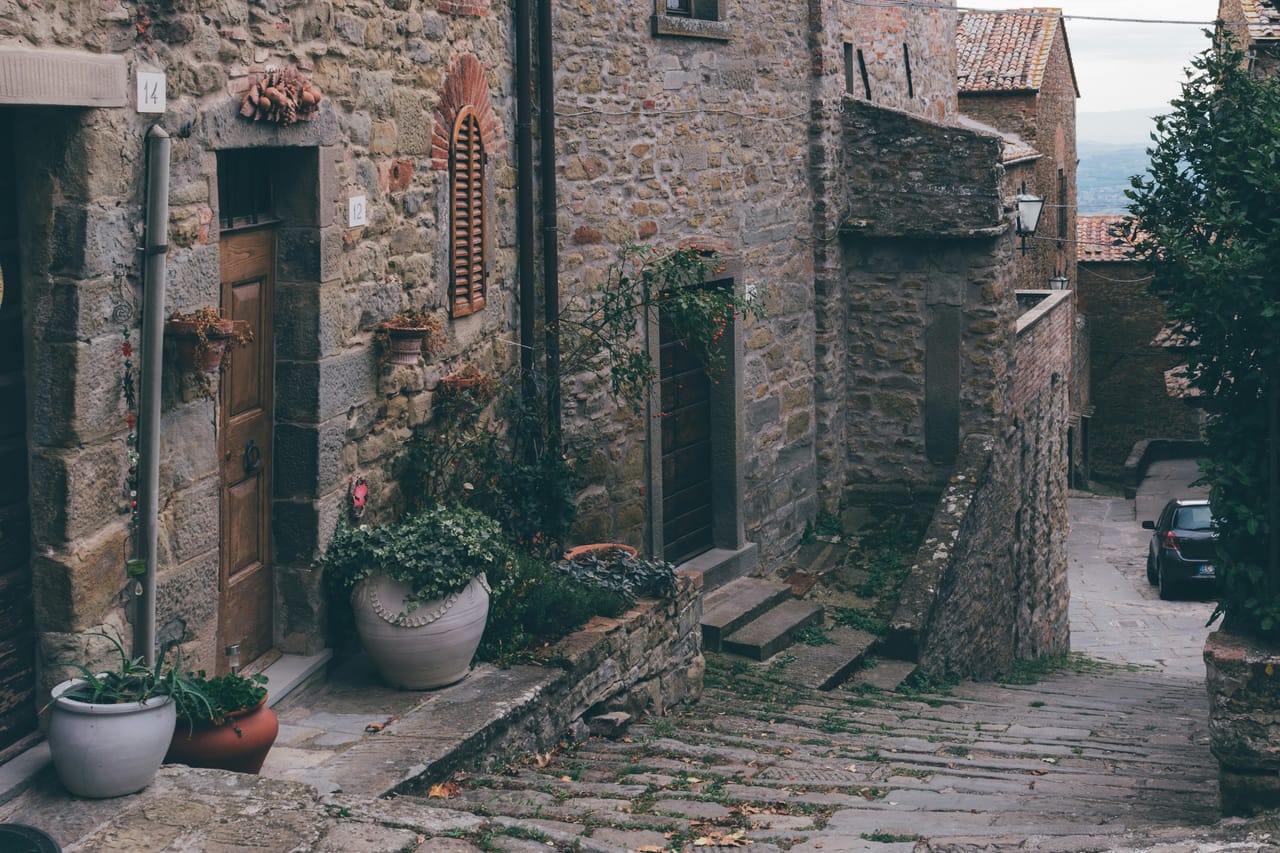
Cortona is an Etruscan town on a hill at 494 metres, with the Valdichiana spread out below and a municipality of just over 22,000 people across a wide territory 1. The historic centre, by contrast, is a compact pocket you can walk end to end. Here is how it holds up against the five criteria.
A living town. The centre thrives on far more than tourism, and its cultural calendar proves it all year. The international photography of Cortona On The Move fills historic palazzos and open-air spaces from 16 July to 1 November 2026 2, the exhibition devoted to Gino Severini runs from 5 July to 1 November 3, and at the end of summer comes Cortonantiquaria, Italy’s longest-running antiques fair, launched in 1963 and now in its 64th edition from 29 August to 13 September 2026 4. These are the events that keep the town switched on well beyond the beach season.
Human scale. From the lower gate up to the Fortezza del Girifalco, you climb on foot. It is a vertical town yet a tight-knit one, and that makes it perfect for anyone who wants to move slowly. If you want a sense of how to shape your days on foot, the logic of a route for discovering Cortona on foot starts from this compact geography.
Historical depth. This is where Cortona truly parts ways with the picture-postcard villages. It began as an Umbrian settlement, grew under Etruscan influence until it was known as “Curtun”, and later became a Roman colony 5. Historical gazetteers classify it at once as an inhabited place, a town and an archaeological site 6. The Etruscan walls, the monumental tombs at the Sodo, the Tabula Cortonensis in the museum tell of a layering that a village founded in the Middle Ages simply does not possess.
Manageable pressure. Cortona has its share of fame, and yet it stays clear of the daily siege that descends on the most photographed names in the Val d’Orcia. Midweek evenings and the shoulder season hand back a calm that elsewhere, on peak weekends, you have to hunt for with a lantern.
Sorted logistics. You reach it by car off the A1 or by train to the Camucia station down in the valley, with a link up to the centre. And once you have parked, the town becomes a comfortable base for exploring without hitting the road again every morning.
Cortona or…? How it compares with Tuscany’s other slow destinations
The “slow weekend” lists tend to name the same places, and almost never Cortona. Setting it beside the others helps you see what you gain and what you give up. The distances below are the real ones from the most searched destinations, and they already say a lot about why Cortona works so well as a base 7.
| Destination | Distance from Cortona | Recognition | What defines it |
|---|---|---|---|
| Cortona | you are here | Etruscan town, MAEC museum | Etruscan, Roman and Renaissance layers in a living centre |
| Pienza | 33 km | UNESCO World Heritage | Renaissance town planning in miniature |
| Val d’Orcia | 42 km | UNESCO World Heritage | the picture-postcard Tuscan landscape |
| Siena | 53 km | UNESCO World Heritage | Piazza del Campo and the medieval city |
| San Gimignano | 79 km | UNESCO World Heritage | the towers and the intense visitor flows |
Pienza and the Val d’Orcia are stunning and, at the same time, fragile, small and beautiful, overrun on fine-weather weekends. San Gimignano gives you the towers and asks for your patience in the crowd in return. Siena is a real city but a larger one, with a rhythm quite different from what you are after on a two-night break. Cortona sits among them all, close enough to reach any of them in a day and tucked far enough away to leave your evenings in peace. And it adds something none of the others has in the same measure: an Etruscan depth you can read step by step.
If your weekend is a two, that couple’s dimension finds its measure in a romantic weekend in Tuscany built for a slow pace. If, instead, you are chiefly after wellbeing and the art of slowing down as a state of mind, that is the string that relaxation in Tuscany plays. Here we stay with the choice of destination.
The location: Tuscany’s last hill before Umbria
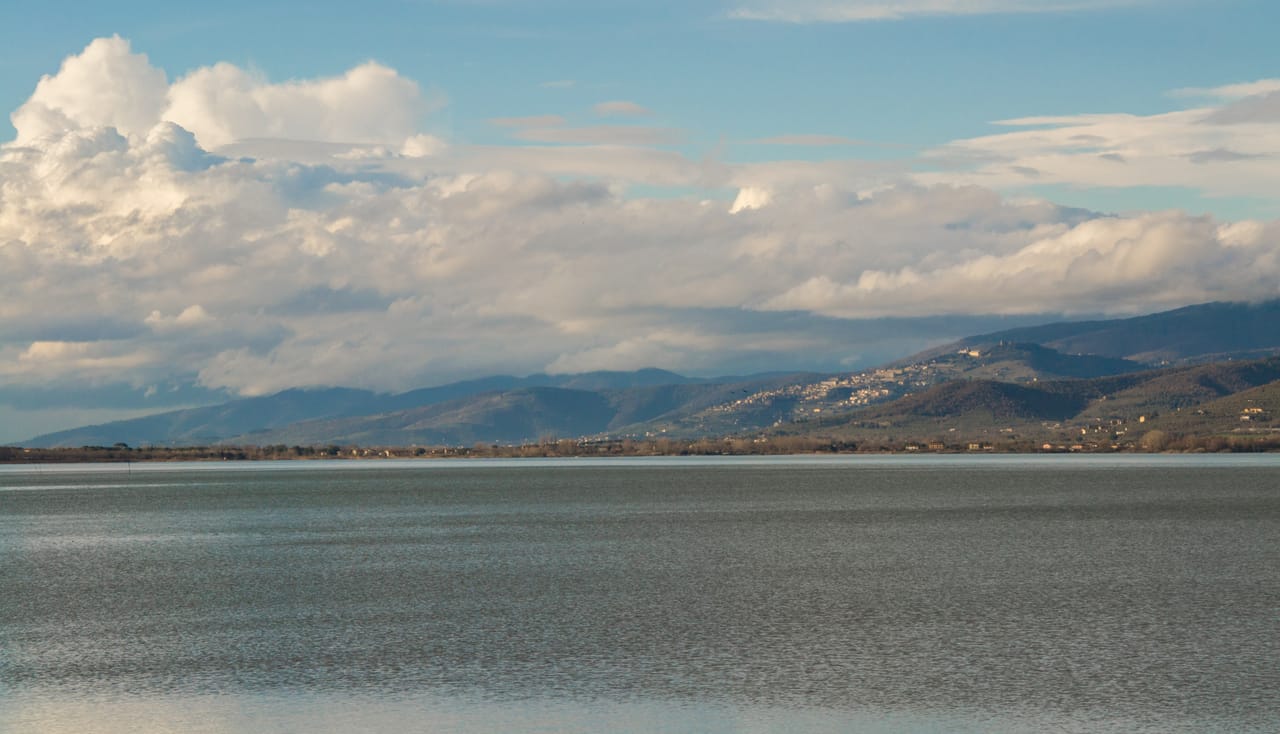
There is a geographical argument the lists almost always miss. Cortona is the last great hill of eastern Tuscany before the landscape slips down toward Umbria. From the terrace over the Valdichiana you can already see Lake Trasimeno, just 18 kilometres away 8. That changes everything for anyone who wants a single base and two regions.
Within an easy radius you have Pienza at 33 km, the Val d’Orcia at 42, Siena at 53 and, across the border, Assisi with its Franciscan sites at 56 km 7. Add protected nature within reach, from Monte Ginezzo at 7 km to the woods and Natura 2000 areas around Trasimeno 8. From here you touch both Tuscany and Umbria on the same holiday, without ever changing hotel. Few “list-topping” destinations offer you this double doorway.
That same location explains the choice of season. Cortona On The Move and the Severini show cover the second half of the year through November 23, the antiques fair enlivens the end of summer 4, while spring and early autumn hand you the best weather for walking and the least crowded hills. A weekend here in April or October breathes differently from the August crush.
Cortona is not for you if…
It is worth saying plainly, because no destination suits everyone. Cortona is not the right call if you are after nightlife and bars running late, because after dinner the town settles down, and that silence is the whole point of a slow escape. It is not for you if you want everything flat and free of climbs, because the town is vertical and those 494 metres make themselves felt in your legs 1. And if you insist on a village untouched by tourism, know that the international fame tied to the Under the Tuscan Sun myth brings visitors here from all over the world, even if the pressure stays more manageable than at the region’s more overexposed names.
If, on the other hand, you recognise what you are looking for in the silence after six, in the climb that opens onto a wide view and in a town with 2,700 years underfoot, then the choice is made.
And now that you have chosen
With the where settled, the rest almost takes care of itself. A slow weekend in Cortona, put together unhurriedly hour by hour, naturally shapes itself around a quiet base, with the terrace over the Valdichiana as your fixed point between one outing and the next. The right place does the rest of the work, with private parking that takes the worry of finding a spot off your hands and the historic centre within walking distance. Hotel Villa Santa Margherita, a boutique hotel a few steps from the centre, was made for exactly this kind of traveller, the one who wants Tuscan authenticity without giving up comfort.
Fonti
Footnotes
-
Cortona — dati (Wikidata). wikidata.org ↩ ↩2
-
Cortona On The Move 2026. discoverarezzo.com ↩ ↩2
-
Events. discoverarezzo.com ↩ ↩2
-
Cortonantiquaria 2026. discoverarezzo.com ↩ ↩2
-
Cortona — Pleiades (storia antica). pleiades.stoa.org ↩
-
Cortona — World Historical Gazetteer. whgazetteer.org ↩
-
Patrimoni UNESCO vicino a Cortona. whc.unesco.org ↩ ↩2
-
Aree protette vicino a Cortona. wikidata.org ↩ ↩2