Guide
Castiglione del Lago: Lake Trasimeno's Fortress Town
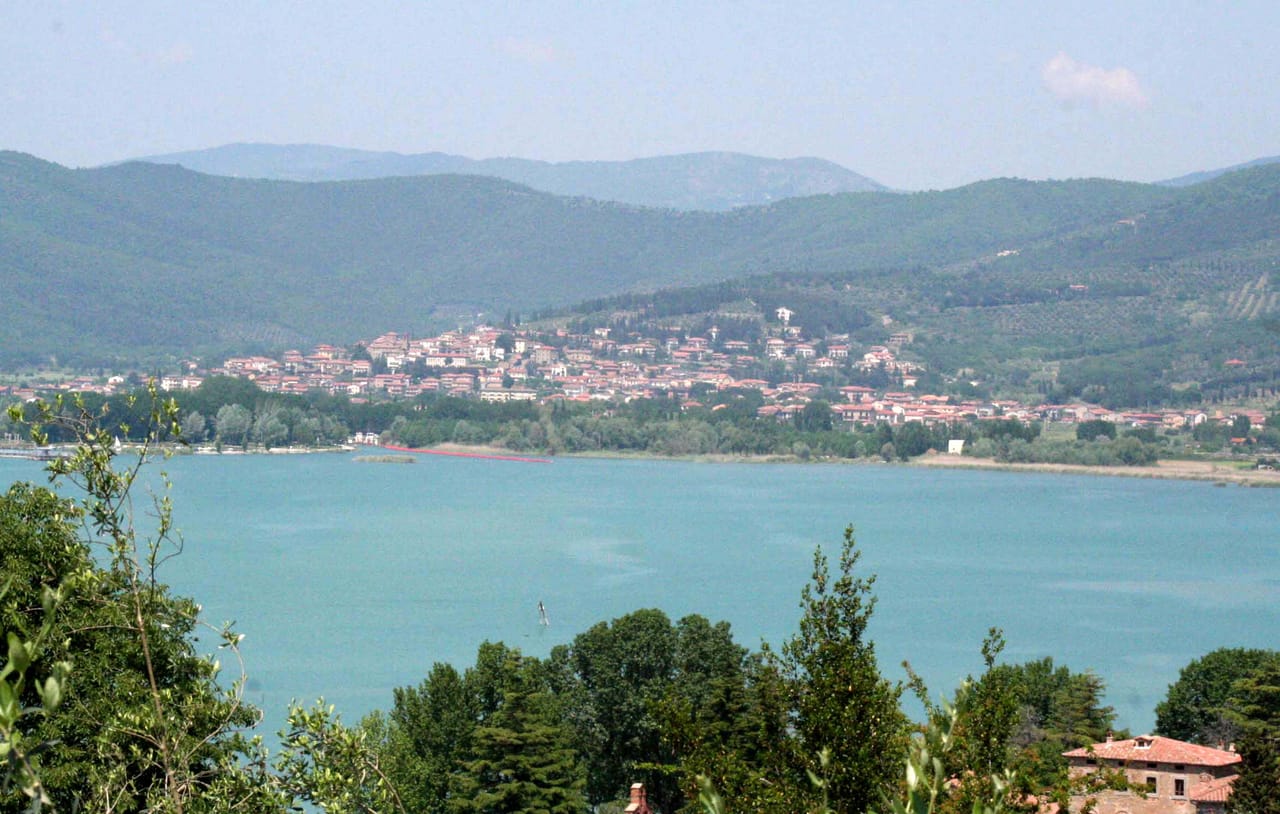
From the hotel’s panoramic terrace, on a clear day, you can catch the distant glint of Lake Trasimeno. Climb up onto the ramparts of the Rocca del Leone and the whole scene flips. From up there you can pick out the profiles of the Tuscan hills, with Cortona clinging to its mountainside. It is the same landscape seen from two opposite shores, and few people realise how close it all sits. Cortona to Castiglione del Lago is a short drive. Half a day is enough to drop you inside an Umbrian village mirrored in the water, a village that turns, at sunset, into one of the loveliest postcards in central Italy.
Why half a day in Castiglione del Lago pays you back
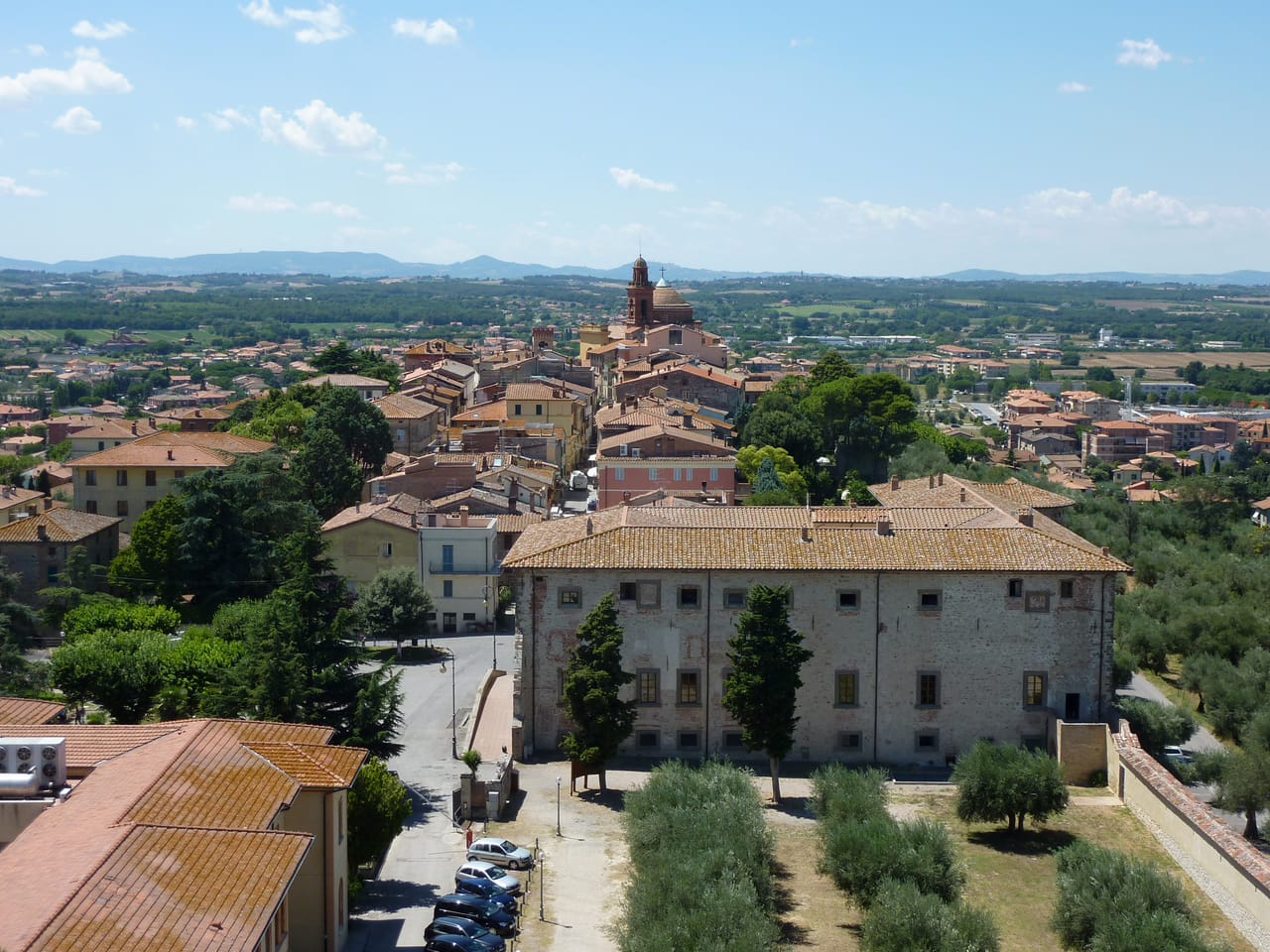
Castiglione del Lago sits on a headland reaching out over the western shore of Lake Trasimeno. That position gave it a military role for centuries, and today it hands the visitor something rare among lakeside villages. The old town is wrapped inside its walls, compact, and you can walk it in an hour without ever losing sight of the water.
The municipality counts just over fifteen thousand residents at the census, small-town numbers that mostly live outside the old core anyway. 1 The upshot is a village that feels lived-in but never crowded, where you can wander between Palazzo della Corgna and the fortress and meet more cats than people. The big international guidebooks have listed it for years among Umbria’s lakeside stops, right beside Assisi and Orvieto. 2
There is a piece of context worth keeping in mind, too. In 2024 Italy logged 466.2 million overnight tourist stays, but more than 42 per cent of them piled into just the fifty most-visited municipalities. 3 Villages like Castiglione del Lago stay clear of that crush, and that is exactly what makes them worth it for anyone after a slower pace.
Castiglione del Lago or Castiglion Fiorentino? Don’t mix them up
Before you set off, sort out a mix-up that throws sat-navs and search engines into a spin. Castiglione del Lago is in Umbria, in the province of Perugia, on the shore of Lake Trasimeno. Castiglion Fiorentino is a completely different place, a Tuscan hill town in the Valdichiana known for its Cassero. Near-twin names, two different destinations, not far apart. When you set the destination, always check that “del Lago” shows up.
The Rocca del Leone, a fortress on the water
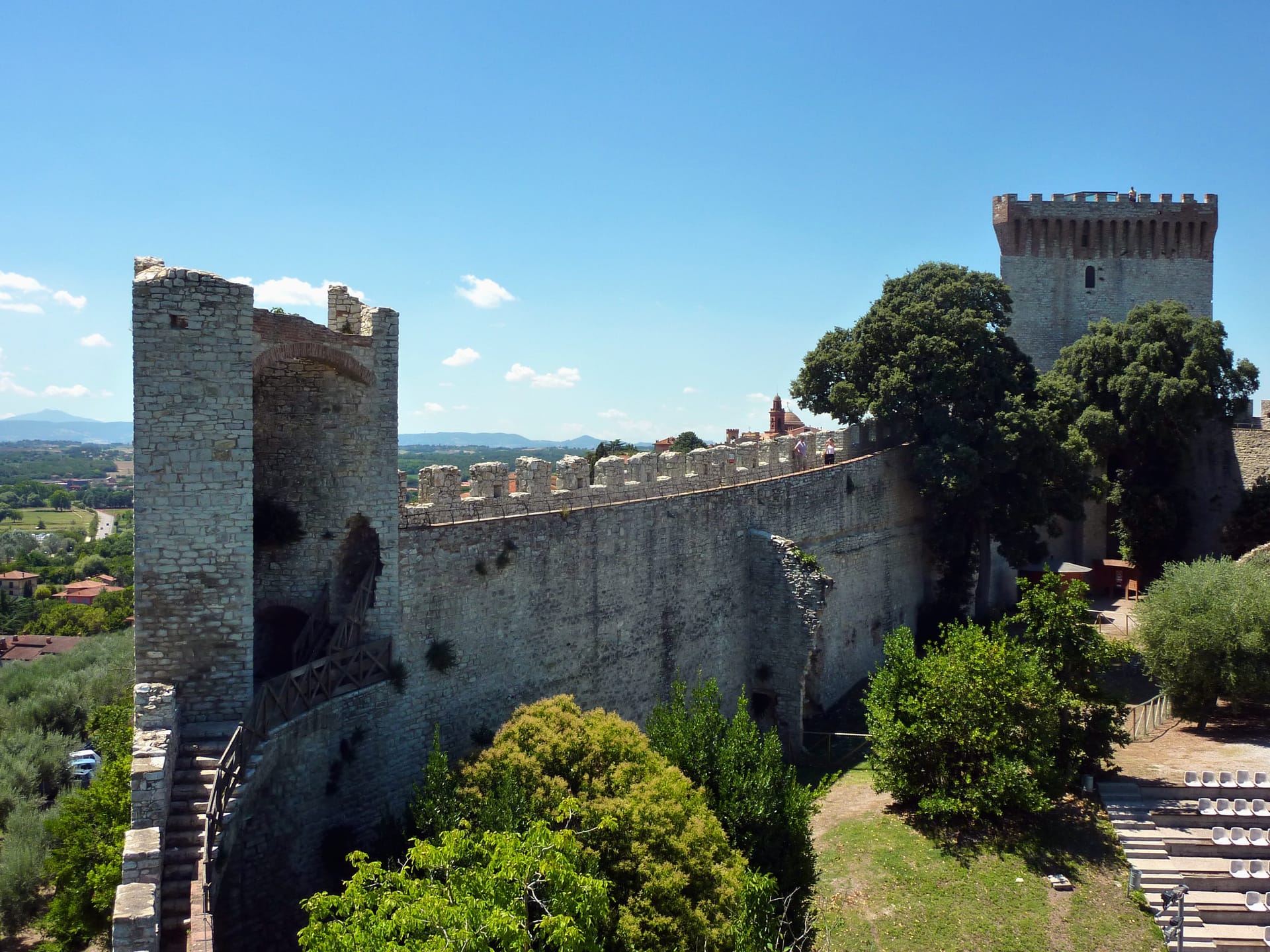
The monument that towers over everything is the Rocca del Leone, the old fortification closing off the village toward the lake. You spot it at once by the tall, slender tower rising above the walls. The whole structure has kept that stern character of a war machine looking out over the water.
Step inside today and you find a large grassy courtyard, silent, ringed by walls you can climb. From up there the view opens a full three hundred and sixty degrees. Trasimeno and its islands lie in front of you, the cultivated plain behind, the hill villages on the horizon. This is where the best of the visit plays out. The Rocca is a place to walk, an open space rather than a set of objects behind glass. Wear comfortable shoes, the walkways are stone and uneven in places.
The walls and the ramparts, the part not to skip
Plenty of visitors reach the Rocca with no idea what waits just past the gate. Up on the walls you walk suspended between the houses and the drop, with the light and the glimpses of the lake opening at intervals as you go.
It is the most distinctive thing to do in the whole village. Walking the walls gives you the physical sense of how a castle on the water was defended, the sound of your own footsteps and the Trasimeno wind coming off the lake. In a few minutes you pass from the village’s genteel register to the austere interior of the Rocca. Give it at least a quarter of an hour of your visit, with a few stops for photographs.
Palazzo della Corgna, the painted court
At the other end of the route stands Palazzo della Corgna, the village’s refined face. It is the old seigneurial residence, and the interior halls still hold their painted decoration. Look up and the ceilings and walls open into painted scenes that turn fairly plain rooms into a small provincial palace.
Take the time to look at the frescoes slowly rather than crossing the rooms in a hurry. It is the cultured counterpoint to the roughness of the fortress, and together the two explain the place’s double soul, military and seigneurial.
The lakefront, the beach and the light at sunset
Come down off the headland and the register changes. Below the walls the lakefront stretches out, with jetties, public gardens and a strip of equipped beach where in summer people bathe in Trasimeno’s shallow, warm water. It is the right spot for a slow break, an ice cream in the shade, the children running toward the shore while you sit and watch the water.
Then comes the moment worth timing the whole trip around. Toward evening, as the sun drops behind the lake, the village and the Rocca’s tower catch fire in orange and mirror themselves in the still water. In person the sunset keeps its promise. The best vantage points are the fortress walls and the lakefront by the jetties, where the profile of the headland stands out against the sky. If you can, stay until that hour and have dinner in town straight after.
The islands and the rest of the lake, in brief
Boats leave from Castiglione del Lago for the Trasimeno islands, Isola Maggiore and Polvese, but that is a chapter of its own and deserves a trip devoted to the crossing and the landings. If it draws you in, we covered the lake as a whole when we wrote about the Trasimeno islands. Watch one practical detail. The lake’s water level can swing a lot between seasons and affect whether the connections run, so always check the service is operating on the day you want to go before you plan the crossing.
At the table on Trasimeno, a lake cuisine
Here your palate changes the map. A few kilometres from Chianina beef and pici, the table at Castiglione del Lago speaks the language of freshwater fish. Perch fillet is the flagship dish, served golden-fried or in a light broth. Tegamaccio is the lake stew par excellence, a mix of fish cooked slowly with tomato and herbs. And then the most surprising speciality, carp “regina in porchetta”, oven-roasted with wild fennel and herbs the way you would treat pork.
Alongside the fish there is the fagiolina del Trasimeno, a small local heritage pulse with a delicate flavour. Finish with an extra-virgin olive oil from the hills that ring the lake. It is a culinary register that rounds out a Tuscan stay perfectly, because it lets you taste something you won’t find in Cortona. The trattorias in the old town and the ones facing the water serve it at fair prices.
How to get there from Cortona, even without a car
Most visitors arrive by car, the easiest option. From around Cortona you drop down to the plain and reach the car parks below the walls in no time, then walk up to the centre. Anyone who would rather not drive can still look at public transport.
Timetables and connections change often, so check the up-to-date options the day before and plan the visit around them.
How much time you really need
Be honest with your day. For the Rocca del Leone, the walls and Palazzo della Corgna a good half day is enough, say three hours at a relaxed pace. If you want to add the lakefront, a fish lunch and the sunset stop, then you may as well give it the whole day and head back to Cortona in the evening.
One pairing that works well is joining the lake trip with a stop at the thermal waters on the Sienese side, for anyone who likes to alternate culture and downtime, or pushing on the next day toward the Umbrian capital. You’ll find ideas both for combining lake and spa and for carrying on to Perugia, all destinations that revolve around the same Cortona base and that fall within the range of day trips in the area. The big guidebooks to the Tuscan-Umbrian border build their itineraries exactly this way, slotting together villages and landscapes a short distance apart. 4
The best time to visit
Spring and early autumn are the ideal seasons, with soft light, deep colours and temperatures that make the climb up the walls a pleasure. Summer is busy but pays you back with the swimmable beach and the long evenings on the lake. Winter hands you an almost deserted village and crisp sunsets, as long as you wrap up well because the wind off the water cuts through you. Whatever the season, aim to be on the Rocca’s walls in the last hour of light.
Castiglione del Lago is the day trip that surprises anyone who underrates it. Small enough to cover in a stroll, rich enough to fill a day, and with that crossed view over Trasimeno that leaves you feeling, for one evening, suspended between Umbria and Tuscany.
A cura di Hotel Villa Santa Margherita, Vivi Cortona.
Fonti
Footnotes
-
Castiglione del Lago - Popolazione. ottomilacensus.istat.it ↩
-
DK Eyewitness Travel Guide Umbria. books.google.co.id ↩
-
The Rough Guide to Tuscany & Umbria (Travel Guide eBook). play.google.com ↩