Guide
Day Trips from Cortona: Best Towns & Places Nearby
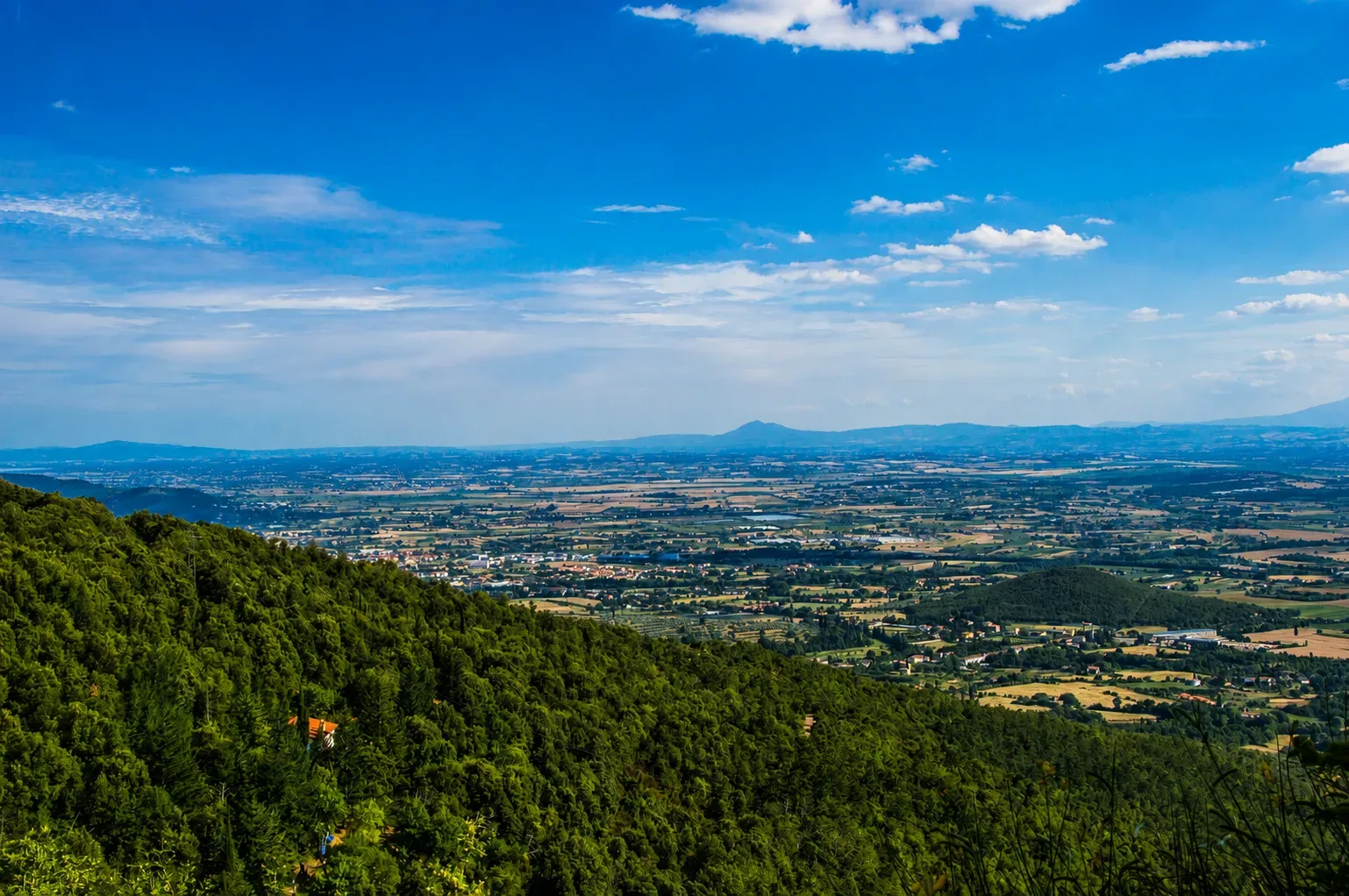
Cortona is worth more as a base than the sum of the places you’ll reach from it. It sits at the southern edge of the province of Arezzo, in Tuscany, a stone’s throw from the Umbrian border 1, and that frontier position is exactly why day trips from Cortona work so well. Head one way and you have the great Tuscan art cities; go the other and you’re among Umbria’s sanctuaries and stone hilltowns; south lie the wine roads, and east the lake. Working out what to do around Cortona starts with picking a direction and matching the day to the hours you actually have.
This guide won’t just throw ten names at you. It sorts them by direction and by the kind of day they make, so you can build an itinerary you set out on and come back from without rushing. The hotel — with its private parking, its garden and its panoramic terrace over the Valdichiana — is the fixed point you return to when the light goes soft.
How to use this guide to pick a trip by the time you have
The first filter isn’t “where,” it’s “how long.” A half day wants a nearby destination and an easy pace; a full day carries an art city or a loop of hilltowns; and if you’d rather not drive, the train from Camucia opens up a whole different logic. Below is the quick reference to get your bearings, and each direction is fleshed out in the sections that follow.
| Time you have | Suggested destinations |
|---|---|
| Half day | Castiglion Fiorentino, Lucignano, Montecchio Vesponi, Valdichiana Outlet, Lake Trasimeno |
| Full day | Arezzo, Siena, Montepulciano + Pienza, Assisi, Gubbio |
| Car-free (train from Camucia) | Florence, Arezzo |
| Relax / wellness | Terme di Rapolano, Bagni San Filippo, Bagno Vignoni |
If you just want the quick list of the closest destinations, with a card for each one, that’s already done and waiting in the dedicated guide to what to see around Cortona. This page is for something else: planning out your days and slotting your one-day tours from Cortona together the right way.
The Valdichiana within reach, and the closest hilltowns
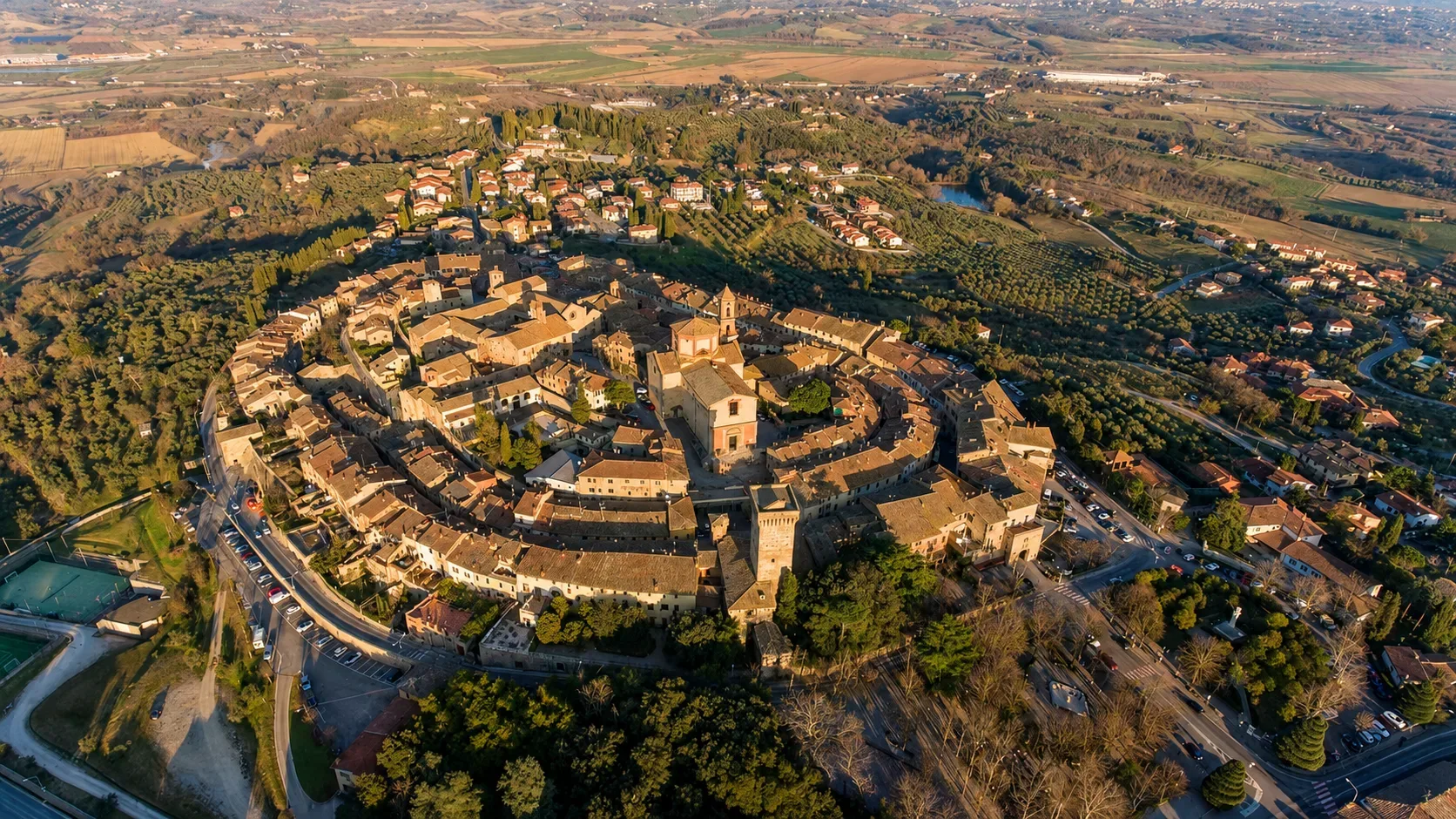
Let’s start with the short radius, ideal for a half day or for filling the afternoon after a morning in the old town. These are the villages near Cortona you reach before the drive even registers.
- Castiglion Fiorentino. The easiest of all, right along the same valley. The Cassero and its tower loom over the town, and the Vasari loggia frames an unusual view across the rooftops. A short stop that gives back a lot. The full rundown is in the card on Castiglion Fiorentino and the Cassero.
- Lucignano. The town with the elliptical plan, its streets curling around the centre like rings in a tree. It’s a stroll, not a climb — a good fit even if you’re not up for much walking. More in the piece on the village of Lucignano.
- Castello di Montecchio Vesponi. One of the best-preserved medieval fortresses in the area, standing alone on a knoll of olive trees. Worth the detour for the view and for the atmosphere, untouched. The castle is privately owned and not freely open every day: the interior can only be visited on set dates, by guided tour, with booking required.
- Valdichiana Outlet Village. For anyone wanting to mix art with a bit of shopping, this is the valley’s practical stop, easy to fold into the drive home.
- Cetona. The quietest village in the Sienese Valdichiana, perched on a wooded hill, with a civic museum devoted to the prehistory of Monte Cetona. No tour coaches, no queues: just stone lanes and a couple of good restaurants. A half day off the radar for anyone who’s already done Lucignano and Castiglion Fiorentino.
The great art cities in a day
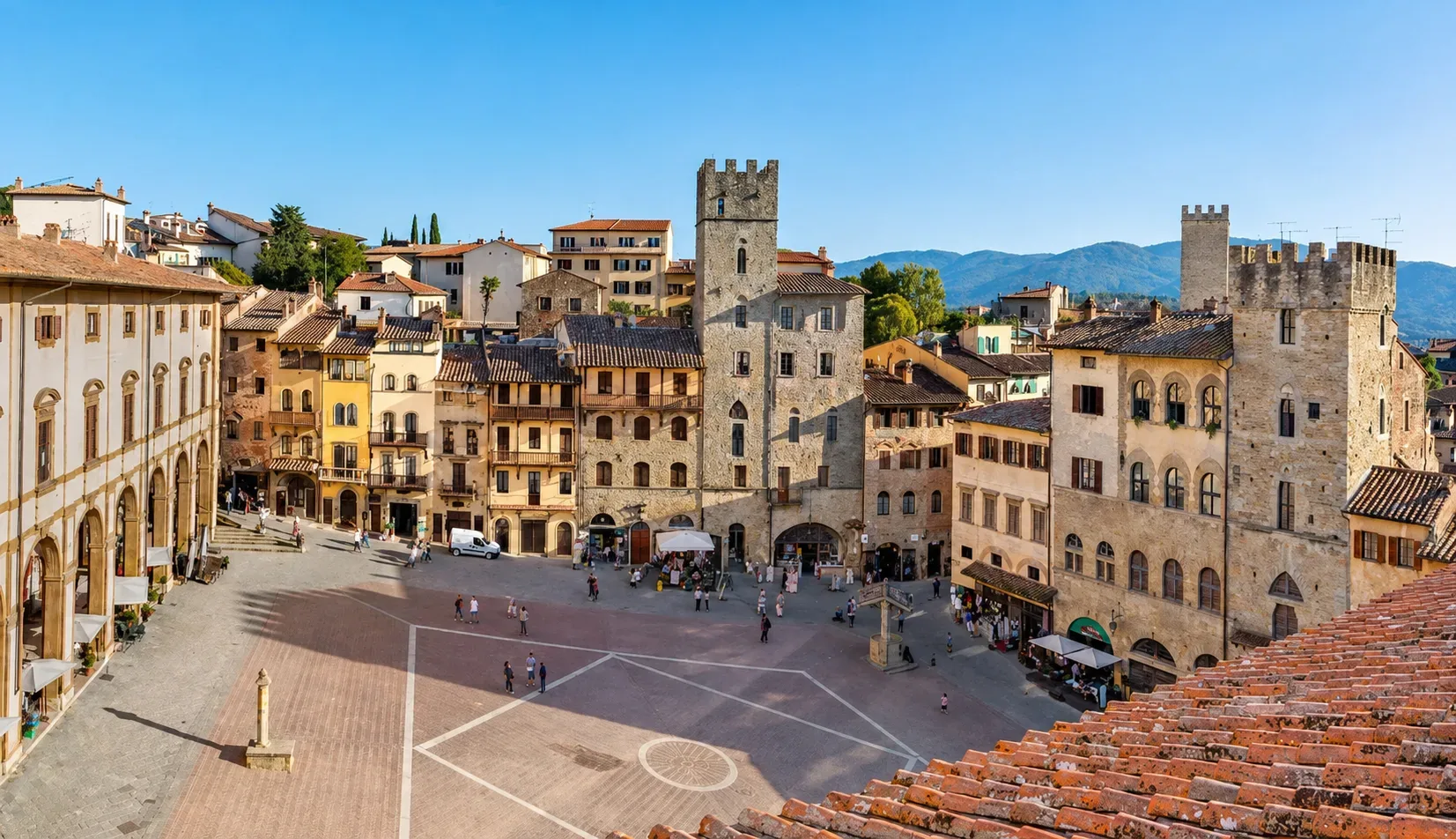
When you’ve got the full day, the “city” direction is the one that pays back most. Three names, three different ways to plan it.
Arezzo is the nearest and the simplest. A city of antiques dealers, of Piero della Francesca’s frescoes, and of a sloping square that wins everyone over. It even goes down nicely in a generous half day. You’ll find what to see and how to get around in the guide on what to see in Arezzo.
Siena asks for more time, and earns every minute. Its historic centre is a UNESCO World Heritage Site, about 50 minutes from Cortona 2, with Piazza del Campo, the Duomo and the maze of the contrade. It’s a classic day trip from Cortona, best planned with an early start. The details are in the card on Siena and Piazza del Campo.
Florence is the one place where it genuinely pays to leave the car behind. From Camucia station, a few minutes from the hotel, the regional train drops you in the city with none of the parking nightmare or the Florentine ZTL to fret over. You arrive, walk out of the station, and you’re in the centre on foot. It’s the car-free option par excellence, laid out step by step in the guide on reaching Florence by train from Camucia.
If you’re after Piero della Francesca without the Arezzo crowds, there’s Sansepolcro, in the Valtiberina, his hometown: the Resurrection, kept in the Museo Civico, is reckoned one of his outright masterpieces and is often overlooked next to the busier circuits. It pairs well with Anghiari, along the same route.
The Val d’Orcia and the wine country
South of Cortona opens the postcard Tuscany — the one with cypresses lined up along the ridges and hills combed smooth. This is the direction that brings beauty and the table together.
The Val d’Orcia is on the UNESCO World Heritage List and lies about 42 km from Cortona 2: a slow itinerary of white gravel roads, isolated parish churches and viewpoints made for pulling over. Just before it you meet Montepulciano, home of Vino Nobile, with cellars dug into the tufa where a tasting is all but compulsory. And Pienza, the Renaissance “ideal city,” itself a UNESCO site about 33 km away 2, and the home of pecorino. A day in the Val d’Orcia from Cortona works beautifully by pairing one village with a cellar stop or a lunch built on local produce. If food and wine are the heart of your trip, it’s worth planning at an unhurried pace and giving it the whole day.
Umbria a step away — spirit, art and stone
Here lies Cortona’s real edge, and it’s geographical. Sitting right up against the Umbrian border 1, you’ve got Umbria as close as Tuscany, and its best-loved places are all doable in a day.
Assisi is the spiritual destination by definition, with the Basilica of St Francis and the other Franciscan sites on the UNESCO list, about 56 km from Cortona 2. The lower town and the upper town both deserve a full day, especially if you love sacred art and the quiet of places of worship. Perugia has a living, layered old centre, with its corso, its fountain, and the escalators that climb up through the Etruscan walls. Gubbio, the city of stone, wears a stern, medieval air, with a funicular that carries you to the top of Monte Ingino. Spello, smaller and tighter, is famous for its flower-filled lanes and its infiorate. If you’re wondering what to see in Umbria near Cortona, these four names are the natural starting point.
Anyone after a more secluded Umbria has two more to jot down. Città della Pieve, near Chiusi, is a town of pink brick where Perugino was born: several of his works can be seen for free simply by stepping into the town’s churches — no ticket, no queue. Chiusi, not far off, holds one of the most important Etruscan necropolises and museums in the area, with underground tunnels carved into the tufa that you can walk beneath the town itself — a “different” half day for anyone who’s already done Assisi and Perugia.
For wine lovers, Montefalco earns the detour: nicknamed the “balcony of Umbria” for its 360° view over the valley, it’s the home of Sagrantino and a less-trodden alternative to Montepulciano if you’re already on the Umbrian side.
Lake Trasimeno, the day on the water among ferries and islands
When you want to slow down and bring the kids along, the lake is the answer. Lake Trasimeno lies about 18 km from Cortona 3 and makes for a proper day on the water. The ferries reach the islands, and Castiglione del Lago, with its fortress looking out over the water, hands you sunsets that justify the trip on their own.
On the opposite shore, Panicale is the quiet counterpart to Castiglione del Lago: a small panoramic village, far less busy, where the church of San Sebastiano holds a Perugino fresco. Worth the stop for the same view over the lake without the crowd.
There’s more, and it’s something few people make use of. You can reach the lake by pedal too, along the Sentiero della Bonifica, a flat route made for e-bikes. The hotel offers rentals right on site, so you can set off from the hills and arrive at the water with no effort and no car. A slow trip in the fullest sense of the word.
A day of wellness among the natural spas
The wellness direction chimes with the idea of restoring mind and body that sits at the heart of the hotel experience. The spas near Cortona are varied and there’s one for every taste.
The Terme di Rapolano are the easy, well-equipped choice, with pools and circuits for a full day of unwinding. Bagno Vignoni, in the Val d’Orcia, is one of a kind, with a great sixteenth-century basin where the village square would normally be. And Bagni San Filippo, the thermal waterfall nicknamed the “White Whale” for its pale mineral formations, is the wildest option, deep in the woods, free and striking. A half day or a whole one, depending on how far you want to let go.
On four wheels, the scenic road trips
If you love to drive, the country around Cortona is one road worth the detour after another. A driving itinerary in this corner of Tuscany can tie the Val d’Orcia to the Umbrian ridges, or stitch the Valdichiana villages into a half-day loop. You can push on toward the Valtiberina too and stop at Anghiari, one of the loveliest villages in the area, along roads that cut through olive groves and worked fields. Here the hotel’s private parking becomes a real ally: you set off whenever you like in the morning and come back in the evening without hunting for a space in town.
Cortona as a base for slow travel
All of this works because Cortona sits at the centre of gravity. Straddling the line between Tuscany and Umbria 1, a day’s reach from Siena, from the Val d’Orcia and from Assisi 2, it lets you change the scenery every day without ever changing hotels. It’s the logic of slow travel taken seriously: a few destinations, well chosen, lived at an easy pace.
The hotel is built to keep step with that rhythm. The private parking takes away the most tiresome worry of any day out; the on-site e-bike rental opens up slow departures toward the hills and Trasimeno; the nearness of the old town leaves the village a walk away; and the panoramic terrace with the private garden is the right place to let the day settle when you get back. Pick your direction, travel light, and let the land set the pace.
Fonti
Footnotes
-
Cortona — Wikipedia. it.wikipedia.org ↩ ↩2 ↩3
-
Patrimoni UNESCO vicino a Cortona. whc.unesco.org ↩ ↩2 ↩3 ↩4 ↩5
-
Aree protette vicino a Cortona. wikidata.org ↩