Guide
Cortona for Guests: A Practical Guide to Getting There, Parking and Local Know-How
Getting to Cortona is the easy part. What comes next — where to leave the car, the smartest way to reach the old town, and where to find a pharmacy, a cash machine or anything else you might need — is what this page is for. It pulls together the practical side of a stay in Cortona through the eyes of people who welcome travellers every day and know the town street by street. Everything is grouped by what you actually need, from transport to daily errands to advice for anyone travelling with a dog or planning around mobility. The essentials are all right here, easy to pull up on your phone while you’re on the move.
Getting to Cortona and getting around
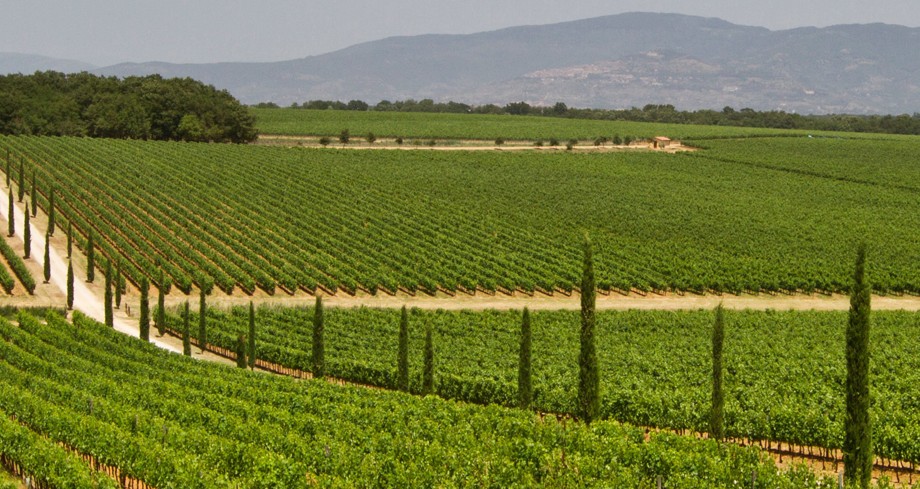
Cortona sits on a hillside where Tuscany meets Umbria, at roughly 600 metres above sea level 1; it’s an ancient Etruscan town in the province of Arezzo 2. You can reach it easily by car or by train 1.
By car, take the A1 motorway and leave at the Valdichiana exit; from there follow the dual carriageway towards Perugia and come off at the second exit, Cortona San Lorenzo 1. It’s about a 20-minute drive from the motorway to the town itself 3.
By train there are two stations to know. Camucia-Cortona, a short hop from the centre 4, serves the regional lines, while Terontola, further out, is also on the long-distance network 5. From Rome the regional train takes a good while; the Intercity is far quicker. The nearest airports are Perugia Sant’Egidio (about 60 km), Florence (about 120 km), Pisa and Rome Fiumicino 1.
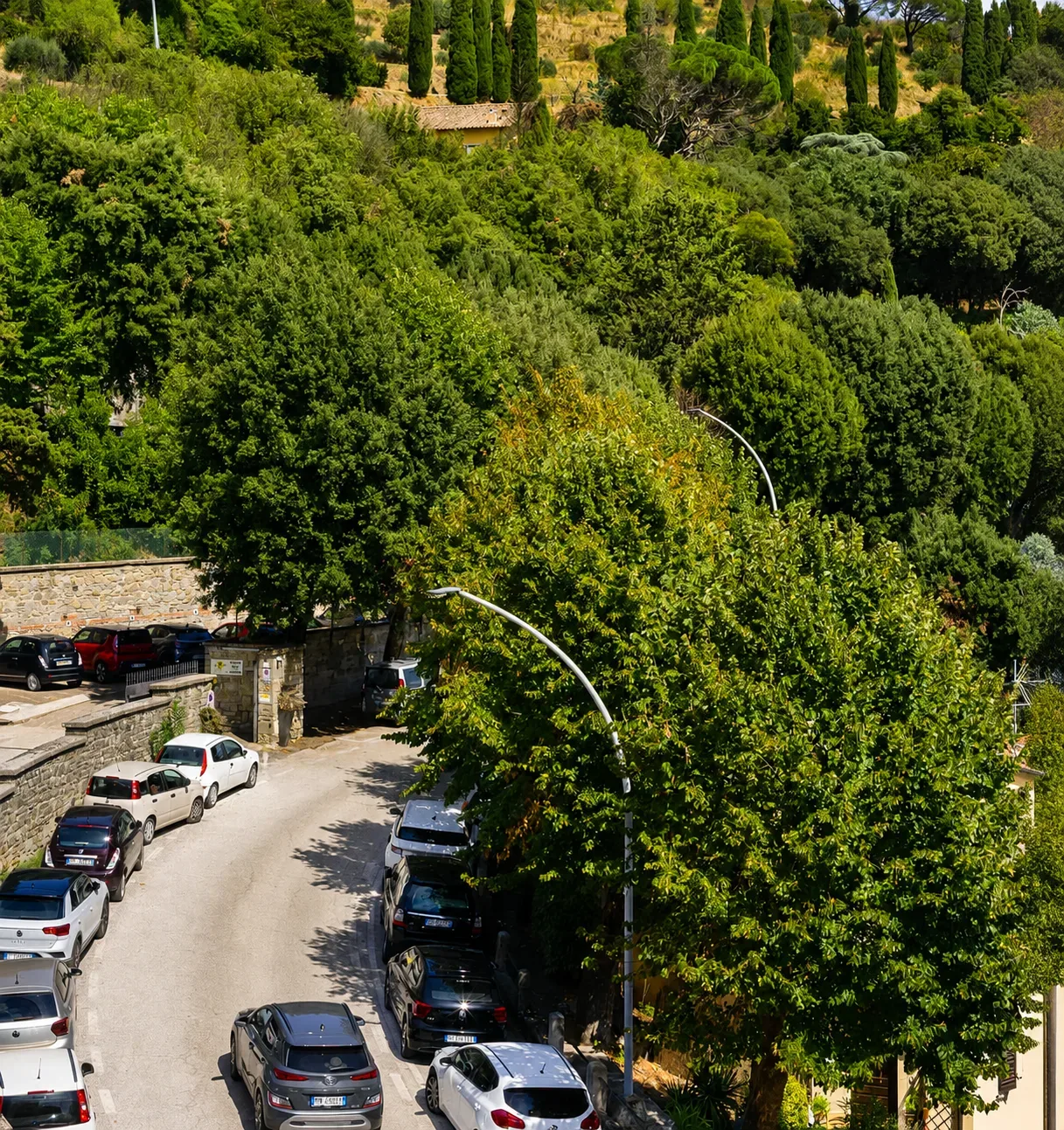
- Where to park. Cortona has four main car parks for anyone arriving by car. Piazza del Mercato and Porta Bifora are free, while Spirito Santo (on Viale Cesare Battisti) and Piazza Mazzini (Porta Colonia) are paid, with blue-line spaces charged from 8:00 to 20:00.6 A handy alternative is Viale Cesare Battisti: the stretch closest to the old town has both paid spaces (blue lines) and a few free ones (white lines), popular for how close they are to the main routes into town.
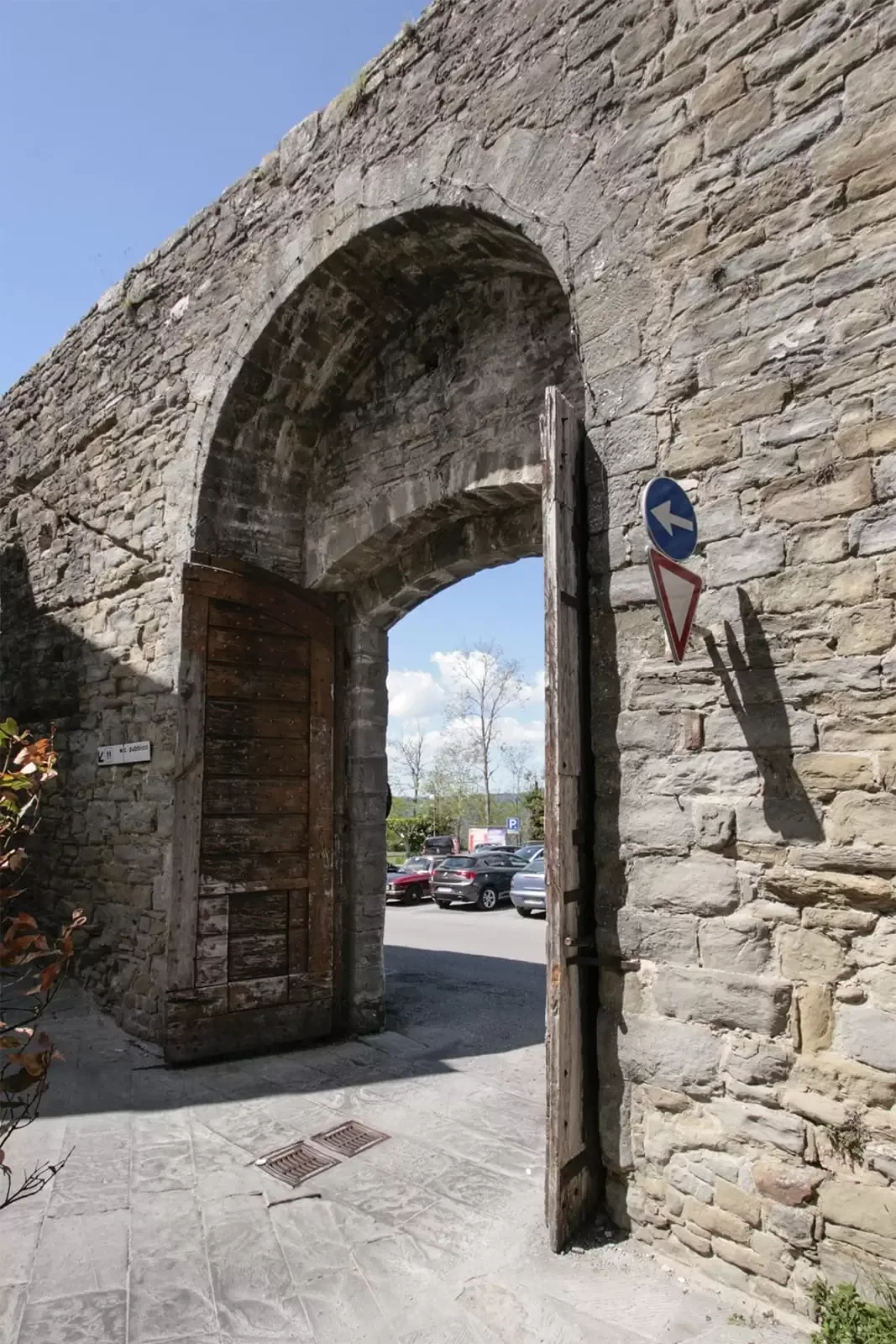
- The ZTL and driving into the centre. Driving into the heart of Cortona is governed by a restricted traffic zone (ZTL), in force across parts of the old town and enforced by cameras.6 Entering without a permit means a fine that, with a rental car, can land in your postbox months after you’ve flown home.7 To spare yourself the hassle, leave the car in one of the outer car parks and walk in.
- Escalators. From the Spirito Santo car park on Viale Cesare Battisti, you can ride the escalators straight up to Piazza Garibaldi.6 They’re an easy way to skip the climb and arrive right at one of the main entrances to the old town.
- From Camucia station to the centre. A local bus runs from Camucia-Cortona station up to Piazza Garibaldi, one of the main gateways into the old town.7 A separate line, on a different timetable, leaves Terontola-Cortona station for Piazza del Mercato.7 You can also book a taxi, either at the stations themselves or by calling the local taxi line.4
- When the bus won’t do. To explore the countryside around Cortona or reach the airports at Perugia, Florence and Rome Fiumicino, you can book a taxi or a private driver. And if you’d rather set your own pace and roam freely, renting a car can be well worth it.
Once you’re in the centre, Cortona is best discovered on foot. The old town is compact — a tangle of alleys, small squares and constant ups and downs where a car is more trouble than it’s worth. Wandering its streets is the real experience of the place: the odd climb comes with the territory and is part of the charm of one of Tuscany’s loveliest hill towns.
Everyday essentials in town
A practical guide earns its keep in the small stuff. Here’s the map of the services that genuinely matter while you’re staying in town.
- Pharmacies and emergency numbers. In the old town you’ll find the Farmacia Centrale on Via Nazionale, handy for everyday needs. Opening hours can shift, and they’re easy to check online. Across the wider municipality there are several other pharmacies, both in Cortona and in Camucia, including the Farmacia Boncompagni, the Farmacia Comunale and others. For anything to do with roads, the ZTL or getting around, you can reach the Cortona municipal police during working hours.
- Supermarkets and food shops. The old town has a small grocery shop, useful for grabbing water or something for a snack. For a proper shop, the supermarkets are down in Camucia, an easy trip by car or public transport.
- Cash machines and post offices. ATMs and a post office sit within the old town — worth knowing before you run out of cash in a place where many shops are small and old-fashioned.
- Tobacconists and newsstands. Tobacconists and newsstands cover the small daily purchases, from stamps to newspapers.
- Luggage storage. Arrive early or leave late and you’ll want somewhere to drop your bags rather than haul them uphill; Cortona’s luggage-storage options solve that, and at the Hotel Villa Santa Margherita guests can leave their bags on site.
- Wi-Fi and getting online. There are free public Wi-Fi hotspots around town, handy for checking maps and timetables when you need them.
Planning your visit: hours, tickets and useful tools
Planning a visit to Cortona mostly comes down to lining up museum and church hours with the rhythm of your day. The centre is small and entirely walkable, so a few well-timed choices let you see plenty without rushing.
For many, the natural starting point is the MAEC, the Museum of the Etruscan Academy and the City of Cortona, at Piazza Signorelli 9 8. In winter, from 1 November 2025 to 31 March 2026, it opens Tuesday to Sunday from 10 to 17; in summer, from 30 March to 31 October 2026, it opens daily from 10 to 19, with last entry at 18:30 8. It pays to work out how to see Cortona on foot, keeping an eye on museum and church hours, which change between winter and summer.
Cortona’s tourist office is on the ground floor of Palazzo Casali, in Piazza Signorelli — the same building that houses the MAEC. You can pick up maps and get information on landmarks, itineraries and events, or call 0575 637278. A combined ticket is also available for the MAEC and the Sodo archaeological area.
Digital guides. To plan your visit from your phone, try Paese Mio, a free app available in several languages, with up-to-date information on Cortona, what to see and what’s coming up.
Good to know. The tourist office in Piazza Signorelli is the go-to spot for information in the centre, but the nicest map is the one waiting for you at the front desk of the Hotel Villa Santa Margherita: made with guests in mind, it’s the one to have on you in the narrower alleys where your phone loses signal.
Cortona for every kind of guest
Cortona welcomes very different travellers, and a little forethought makes the stay easy for everyone.
Mobility and accessibility
The centre climbs, and the surfaces are historic, but there are dedicated solutions. Anyone entitled to ZTL access can enter by showing their disabled badge and giving their number plate to the local police 36 hours before arrival 6. Getting around Cortona takes some planning, given the slopes and the old paving.
Travelling with a dog
Cortona is a good fit for travellers with pets, with dog-friendly places and services. Dog-friendly Cortona offers routes, rules and spots suited to anyone travelling with a dog.
Weather and what to pack
The hillside climate brings hot summers and cool shoulder seasons, with those 600 metres making themselves felt after dark 1. Knowing what to expect means packing comfortable shoes and an extra layer or two, and getting a feel for the weather and seasons in Cortona helps you pick the right time to come.
The questions we hear most at the front desk
A lot of the practical questions come up right at the welcome desk — distances, parking, opening hours. These are the ones we hear most in Cortona, the common doubts we like to clear up in advance.
A tip from people who live in Cortona
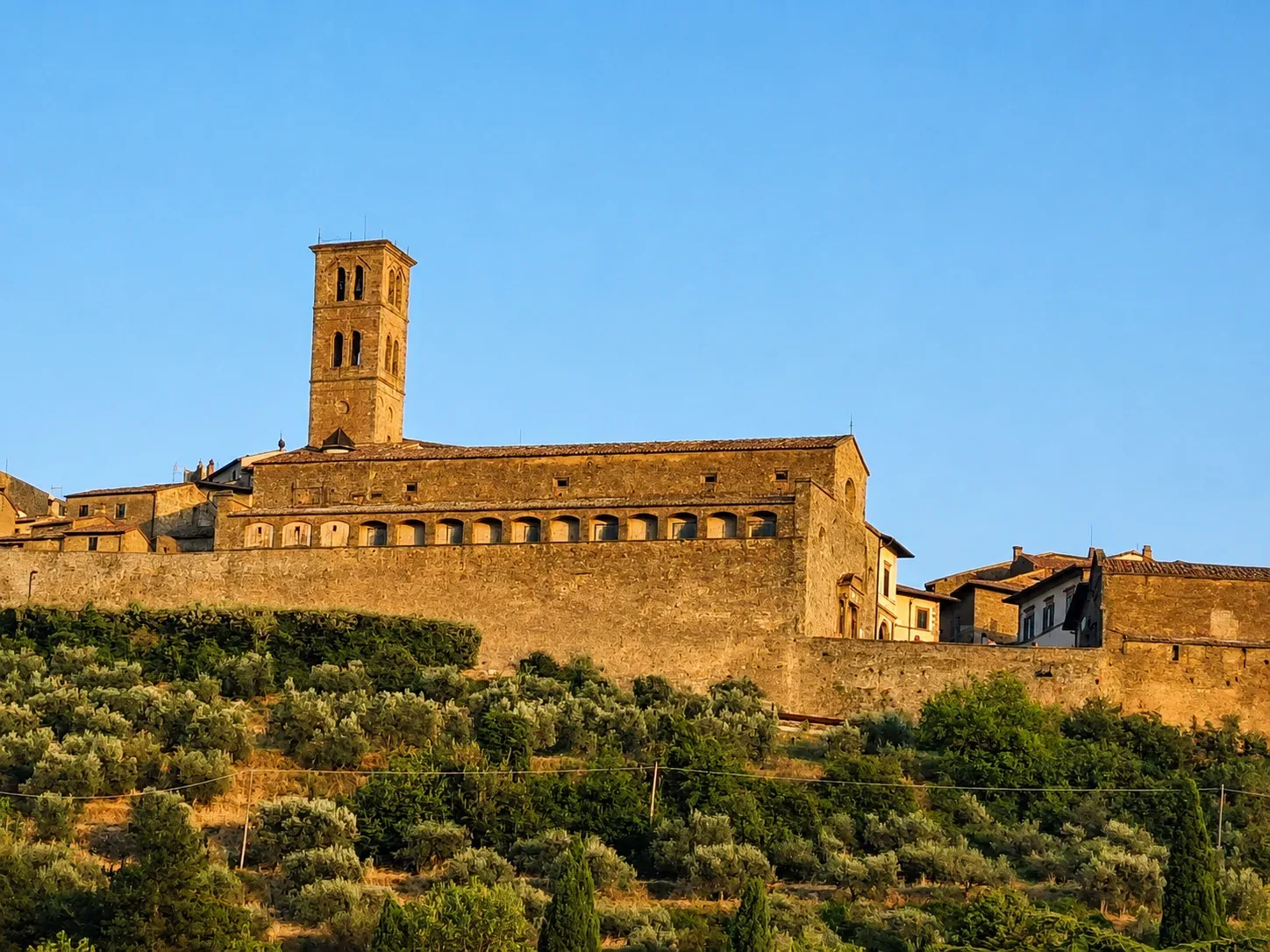
After hosting so many couples and small groups, a bit of first-hand advice beats any amount of generic tips. The first is about timing. The best moment to walk up into the centre is late afternoon, when the light softens over the Valdichiana and the day-trippers have already left. That’s when the streets of the Poggio show their truest quiet.
The second is logistical. Since the centre is almost entirely pedestrian and traffic-restricted 6, you’re better off leaving the car and moving around on foot or by bike. At the Hotel Villa Santa Margherita, e-bike hire lets you reach the surrounding hills and wineries without breaking a sweat, while the on-site parking takes the ZTL off your mind the moment you arrive. At day’s end, the terrace looking out over the Valdichiana is the right place to slow down, in the spirit of Tuscan slow travel.
Last, one tip that’s too often overlooked. Keep the bus numbers and timetables to hand before you head down to Camucia — it saves you waiting around, because the service changes between high and low season 7. Every practical detail you need to set off with an easy mind is here, gathered by the people who tell the story of this place every day.
Fonti
Footnotes
-
Arrivare a Cortona | Come raggiungere … cortonaweb.net ↩ ↩2 ↩3 ↩4 ↩5
-
Cortona — Wikipedia. it.wikipedia.org ↩
-
Cortona - Cosa vedere e come arrivare. toscana.info ↩
-
Come raggiungere Cortona?. cortonamia.com ↩ ↩2
-
Come arrivare a Cortona, Arezzo. casaelena.net ↩
-
Cortona: breve guida per esplorare la città , i musei e info … discovertuscany.com ↩ ↩2 ↩3 ↩4
-
Biglietti - Pagina 2 di 2 - MAEC Cortona | Museo dell’ … cortonamaec.org ↩ ↩2