Guide
Monte Ginezzo E-Bike Loop from Cortona: Views over Tuscany and Umbria
Up on the Ginezzo ridge, your front wheel is still in Tuscany while your eyes have already drifted into Umbria. On one side the Valdichiana lies flat and tidy as a sheet of graph paper. On the other, Lake Trasimeno flashes silver behind the hills. The Monte Ginezzo loop starts by e-bike in the center of Cortona and climbs all the way up here, to a mountain only about 7 kilometers from town1 that feels a world away, thanks to the silence and the clean mountain air. Even with pedal assist the climb will make you work, but it’s well within your reach. You just need to know which stretches you can ride, where to get off and walk, and how to manage the battery so you reach the top with a few bars to spare.
The Monte Ginezzo loop at a glance
| Feature | Details |
|---|---|
| Start and finish | Cortona town center, Hotel Villa Santa Margherita |
| Starting elevation | about 494 m, Cortona’s altitude2 |
| Distance from Cortona to the mountain | about 7 km1 |
| Loop distance and elevation gain | on the GPX track the hotel gives you with your e-bike |
| Surface | tarmac out of town, gravel and forest roads higher up, footpath for the last stretch to the summit |
| E-bike difficulty | moderate, with one long, steady climb and a descent to take slowly |
| Best time to go | spring and fall; in summer, set off early in the morning |
| Viewpoints | Ginezzo ridge, the Portole area, Croce di Sant’Egidio |
| Protection status | Natura 2000 protected area1 |
The Monte Ginezzo loop is an e-bike ride that leaves Cortona, climbs the town’s mountain to a ridge overlooking the Valdichiana and Lake Trasimeno, then drops back into town on gravel and forest roads. Anyone with average fitness can handle it, as long as they walk the few stretches of real footpath and stay off the steeper flank on the way down.
Why Monte Ginezzo is the balcony between Tuscany and Umbria
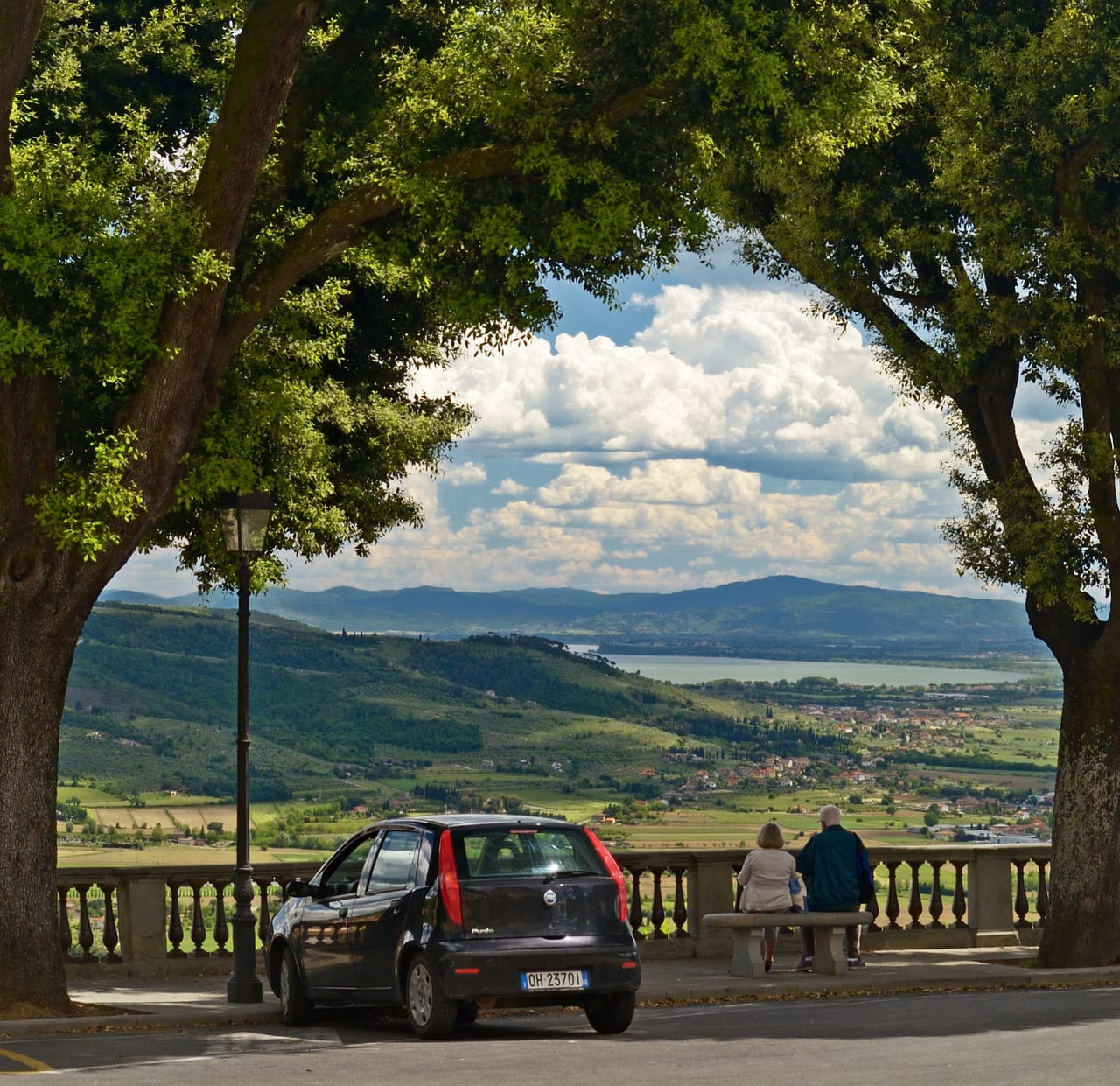
The border between the two regions goes back a long way here. Before it became Etruscan Curtun and then the Roman colony of Cortino, Cortona was an Umbrian town3. On the climb to Ginezzo you cross that double identity in just a few kilometers. Behind you are the town’s Etruscan stones, and ahead is the slope that looks out over the lake.
From the ridge you take in both sides at once. One side falls away toward the Chiana plain, drained long ago and laid out in neat, regular fields. On the other, the woods roll down toward Trasimeno, about 18 kilometers from Cortona1. Stand on the summit and you see right away why these places have always fought over the same horizon.
The light changes everything. In the morning the lake is a pale blade and the Valdichiana sits under a veil of haze. Late in the afternoon the sun sinks behind the plain, the vine rows cast long shadows and Trasimeno darkens to deep blue. If you can only pick one time, go up early, when it’s cooler and the air is at its clearest.
What you can see from the summit
- Lake Trasimeno and its islands to the east, on the Umbrian side.
- The flat, geometric Valdichiana to the west.
- Cortona clinging to its hillside, lower down than you’d expect.
- The Sienese hills and, on clear days after a storm has blown through, the outline of Monte Amiata on the horizon.
The route, step by step from the hotel
From the hotel to the climb
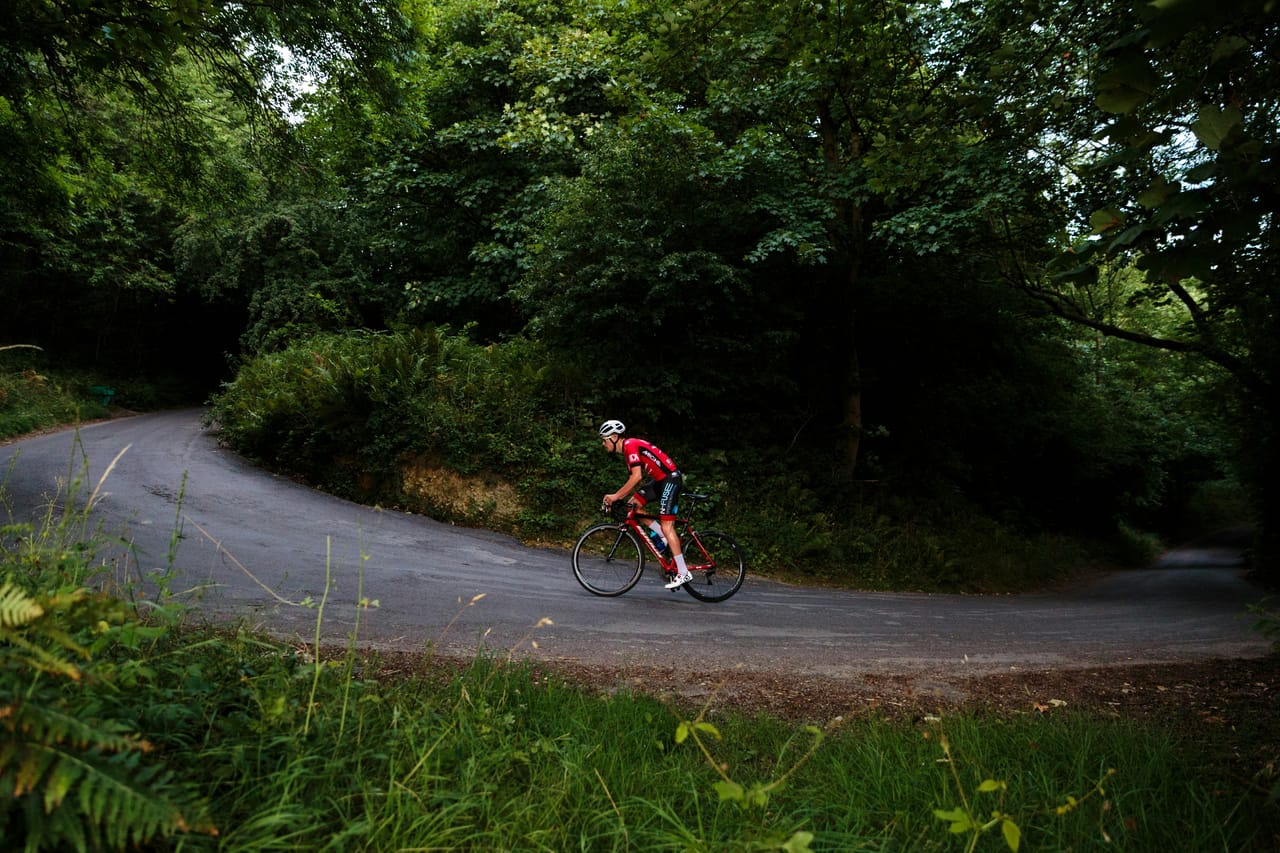
Hotel Villa Santa Margherita, exit gate. Pick up your fully charged e-bike, adjust the saddle and set off on the lowest assist level to warm up your legs on the first switchbacks around the town walls. Within minutes the houses thin out and the olive groves begin. The first real ramp comes early and gives you a feel for how the motor responds. The stretch up to Croce di Sant’Egidio is the heart of the climb. Tarmac gives way to woodland, the gradient stays steady, and every so often a gap in the trees shows the town shrinking below.
On to Portole and the Passo della Cerventosa
Portole. Here the road reaches mountain height and the landscape changes character. Olive trees give way to chestnuts, the air turns cooler and the silence deepens. The surface becomes gravel and forest track, firm in the dry months and trickier after rain. Stay seated in an easy gear and let the motor work smoothly, without sudden bursts. At the Cerventosa you reach the pass that links the two sides of the mountain, and from there the ridge feels close.
Along the Ginezzo ridge
Ginezzo meadows. The woods suddenly open onto pasture and low scrub, and the whole view hits you at once. This is the most beautiful part of the ride, and the most fragile. Where the forest track turns into footpath, lean your bike somewhere it won’t get in anyone’s way, lock it and walk the last few meters. A few minutes on foot is all it takes to enjoy the summit without carving tire tracks into the meadow. Bring a light jacket, because even in late June the wind up on the ridge has a bite.
The descent and the ride home
The turnoff for the return. To get back to Cortona, head down the way you came, following the forest tracks back toward Portole and Croce di Sant’Egidio. The Monte Maestrino side is very steep and rocky. It’s barely rideable going up and downright dangerous coming down on a heavy e-bike, so we’d steer well clear. On the way down, switch the assist off, keep your fingers on the brakes and leave plenty of room between you and the rider ahead. The last stretch of tarmac back to the walls is your cue to relax your shoulders and watch the plain light up in the afternoon sun.
Hiking trails and the rules on where to ride and where to walk
The waymarked hiking trails around Ginezzo are built for people on foot. Before you take one by bike, check the signs and local rules, and if you’re unsure, take the gravel road that runs alongside. Monte Ginezzo is a Natura 2000 protected area, listed in the World Database on Protected Areas under the code WDPA 5555806461. In a landscape this fragile, any new track across a meadow stays visible for a long time.
Six rules for riding on Ginezzo:
- Stick to existing gravel and forest roads, and don’t make up your own shortcuts.
- Never ride across the ridge meadows, not even to get a photo.
- On stretches of hiking trail, get off and push, or leave the bike and carry on walking.
- Always give way to walkers and call out a friendly hello rather than ringing your bell at the last second.
- Keep the noise down, because the wildlife up here spooks easily.
- Bring back down everything you carried up, apple cores and peels included.
How to manage your battery and assist on the climb
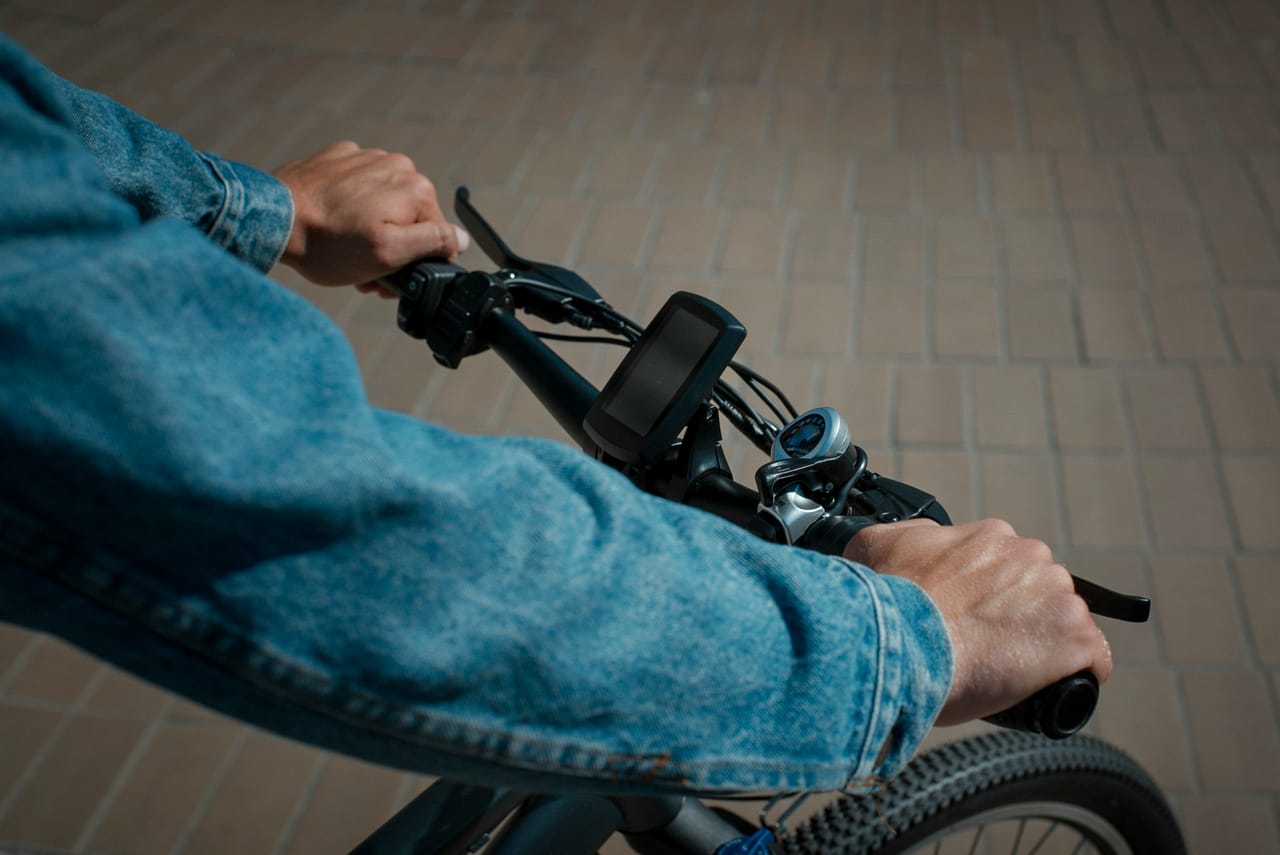
Start on the lowest assist level, turn it up only for the genuinely steep ramps, and drop back down as soon as the gradient eases. Your battery goes much further if you keep a steady cadence in an easy gear. Max assist drains it fast, so save it for the few meters where you’d otherwise grind to a halt.
The classic mistake shows up on the very first switchbacks out of Cortona. First-time e-bikers flick straight into turbo, cruise up to Sant’Egidio without breaking a sweat and arrive on the ridge meadows with the battery light blinking. The mountain doesn’t forgive much, and even the ride home has a few uphill stretches. Check your charge before you set off. Since the way back is almost all downhill, you can afford to use a little extra on the way up, as long as you’re sensible about it.
A few more habits that make a real difference:
- shift early, before you stall halfway up a ramp;
- on gravel, keep your weight slightly back and your cadence steady;
- if the surface turns to footpath or loose rock, get off and push, using the “walk” mode many e-bikes have, which does the hard work of pushing for you.
Climbs like this are exactly where pedal assist comes into its own. It turns a ride meant for trained cyclists into a day out for anyone who gets on a bike now and then.
When to ride Monte Ginezzo
Spring and fall are the best seasons. In April and May the ridge meadows fill with wildflowers and the air is crystal clear after the rain. In October the chestnut woods along the climb change color, the gravel roads dry out and the low sun brings the Valdichiana into sharp focus.
Summer takes a bit more planning. Down on the plain it’s hot by mid-morning, while up top it’s pleasant even in July. Leave at dawn, carry two water bottles and aim to be back before the hottest part of the day. If you’d rather ride in the evening, the sunset route sticks to roads closer to town and gets you back to the hotel as darkness falls. Ginezzo at sunset is stunning, but we’d advise against coming down the forest tracks in fading light.
In winter the mountain can bring mud, ice in shady spots and very short days. Check the forecast the night before and ask at reception what the trails have been like over the past few days.
Set off from the hotel and come back to unwind
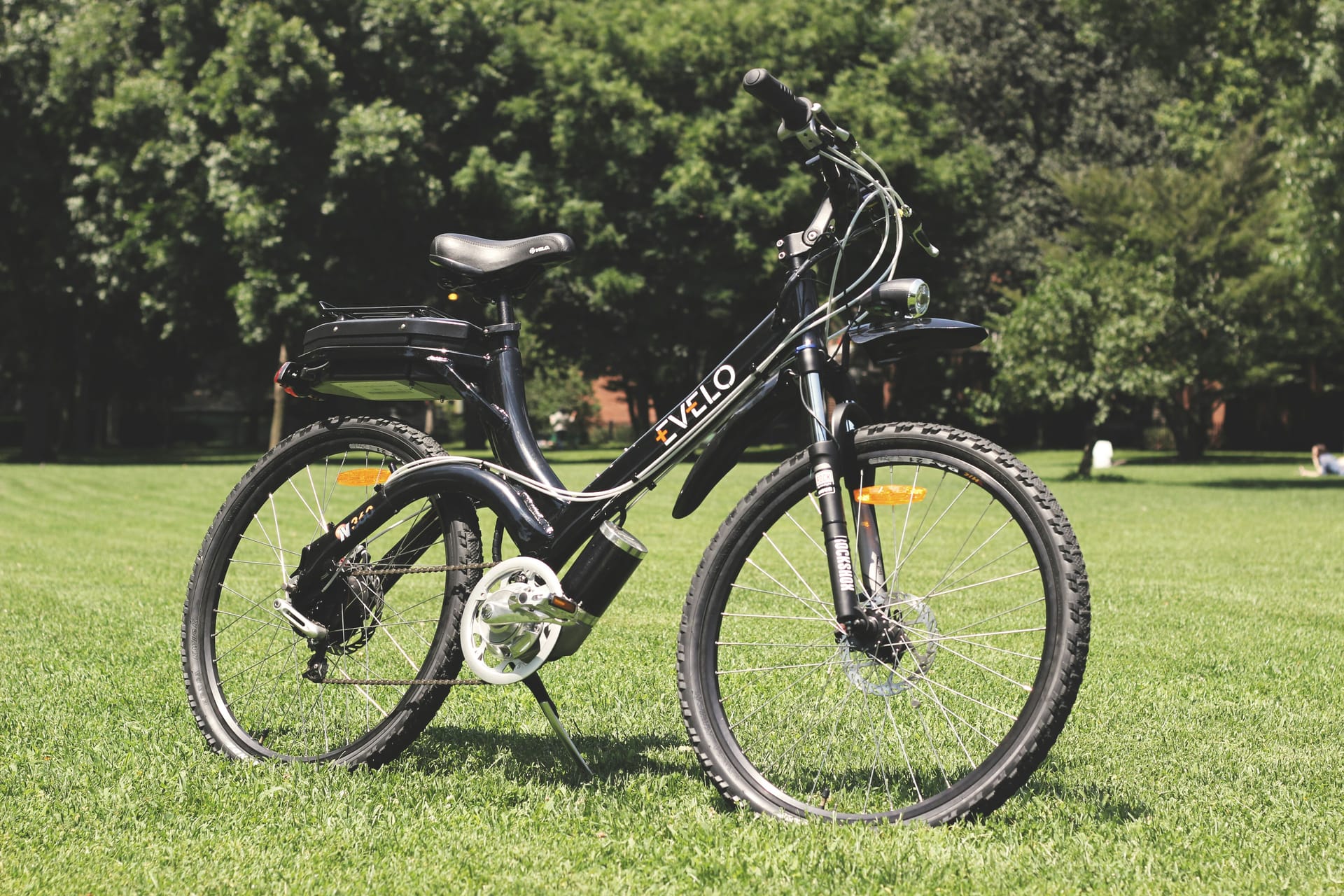
Starting from Cortona changes the whole rhythm of the day. There’s no car to load and no parking to hunt for at the foot of the climb. Your e-bike is waiting at the hotel, charged and set up, and the on-site parking keeps your car out of the way for your entire stay. For models and prices for e-bike rental in Cortona, just ask when you check in.
Back from the ride, the private garden is the perfect spot to stretch your legs in the shade. From the terrace you see the ridge from the other side, with the Valdichiana below you and the mountain at your back. It’s a fitting way to close the loop.
Ginezzo is the toughest of the rides we recommend. If you’re traveling as a couple with different fitness levels, or want to loosen up your legs the day before, the Sentiero della Bonifica runs flat along the Chiana canals, while the ride to Montepulciano combines gentle hills with wine cellars. If you’d rather tackle the mountain with someone who knows every junction, you can book one of the guided bike tours.
In 2022, cycle tourism in Italy accounted for around 33 million overnight stays, 4.3% of the national total4. Behind those numbers are people who, like you, discovered how different a place feels when you cross it at the pace of a pedal stroke. On Ginezzo it hits you at the first meadow, when you switch off the motor and all you can hear is the wind.
Sources
Footnotes
-
Cortona — dati (Wikidata). wikidata.org ↩
-
Cortona — Pleiades (storia antica). pleiades.stoa.org ↩
-
3° RAPPORTO SUL CICLOTURISMO ISNART - LEGAMBIENTE. osservatorioturismoveneto.it ↩