Guide
Pici all'Aglione: Cortona's Hand-Rolled Pasta, History & Recipe
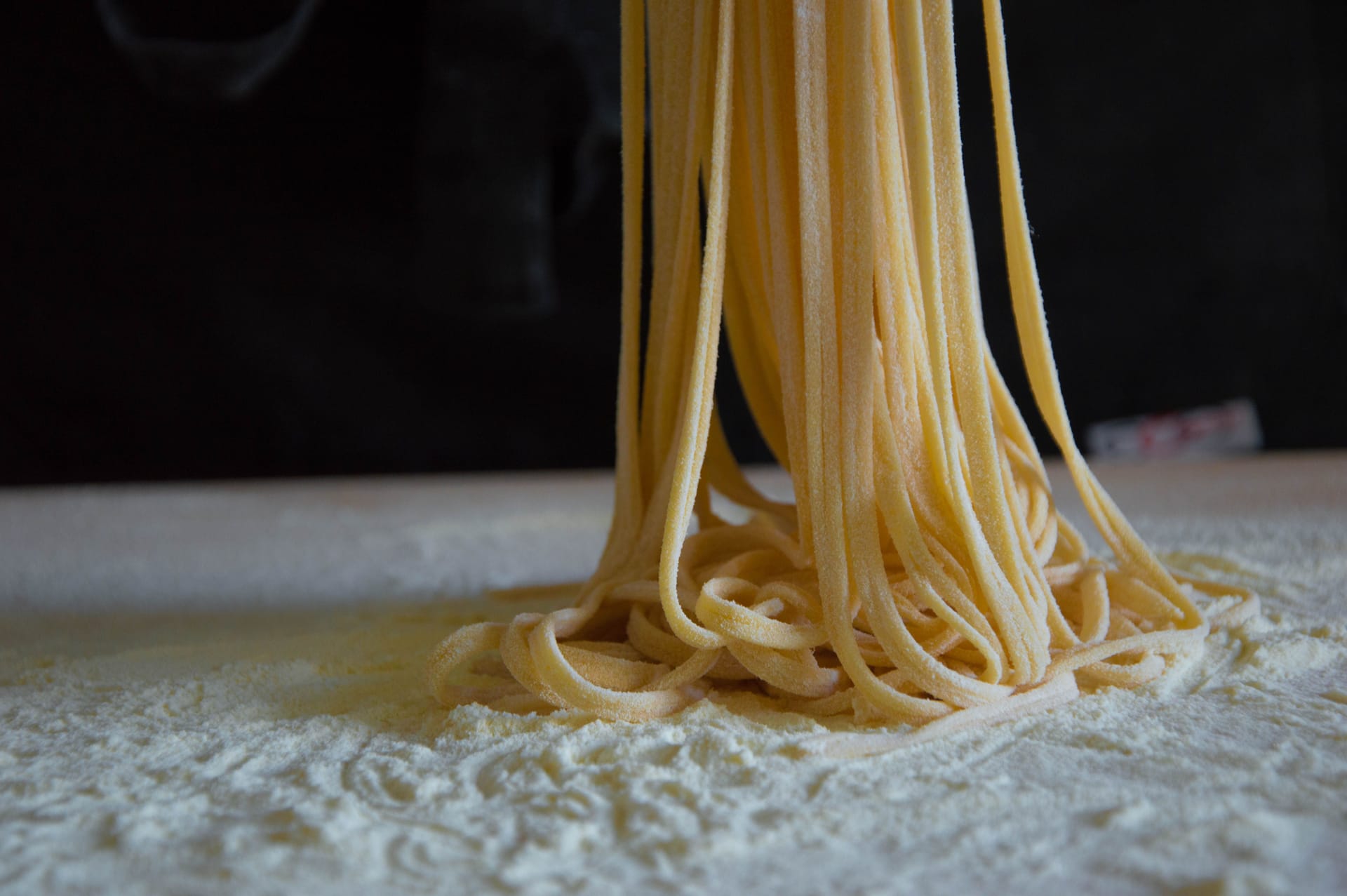
A bulb that can tip the scales at 800 grams, roughly the size of your fist, that on the plate smells of garlic without actually being garlic. Sit down in a trattoria in the Valdichiana, order pici all’aglione, and what lands in front of you is a fat, hand-rolled spaghetto wrapped in a sweet tomato cream where the aglione has slowly melted away. In Cortona and across the valley, this is the dish that tells the story of farmhouse cooking better than any other, and making it at home takes less effort than you’d think. The dough has two ingredients; the sauce, four.
Before we get to the recipe, it helps to understand why this dish was born here, and why aglione, its star ingredient, throws people the first time they meet it.
Aglione, a giant garlic with a sweet streak
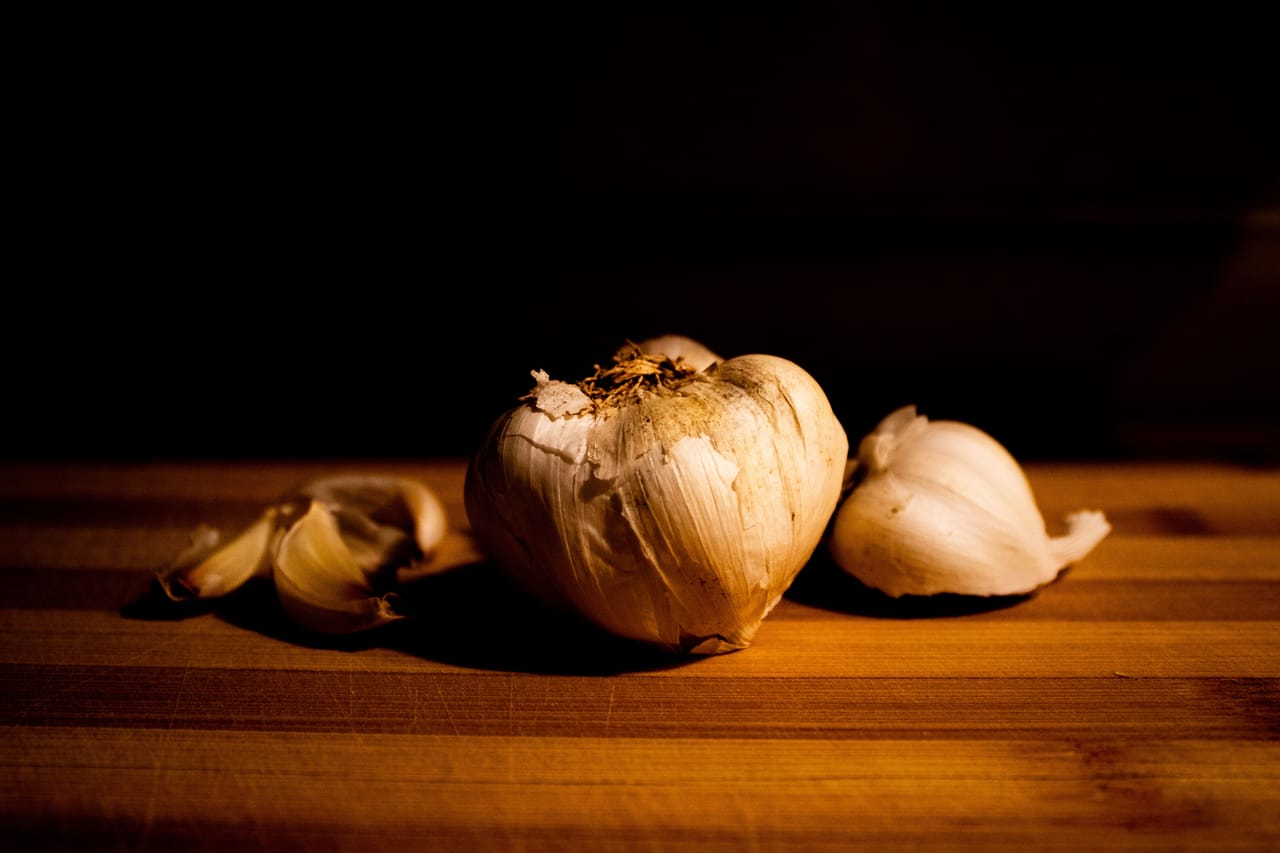
On the cutting board, aglione looks like a head of garlic that grew up oversized. It contains no alliin, the compound that weighs down your breath and lingers long after a garlicky meal 1.
The bulb is white edging toward ivory, almost spherical with a slight flattening at the poles, and inside it usually holds six large, cleanly separated cloves. A single clove weighs as much as a whole head of ordinary garlic. The flavour is gentle and sweet, a world away from the bite of the garlic you toss into a soffritto 1.
The differences that matter at the market, or in front of a menu:
| Ordinary garlic | Valdichiana aglione | |
|---|---|---|
| Bulb weight | a few dozen grams | up to 800 g |
| Cloves | many and small | around 6, large and separated |
| Alliin | present | absent |
| Flavour | pungent | sweet and gentle |
On digestibility, it pays to be cautious. Tradition calls it lighter on the stomach, and the absence of alliin explains why it leaves no trace on your breath, though it remains a condiment and nothing more. What is certain is that it changes everything in the kitchen, because you can use plenty of it without smothering everything else.
Pici, the poor man’s pasta of the Tuscan countryside
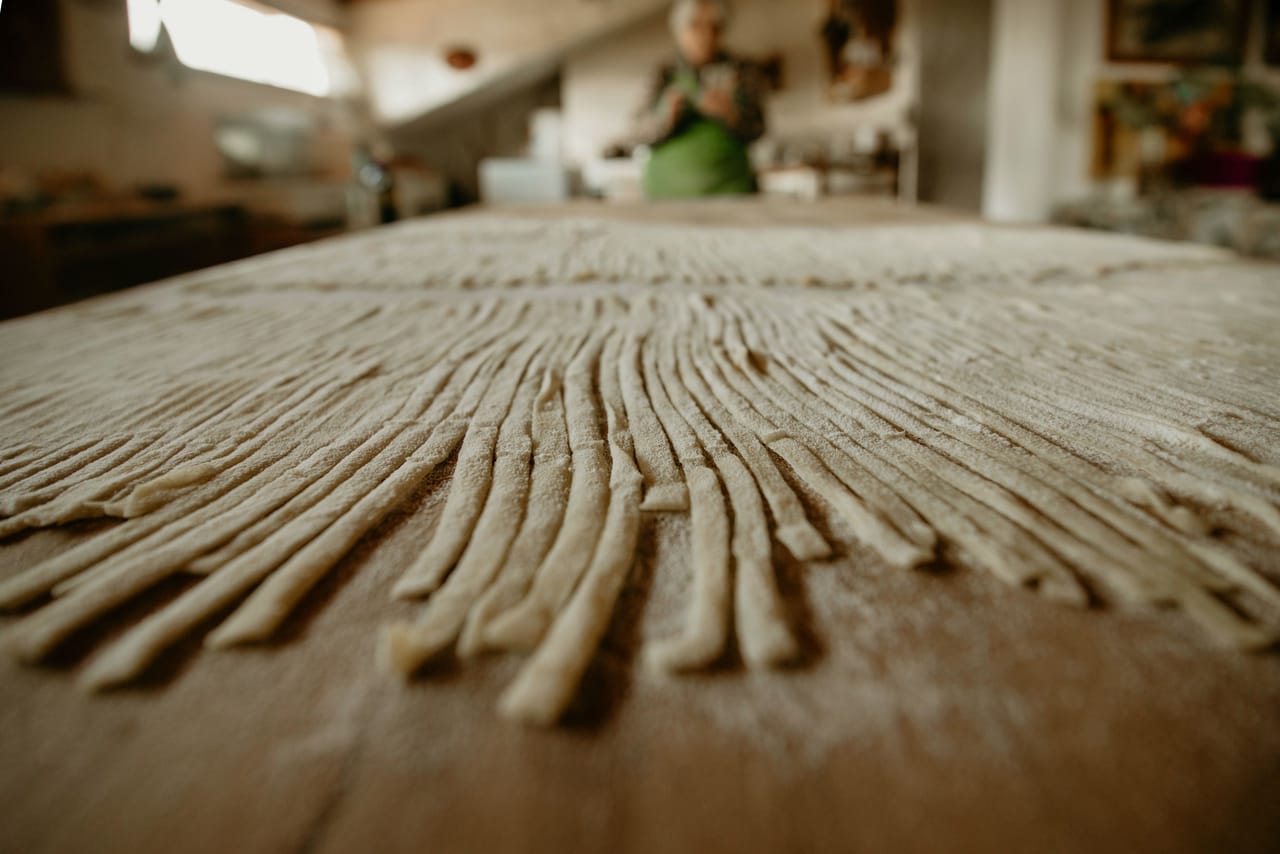
The traditional picio is made from soft wheat, just flour and water, no egg 2. It began as farmers’ food, made from whatever was in the pantry, and that plainness is exactly its strength. The dough is rolled by hand into one long, uneven spaghetto 2.
This pasta has ancient roots, reaching back into Etruscan civilisation. The earliest evidence dates to the fifth century BC and appears on the Tomb of the Leopards at Tarquinia, a funerary monument 3.
Its humble nature explains why pici take to the most varied dressings, from ragù to rabbit-liver sauce to plain breadcrumbs. The one that suits them best, no argument, is aglione 3. If you’re trying your hand at handmade pasta in Tuscany, this is the shape to start with, because it needs no pasta machine and no eggs, just a little patience in the palms of your hands.
The dish that stands for Cortona
The bond between this dish and the land is a concrete one. Valdichiana aglione is a rare product, so rare that the Slow Food Foundation has placed it in the Ark of Taste. Today fewer than ten growers remain on the reclaimed flatlands of the valley, with current output hovering around two thousand bulbs, most of it grown for the growers’ own tables. The industrialisation of the 1960s all but killed off the habit of raising it at home, and with it the habit of bringing it into the kitchen 1.
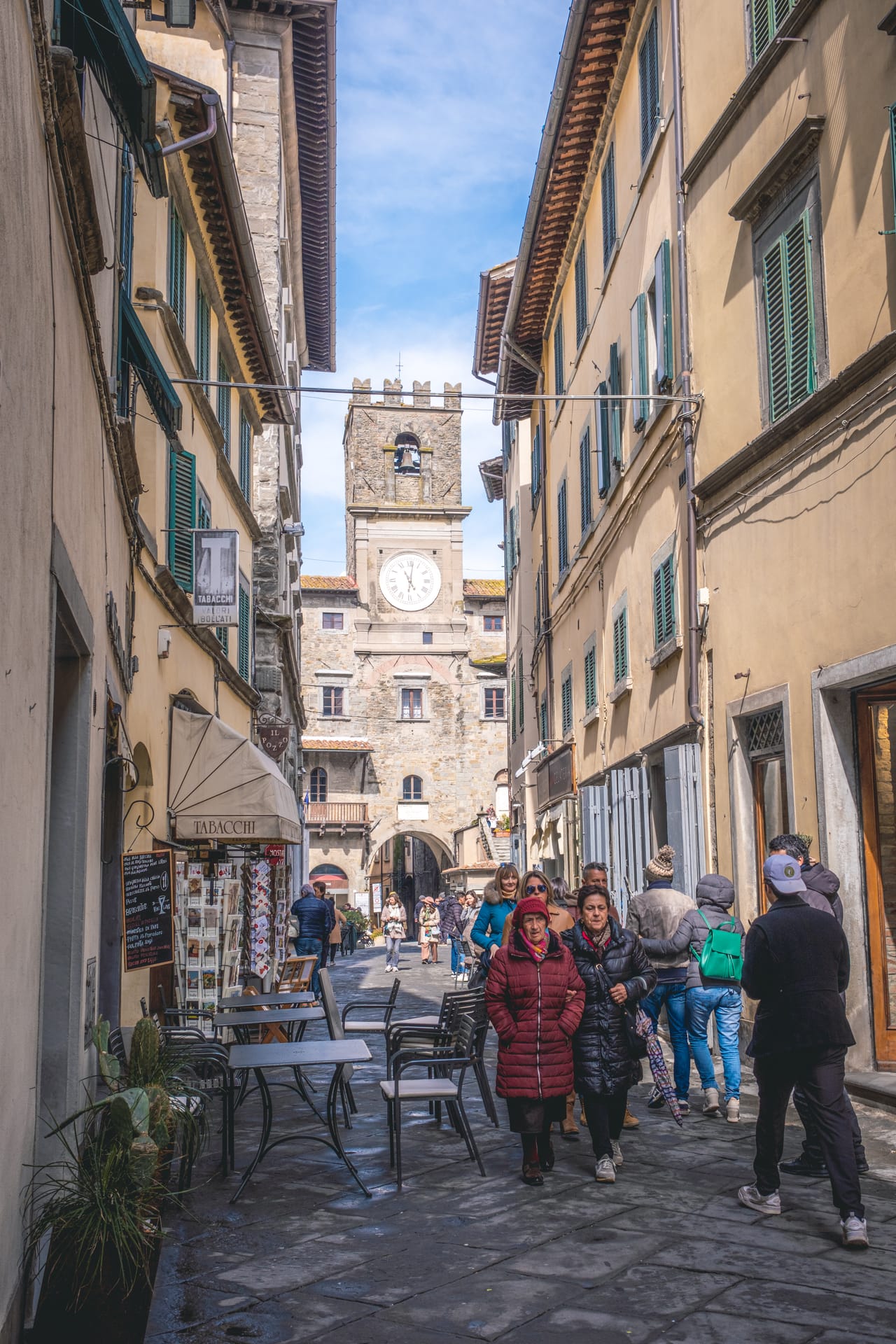
Cortona sits inside this valley, and the production rulebook for Aglione della Valdichiana puts it in writing, naming aglione the lead in pici all’aglione, “by now the signature dish of the production area” 4. Ordering it here, in short, is simply the right thing to do, far more than a nod to the tourists. The story of aglione, after all, runs back to the Etruscans who lived on this land, the same people who left Cortona its tombs and its treasures. There’s even a faint trail out to the Isola del Giglio, where in 1544 the pirate Barbarossa sacked the town and carried off more than seven hundred inhabitants; the Medici later repopulated the island with families from the Valdichiana, who brought aglione cloves among their belongings 1.
Among the classic first courses of the Cortona area, pici all’aglione hold a place of their own. If you want to widen your view of the Cortonese table there’s the Chianina steak and, to finish, cantucci with Vin Santo, but the picio remains the starting point.
How to make pici all’aglione at home
There’s only one secret: the aglione must cook slowly, never taking on colour, until it dissolves into a sweet cream. Scorch it and it turns bitter, and you’ve lost everything. Beyond that it’s an honest recipe for pici all’aglione, four servings, with timings anyone can manage 2.
Ingredients for 4
For the pici:
- 400 g plain (00) flour
- 200 g lukewarm water
- a pinch of salt
For the sauce:
- 100 g cleaned aglione (about one clove per person)
- 50 g extra virgin olive oil
- 750 g passata (tomato purée)
- 80 g white wine
- salt
Method
- Knead the flour, water and salt until the dough is smooth. Shape it into a ball and let it rest for half an hour under an upturned bowl. Don’t skip the rest, because it relaxes the gluten and the pici stretch out without springing back 2.
- Roll the dough to about 2 mm, cut it into strips and roll them under your hands, from the centre out to the ends, into ropes 3 or 4 mm thick. This is where hand-pulled pasta takes on its uneven, never-to-be-repeated shape.
- In a pan, warm the oil and add the thinly sliced aglione. Keep it over a gentle heat for around ten minutes, stirring, until it turns into a pale cream. Deglaze with the white wine and let it cook off.
- Pour in the passata, season with salt and cook over a low heat for 20 to 30 minutes, until the sauce thickens and takes on a deep red.
- Cook the pici in plenty of salted water. They bob back to the surface almost at once; from the moment the water returns to the boil, count about 4 minutes, then taste. They should be cooked through but still firm 2.
- Drain them, saving a cup of the cooking water, tip them into the pan with the sauce and let them take on flavour for a few seconds. If the sauce tightens up, loosen it with a splash of cooking water so it coats the picio without drying it out. Serve piping hot.
The sauce can be made ahead and kept in the fridge, ready to pull out when you make the pasta. A serving comes in at around 600 kcal, to give you a sense of things at the table 5.
How to spot a good plate in a trattoria
When you order it out, two details tell you straight away whether it’s been done properly. The first is the pasta, which should be hand-pulled, so uneven, with the odd thicker strand and the odd thinner tip, never the flawless uniformity of an industrial die. The second is the aglione, which in a proper plate you won’t see in pieces and won’t find browned, because it has melted into the tomato cream. If you catch a sharp soffritto or spot golden slivers, the aglione has been treated like ordinary garlic, and the result is a different thing altogether.
To go with them, the valley often pours a local red like Cortona Syrah, while in the sauce the touch that makes the difference is a good extra virgin olive oil from the area, added with a generous hand.
Approfondimenti
Fonti
Footnotes
-
Aglione della Chiana - Arca del Gusto. fondazioneslowfood.com ↩ ↩2 ↩3 ↩4
-
Pici all’aglione: la ricetta originale toscana. soniaperonaci.it ↩ ↩2 ↩3 ↩4 ↩5
-
Pici all’aglione. terredisiena.it ↩ ↩2
-
Disciplinare di Produzione “Aglione della Valdichiana” IGP. masaf.gov.it ↩
-
Ricetta Pici all’aglione. ricette.giallozafferano.it ↩