Guide
Spiritual Places in Cortona: Hermitages, Silence & the Soul
There’s an hour in Cortona when the light slants low across the stone rooftops and the Valdichiana below stops shimmering and starts to glow pink. That’s when the silence settles, like gold dust drifting over the lanes. Most people who climb all the way up here looking for the spiritual side of Cortona don’t yet realise it’s exactly this they’re after: not another monument to tick off, but a state of mind to get back. This is a map for the soul, written for anyone who wants to step away from the crowds and walk slowly. You won’t find a fact sheet on every church here, because each place of the spirit has its own dedicated page, and we’ll walk you to it. What you’ll find here is the why it moves you, the thread that ties hermitages, cloisters and viewpoints together, and the simplest way to take them in without hurrying.
Why Cortona is a city of silence
Cortona counts as a place of silence for solid reasons, not for the sake of a tagline. It’s a hill town, perched halfway up Monte Sant’Egidio, its old core looking out over the plain from around 600 metres with views in every direction 1. Its average elevation tops 490 metres 2, and that position keeps it well clear of the big through-roads, so the noise of the valley floor never climbs this far. The narrow lanes, the flights of steps and the tight, packed Etruscan-medieval stone soak up the sound and hand back nothing but the echo of your own footsteps.
Then there’s the gentle lie of the land. Protected wild areas ring the town within easy reach, from Monte Ginezzo about 7 kilometres out to the woods of Ferretto and Bagnolo at 13 3, a green crown that absorbs, screens and calms. Cortona is an ancient place by nature, after all, born Umbrian and grown up under Etruscan sway until it took the name “Curtun” 4, and you feel that layering of centuries as a kind of settled stillness. The silence, in short, isn’t an atmosphere the town promises you. It’s a plain fact of the place.
The Franciscan soul that binds every stone
To make sense of Cortona’s spiritual life, follow a single thread, and that thread is Franciscan. Two figures hold its ends. Saint Francis left a deep mark here, still kept alive in the quiet of his places (we go into it on the page devoted to the church of San Francesco in Cortona). And then there’s her: Margaret of Cortona, the saint who made this town the stage for her own conversion.
Hers is one of the most intense human and spiritual stories in medieval Franciscanism, handed down through the Legenda set down by Fra Giunta Bevegnati, a text that traces her inner journey from sin to union with God 5. Margaret is a radiant expression of that female spirituality for which medieval central Italy was such fertile ground, “in the sunlit climate of Franciscanism” 5, and she was born a few years before other great mystics of her age 5. She left no writings of her own, yet her presence still runs right through the town. You’ll find the full telling of her story and her sanctuary on the Basilica di Santa Margherita page. Here it’s enough to know that it’s from this twin breath, Franciscan and Margaritan, that Cortona’s spiritual places spring, not isolated dots on a map but chapters in one continuous story of the soul.
Cortona’s places of the soul, a map by mood
The lovely thing about these places of the soul is that each one answers a different need. You don’t have to see them all. You just have to know what you’re after, and let the right place come to meet you. Here’s a small map by mood, with a pointer to the page that tells each spot in full.
Le Celle Hermitage, for deep stillness
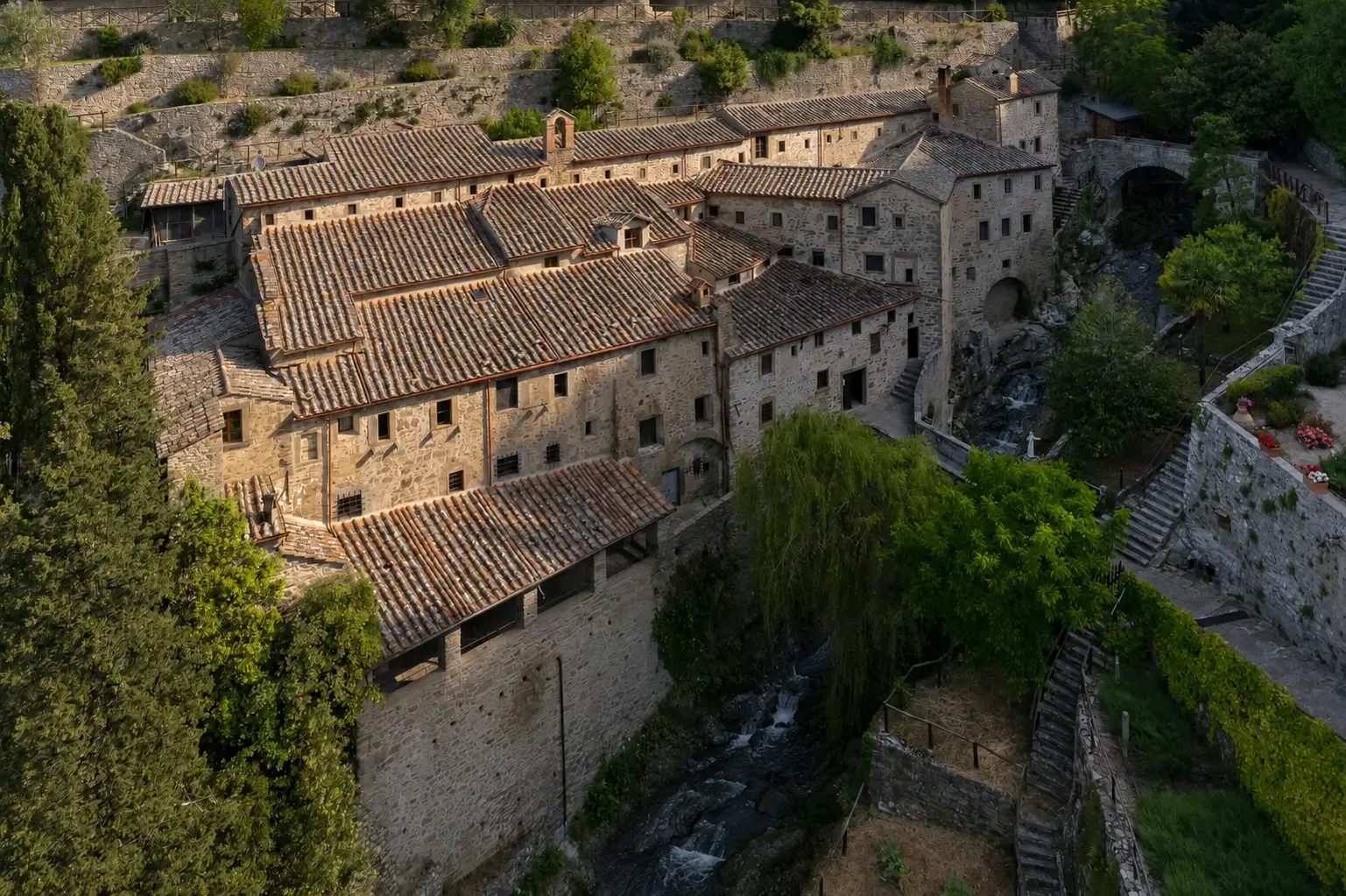
If you want silence in its purest form, climb to Le Celle. It’s a Franciscan hermitage set into the rock, with a stream running through it, where retreats and days of spiritual exercises are still held “in silence, reflection and prayer” 6. Groups come up on purpose to stay a few days, like the Exercises held there in October on the theme of prayer 7. It’s the place of retreat, plain and simple. Read how it’s laid out and how to get there on the Le Celle Hermitage page.
The Basilica of Santa Margherita, where wonder turns to prayer
At the top of the town, just below the fortress, the basilica holds the saint’s remains and takes in the whole of the Valdichiana at a glance. Here the awe of the view and the sense of the sacred are one and the same. It’s where Margaret’s story takes on flesh. Find out why on the Basilica di Santa Margherita page.
The Calcinaio Sanctuary, for harmony and light
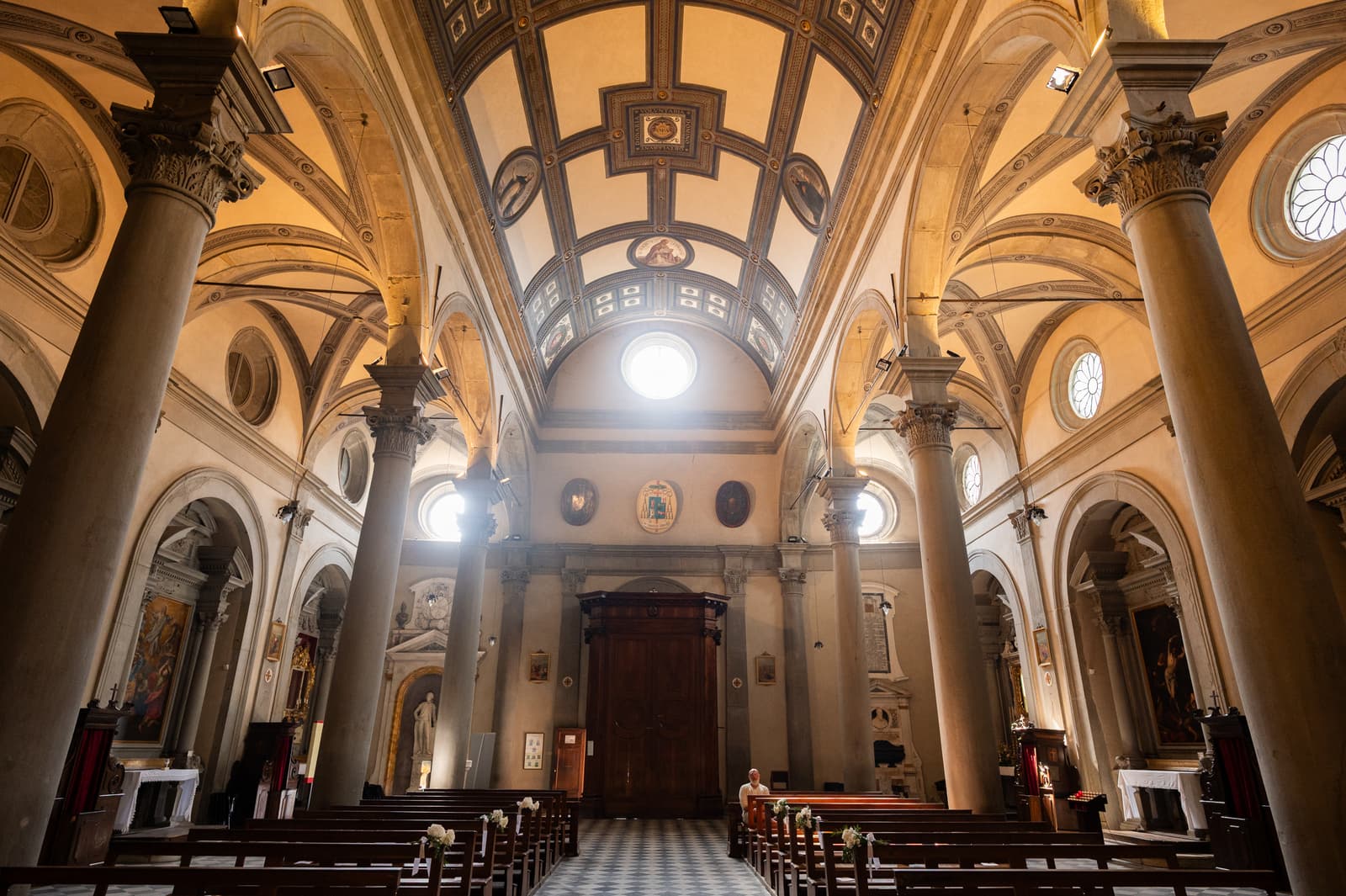
Just outside the walls, the Calcinaio Sanctuary is an exercise in Renaissance balance, all proportion and light. It doesn’t move you by piling things on, but by measure. It’s the place to choose when you need a little inner order. We tell its story on the Calcinaio Sanctuary page.
Hidden convents and oratories, for the silence of cloisters
There’s a lesser, hidden Cortona of shadowed cloisters and small oratories that almost nobody knows. The Clarian tradition, alive in the town’s Poor Clare monastery, reminds us that “enclosure is the shutting-out of everything foreign, a closing off of the world and its noise, never a shutting of oneself away” 8, and that “the cell and silence are the inner places of prayer” 9. That’s the spirit you breathe as you step through these courtyards. Go looking for them on the pages about Cortona’s convents and cloisters and its hidden oratories.
The silent viewpoints, for panoramas that leave you speechless
And then there are the spots where you stop to look and simply run out of words. Climbing to the Parterre or the ramparts in the golden hour means letting the landscape do the work for you, and your breathing slows on its own. It’s no accident that from here the eye reaches all the way to distant holy places, in a spiritual geography that holds together the Val d’Orcia some forty kilometres off and Assisi with the basilica of San Francesco just over fifty 10.
How (not) to fill your day, and live the silence slow
The commonest mistake is to treat Cortona like a to-do list. But here slow travel isn’t a way of visiting, it’s the spiritual practice itself. Taking the town at a walking pace is already the journey of the soul.
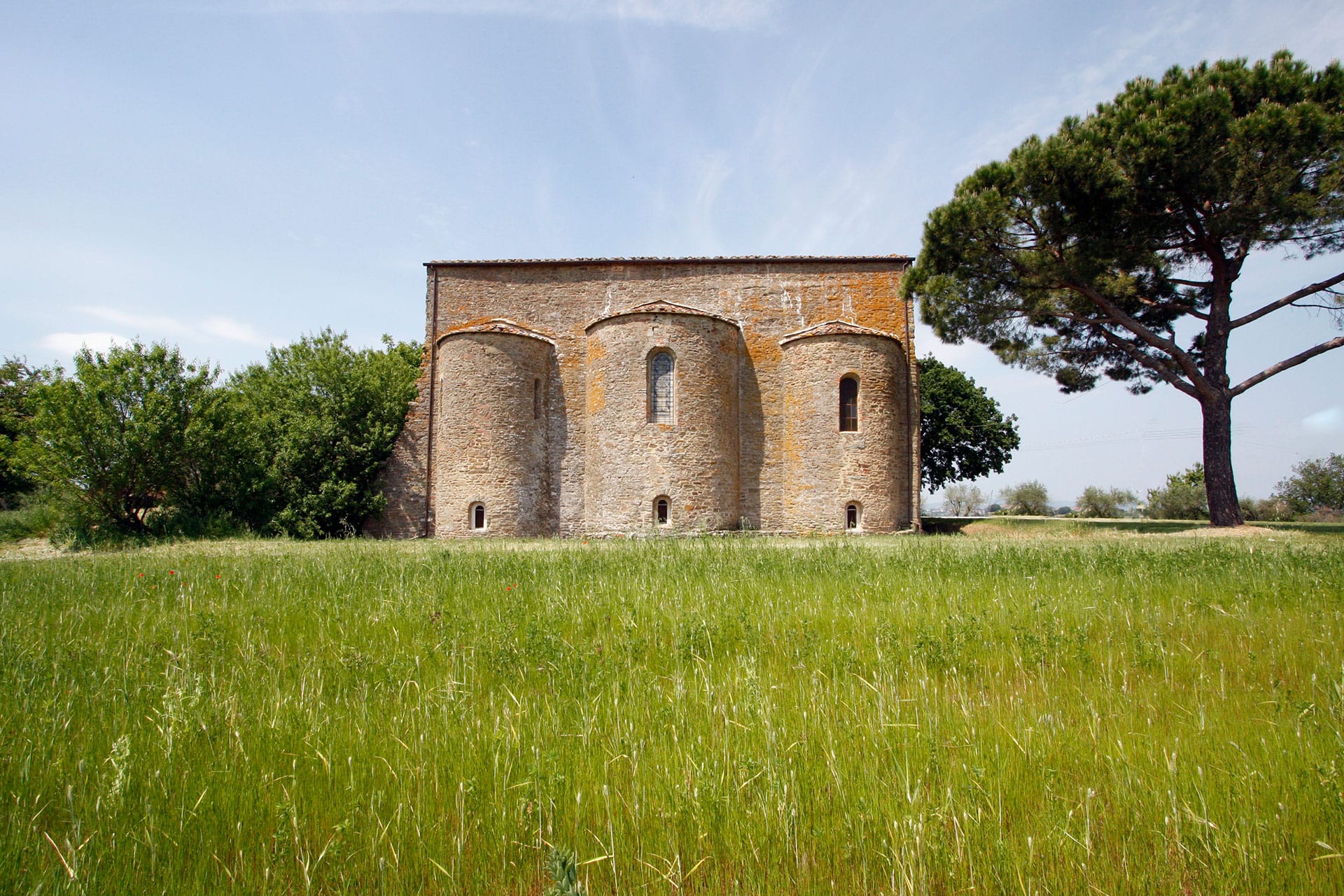
In practice that means a handful of simple choices. Leave the car and go on foot, because the old town is small and meant to be measured in steps, not engine revs. Pick the quiet hours, early morning and late afternoon, when the tour groups are elsewhere and the lanes go back to the people who live in them. Plan a single proper stop a day, not five, and give yourself the time to sit on a flight of steps doing nothing at all. If you’d rather have a route already mapped out, stop by stop, follow the pages on the itineraries of the spirit and the walking trails between the sacred places; and if the town’s Franciscan thread draws you in, start from Margaret’s story on the Basilica di Santa Margherita page or from the ancient Abbey of Farneta, out in the countryside down in the valley.
Silence, here, isn’t something you win. It’s something you welcome. All you have to do is stop rushing.
A quiet base for your Cortona retreat
To really live Cortona’s stillness, a great deal comes down to where you lay your head at night. Hotel Villa Santa Margherita is a family-run place a short walk from the old town, made for anyone after real rest, with generous private green space, a terrace looking out over the Valdichiana and its own car park so you can set the car down and carry on by foot, with no more engine noise. It’s the same logic as the town’s places of the soul, brought inside the hotel. After a slow day among hermitages and cloisters, this is where you find again the silence you went looking for outside, and the calm you need to let it settle.
Fonti
Footnotes
-
Cortona — Wikivoyage. en.wikivoyage.org ↩
-
Cortona — dati (Wikidata). wikidata.org ↩
-
Aree protette vicino a Cortona. wikidata.org ↩
-
Cortona — Pleiades (storia antica). pleiades.stoa.org ↩
-
roberto fusco. fraticappuccini.it ↩ ↩2 ↩3
-
I Vescovi ci parlano… fraticappuccini.it ↩
-
SemplicementeGrazie!. fraticappuccini.it ↩
-
Festa di S. Chiara - L’omelia dell’Arcivescovo alle Clarisse … diocesi.arezzo.it ↩
-
Festa di Santa Chiara 2021. diocesi.arezzo.it ↩
-
Patrimoni UNESCO vicino a Cortona. whc.unesco.org ↩