Guide
Under the Tuscan Sun: The Real Cortona Film Locations
There’s a Tuscan dream that began on the page and then turned into an image. It belongs to Frances Mayes, who in 1996 wrote a memoir about buying an abandoned villa in the countryside near Cortona, wanting to restore it and rebuild a life for herself 1. Seven years later that autobiography became “Under the Tuscan Sun,” Audrey Wells’ 2003 film starring Diane Lane 2. Ever since, thousands of travelers have shown up here looking for the streets, the squares, and the views from that story. This guide is your map for finding and visiting the real film locations in and around Cortona, sorting out where Villa Bramasole and Villa Laura actually are, and getting between them on foot. Think of it as the front door to a series of deeper dives into each individual stop.
Why one movie put Cortona on the world map
Cortona became world-famous because of “Under the Tuscan Sun”: Frances Mayes’ 1996 bestselling memoir about restoring a villa here, and Audrey Wells’ 2003 film adaptation starring Diane Lane 3. The movie’s fresh-start story, set among Cortona’s walls and olive groves, handed audiences everywhere the particular mood of this corner of Tuscany 2.
The town was hardly unknown before: an art town with a thousand years behind it, one of the twelve cities of the Etruscan League, set on a hillside roughly 600 meters up with views in every direction 4. But it was the book that made it famous far beyond Italy, and the film that turned that fame global 3.
In the film the lead character, a San Francisco writer unmoored by a divorce, decides to start over and buys an abandoned villa, won over by the Tuscan countryside 2. That fresh-start story is what made viewers fall for the place. For anyone who wants to really understand that pull, we’ve written a closer look at why Cortona captured the world.
Villa Bramasole and Villa Laura: the real house and the film set
Here’s the distinction almost no one spells out clearly, and it’s the first thing to know before you go hunting for the house from the movie.
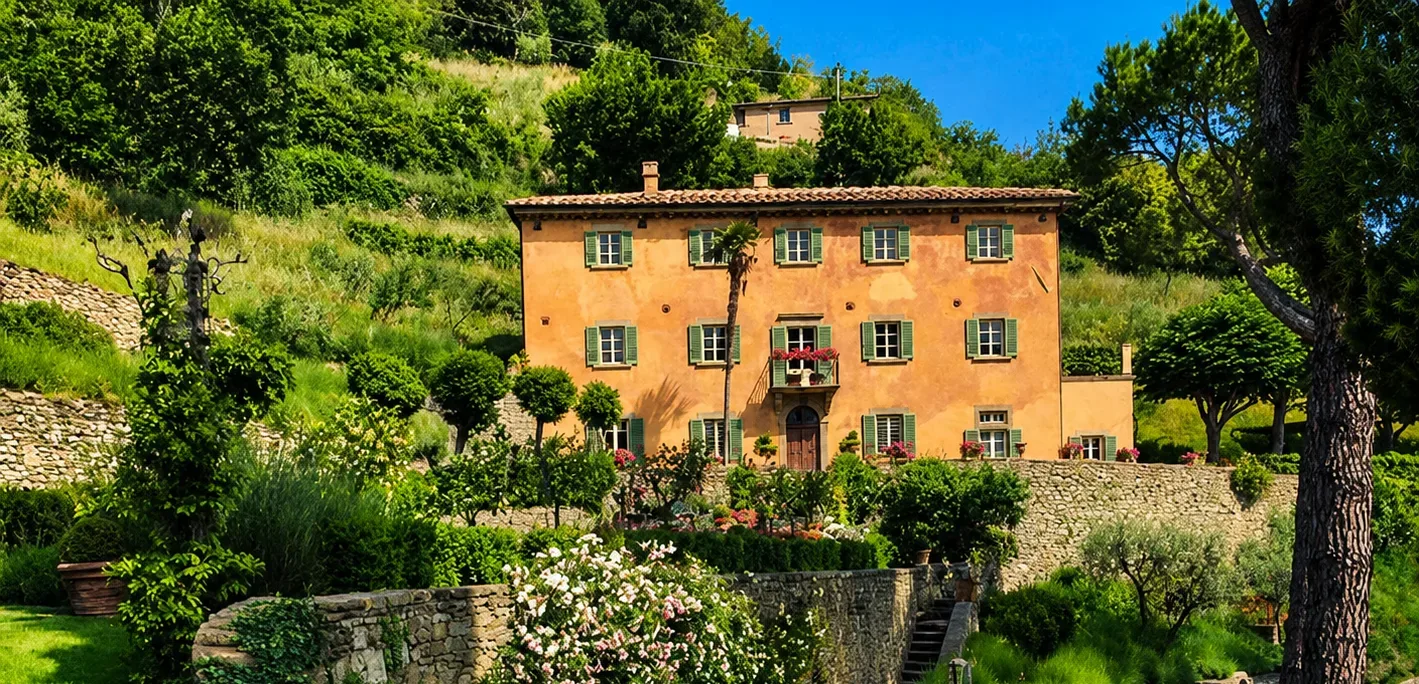
Villa Bramasole is the home Frances Mayes actually bought. In the film the heroine buys a villa named Bramasole in Cortona 2, and in real life the author lives in Cortona and has described, in her own words, restoring that house and its garden 5. The real Bramasole is still there, and you can only admire it from the outside, along a walking route that starts from the Giardini del Parterre 6.
Villa Laura, on the other hand, is where the film was actually shot. The production picked this house because the real Bramasole had already been renovated, and the story needed a place still waiting to be restored 6. That’s why so many visitors get confused: the “Bramasole” you see on screen isn’t Frances Mayes’ real home.
You’ll find the full story of both in the pages devoted to Villa Bramasole and to Villa Laura, the film set.
Bramasole vs Villa Laura in 30 seconds Bramasole is the house Frances Mayes really bought, visible from the outside along the walk from the Parterre 6. Villa Laura is the home used for filming, chosen because the script called for a house still in need of renovation 6. Same dream, two different places.
The locations in Cortona’s old town
The film’s urban heart sits within a few steps, all walkable along the climbing lanes of the old town. Here are the main stops.
-
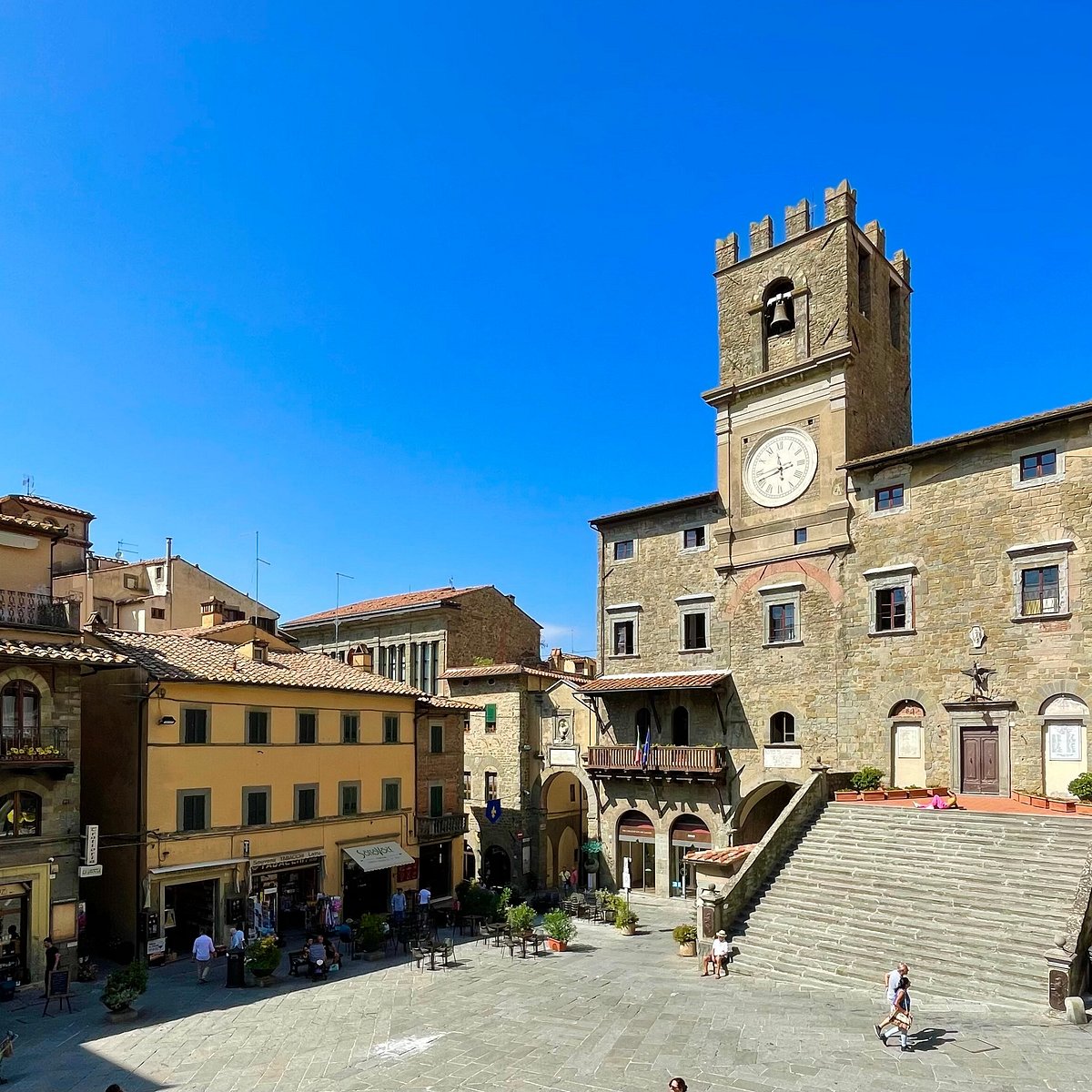
Piazza della Repubblica, the market scene. The crew filled the square to recreate Cortona’s lively market, and right above it, during those scenes, you can spot the Palazzo Comunale, a 12th-century building 6. Read more about the scene on our page about Piazza della Repubblica in the film.
-
Piazza Signorelli and the Teatro Signorelli. Piazza Signorelli was chosen for its storybook beauty, and here’s a fun detail: the fountain you see in the scene was built specifically by the production, because in reality it isn’t there 6. The Teatro Signorelli, meanwhile, shows up in the movie-date scene with the character Pawel 7. All the details on the Teatro Signorelli on the big screen.
-
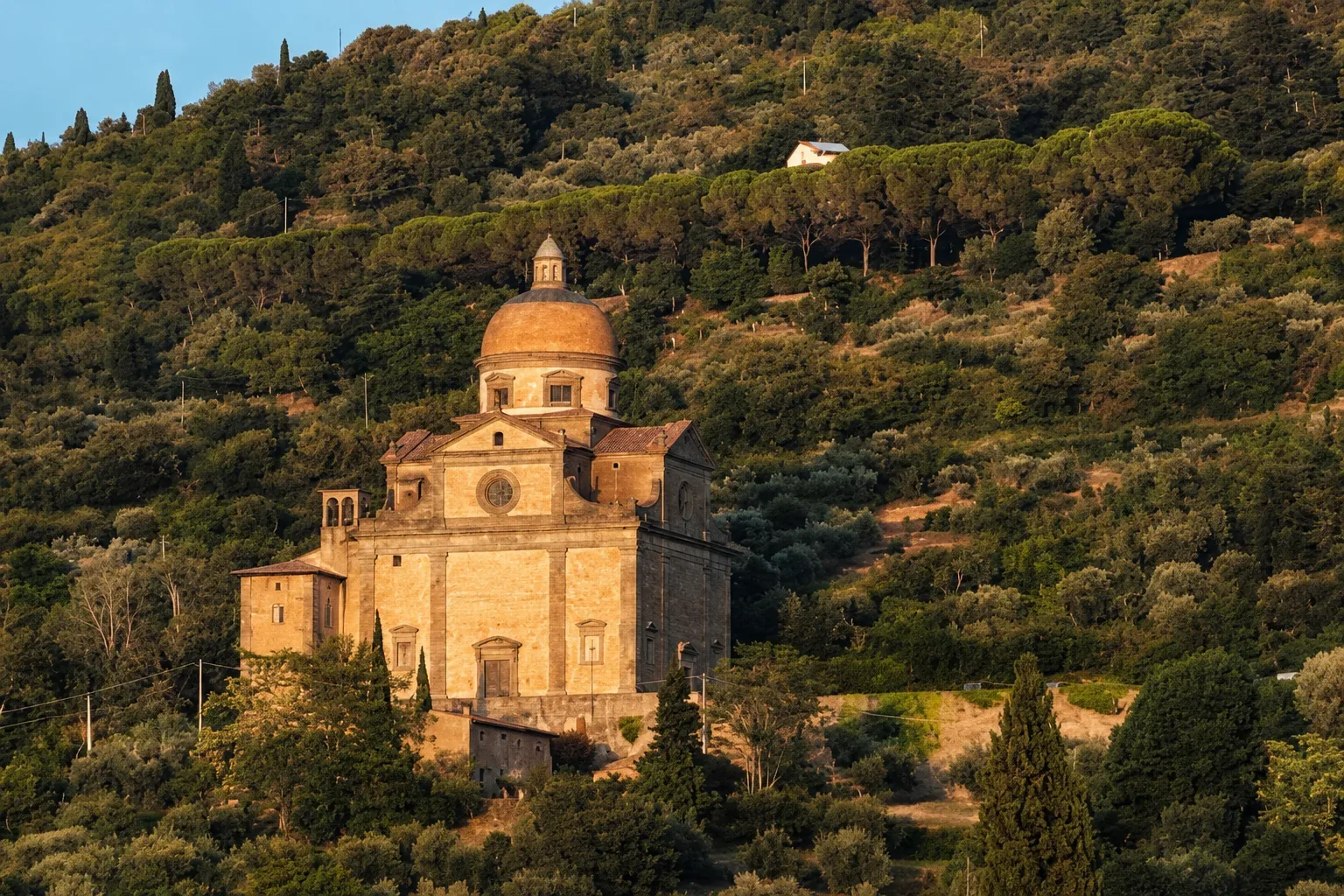
The wedding church (Santa Maria Nuova), one of the stops readers of the book love most. We tell its story on the page dedicated to the wedding church in the film.
For the full map of every urban setting, with a walking sequence to follow, head to the overview of the film locations in the old town.
The film’s locations beyond Cortona
Cortona was the main location, but not the only one. Filming also took place in Florence, Montepulciano, Positano on the Amalfi Coast, Rome, and Umbria, plus the Cinecittà studios for interiors 7. It mirrors the journey the heroine makes, from Cortona all the way south, along the arc of her own renewal. You’ll find these outside settings laid out on the page about the film’s locations beyond Cortona.
The walking route in Frances Mayes’ footsteps
The classic route for finding the film locations is also the easiest. Start at the Giardini del Parterre, where the panoramic walk begins; pass the tennis club and keep climbing along Viale Passerini for about 300m, until Bramasole comes into view on your left 6. It’s a pleasant walk, green all the way, with glimpses over the Valdichiana, and it gives you exactly the first impression described in the memoir standing in front of the once-abandoned house 6.
From Villa Santa Margherita, a path shaded by olive trees leads to Villa Bramasole: just 1.2 km, about twenty minutes of gentle, effortless strolling through the scents and stillness of the Cortona countryside.
Remember, the real Bramasole can only be admired from the outside, because it’s a private home, and respecting the quiet is part of the experience. The step-by-step guide, with the best places to pause and the finest views, is on the page dedicated to the walking route in Frances Mayes’ footsteps. This is the way to see Cortona at its best, slowly: the town is small, and walking is by far the best way to discover it 4.
Frances Mayes, the book, and her bond with Cortona
Before the film there’s the book. “Under the Tuscan Sun” came out on September 1, 1996, 288 pages published by Chronicle Books, and it’s the enchanted account of the author’s love for Tuscany 5. Frances Mayes, a poet and travel writer, splits her life between Cortona and San Francisco and has written five books of poetry 5. The house in the story had seventeen rooms and a garden crying out for immediate care 5.
The success was enormous. The memoir stayed on the New York Times bestseller list for more than two and a half years, and the author’s books have been translated into more than fifty languages 8. Unlike the film, the book paints a real slice of Tuscan life, among farmers’ markets, frescoes discovered under old paint, and everyday dealings with the locals 1. It’s worth reading the memoir before or during your stay, to tell apart what’s autobiography from what’s Hollywood magic, like the invented fountain in Piazza Signorelli 6.
Living the Tuscan dream today
That dream isn’t only cinema. It’s a way of being in the world made of mornings in the garden and long, unhurried lunches on the terrace, of drives between hilltop towns in search of good wine, and of restoring not just a house but the spirit too 5. It’s exactly the slow-travel spirit you can still feel in Cortona today, among the olive trees, the farmers’ markets, and the simple pleasures of the table 1.
Living that atmosphere means giving yourself time for a walk at sunset, a glass of local Syrah, the silence of a terrace facing the Valdichiana. It’s the thread that ties together the pages of the book, the frames of the film, and the real land you travel through today. If you’re heading out, a little reading beforehand helps you settle into the right frame of mind for the trip.
Planning your visit: a base, parking, and the locations on foot
Here comes the practical advice that makes all the difference. Cortona is a hillside town, with narrow, steep streets, and driving inside it is genuinely difficult 4. The best move is to go on foot, because the town is small and all the film locations are within walking distance 4. For anyone planning the trip, that means you want a calm base with parking, somewhere to set out from each morning without the stress of a car in the center.
This is exactly where the Hotel Villa Santa Margherita becomes an obvious choice. It sits just a short walk from the old town, with private parking and a large private garden, a rare thing for anyone who wants to explore the film settings on foot and then return to a quiet retreat. From the hotel you quickly reach the Parterre, where the walk to Bramasole begins, and the entire urban route stays walkable. To plan your own stay in Frances Mayes’ footsteps, check availability and let the family’s warm welcome take it from there.
Fonti
Footnotes
-
5 libri ambientati in Toscana. visittuscany.com ↩ ↩2 ↩3
-
Sotto il sole della Toscana — Wikipedia. it.wikipedia.org ↩ ↩2 ↩3 ↩4
-
Tra Arezzo e Cortona alla scoperta degli Etruschi. visittuscany.com ↩ ↩2
-
Cortona — Wikivoyage. en.wikivoyage.org ↩ ↩2 ↩3 ↩4
-
Under the Tuscan Sun: At Home in Italy. books.google.co.id ↩ ↩2 ↩3 ↩4 ↩5
-
Sotto il sole della Toscana: i luoghi del film a Cortona (VisitTuscany). visittuscany.com ↩ ↩2 ↩3 ↩4 ↩5 ↩6 ↩7 ↩8 ↩9
-
Under the Tuscan Sun (film) — Wikipedia (riprese). en.wikipedia.org ↩ ↩2
-
Every Day in Tuscany: Seasons of an Italian Life. play.google.com ↩