Guide
Diocesan Museum of Cortona: Fra Angelico and Signorelli
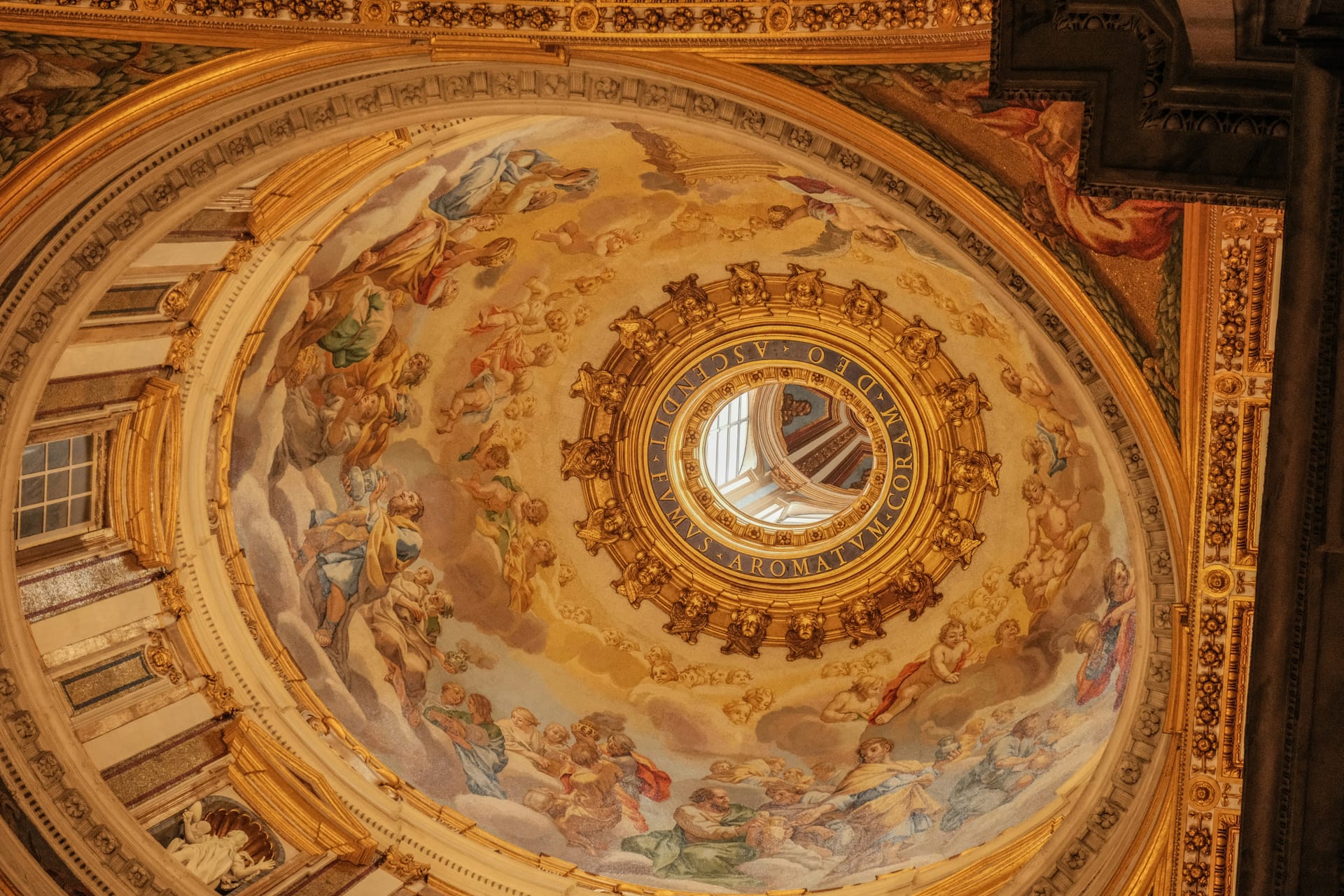
Facing the cathedral in Piazza del Duomo, an internal staircase carries you from a Renaissance church down to a frescoed oratory, with Gino Severini’s Stations of the Cross cartoons lining the way. 1 The Museo Diocesano in Cortona occupies the former Chiesa del Gesù, a building worth the visit as much as the paintings it holds. It was founded at the end of the Second World War at the initiative of Bishop Giuseppe Franciolini and the Cathedral Chapter, gathering works from the Duomo and the churches around Cortona. Among them are Fra Angelico’s Annunciation 2 and a room given over entirely to Luca Signorelli, the painter who is very much a local here. 3
Why the Museo Diocesano earns a stop, even on a tight schedule
If you have half a day in Cortona and have to pick, this museum pays off quickly. The headline works sit in a few rooms close together, so you walk very little to see a great deal.
Three reasons to step inside:
- The masterpieces are within a few steps of each other. Fra Angelico and Signorelli in a handful of rooms, without the long galleries and queues of a big-city collection.
- The building is part of the story. An upper church built between 1498 and 1505 sits on top of a frescoed lower oratory. You take in two rooms, one above the other. 3
- The location could hardly be handier. You’re right in front of the cathedral, a few minutes from Piazza della Repubblica, and the stop slots in nicely alongside the rest of what to see in Cortona.
The collection began taking shape before the official opening. In 1923, for the fourth centenary of Signorelli’s death, the master’s works were arranged here; in 1939 paintings arrived from the Cathedral and the diocesan churches. The museum opened in 1945, after more than twenty years of work. 4
A church on top of an oratory
Before you even reach the paintings, notice where you’re standing. The Chiesa del Gesù complex in Cortona was built between 1498 and 1505 for the Confraternity of the Buon Gesù, and it was made of two structures set one above the other. Up top the church proper, a single nave with three altars that once held three altarpieces commissioned from Signorelli, now brought together in the room named after him. Below it the oratory, where the confraternity brothers gathered. 3
Don’t miss it: as soon as you step into the upper church, look up and give the space itself a few seconds. It’s easy to walk past if you head straight for the paintings.
The lower oratory is waiting for you down the stairs. In 1555 it was frescoed throughout by Cristoforo Gherardi, known as il Doceno. 4 Walls and vaults tell scenes from the Old and New Testaments, and here you’ll find the fine terracotta group of 1519, the Lamentation over the Dead Christ. 4
The visit, room by room
There aren’t many rooms, and you move through them at an easy pace. These are the stops worth lingering over.
- The fifteenth century, with Fra Angelico’s Annunciation and the other panels of the era
- The Luca Signorelli room
- The descent to the oratory, with Gino Severini’s Stations of the Cross
Set your expectations honestly. Taken at a relaxed pace, the visit uses up a modest slice of a morning or an afternoon. That’s our own read, from people who come here often, with no official standing, but it helps you fit the stop into the day.
The fifteenth century, with Fra Angelico’s Annunciation
This is the room with the star turn. Fra Angelico’s Annunciation, dated to the 1430s (sources put it somewhere between 1434 and 1436), is reason number one to come and on its own justifies the ticket. 2
The rest of the room, though, is the part almost nobody tells you about, and it deserves the same minutes. Take the time to look at the other fifteenth-century panels shown beside the Annunciation, where you’ll see different ways of painting the sacred within a single century.
The Luca Signorelli room
Signorelli was born in Cortona, and he’s something of the host here. The room that carries his name gathers the master’s works, including the three altarpieces that once stood on the original altars of the upper church. 3
The tip here is to look at how the panels are arranged, brought back together after being spread between the church and other sites. Study the bodies, the musculature, that restless draftsmanship that would set the tone all the way to Michelangelo. If the subject pulls you in, the whole arc of Luca Signorelli’s masterpieces runs through Cortona in several places.
Down to the oratory, and Gino Severini’s Stations of the Cross
The descent to the oratory is a leap across centuries. Along the stairs hang the preparatory cartoons made by Gino Severini 1 for the fourteen Stations of the Cross, the same ones that, in mosaic, climb from the old town up to the Santuario di Santa Margherita. 5 Seeing the cartoons here and then coming across Gino Severini’s mosaics out in the open, on the way up to the sanctuary, closes a satisfying loop.
At the foot of the stairs the oratory opens up, with Gherardi’s frescoes and the terracotta Lamentation over the Dead Christ. It’s the museum’s most intimate space, the right spot to slow down before you leave.
Practical details: hours, tickets and access
The museum sits in Piazza del Duomo, in Cortona. 1 It helps to know that hours shift with the season, and sources don’t always agree, so a quick check on the museum’s official channels before you set off clears up any doubt.
On tickets, the combined option is the best value. With the Pass Piccoli Grandi Musei, joint entry to the MAEC and the Museo Diocesano costs 7 euros. 6 It’s worth a look, because the MAEC is a stone’s throw away in Piazza Signorelli, and a single ticket lets you see the best of Cortona’s art.
The central location makes the stop easy to fold into a day in Cortona, perhaps paired with the Duomo across the square and the climb up to the Fortezza del Girifalco.
Fonti
Footnotes
-
Museo diocesano di Cortona – AMEI. museiamei.it ↩ ↩2 ↩3
-
Museo diocesano di Cortona. piccoligrandimusei.it ↩ ↩2
-
Museo Diocesano. operalaboratori.vivaticket.it ↩ ↩2 ↩3 ↩4
-
Museo Diocesano. cortonatuseibellezza.it ↩ ↩2 ↩3
-
Cortona - Tu sei bellezza - Diocesi di Arezzo. diocesi.arezzo.it ↩
-
MAEC – Museo dell’Accademia Etrusca e della Città di Cortona. piccoligrandimusei.it ↩