Guide
The Story of Saint Margaret of Cortona
Margherita shared her life with a man. Then he died, and a little dog led her through the woods to his body. That was the day everything turned. The woman she had been became the penitent an entire town would learn to venerate. Saint Margaret of Cortona (1247–1297) is one of the most vivid figures of Tuscan Franciscan history. Here is her story from the start: the famous legend of the dog, the reason Cortona holds her so close, and the places that still keep her memory alive, along the pilgrim routes of the spirit that climb toward her basilica.
At a glance
- Born: 1247
- Early years: her years at the side of a man
- Turning point: his death and her conversion to a life of penance
- Calling: Franciscan penitent
- Death: Cortona, 1297
- Tradition: the “Magdalene” of the Franciscan order 1
Who was Saint Margaret of Cortona
Saint Margaret of Cortona (1247–1297) was a penitent tied to the Franciscan world who lived in Cortona. After a youth marked by her relationship with a man, she turned to a life of prayer and penance and became a spiritual touchstone for the town. Tradition calls her the “Magdalene” of the Franciscan order, the sinner who becomes a saint 1. Cortona still venerates her with a devotion that runs deep.
Her origins, in 1247
Margaret was born in 1247. Of her childhood we know little for certain. The sources that tell her story took shape after her death, when she was already an object of devotion, and they blend historical memory with edifying legend. Read them for what they are: a portrait drawn by people who wanted to show just how far she had come. On one point the sources agree. Her youth led her toward a life her age judged scandalous.
The years of the relationship
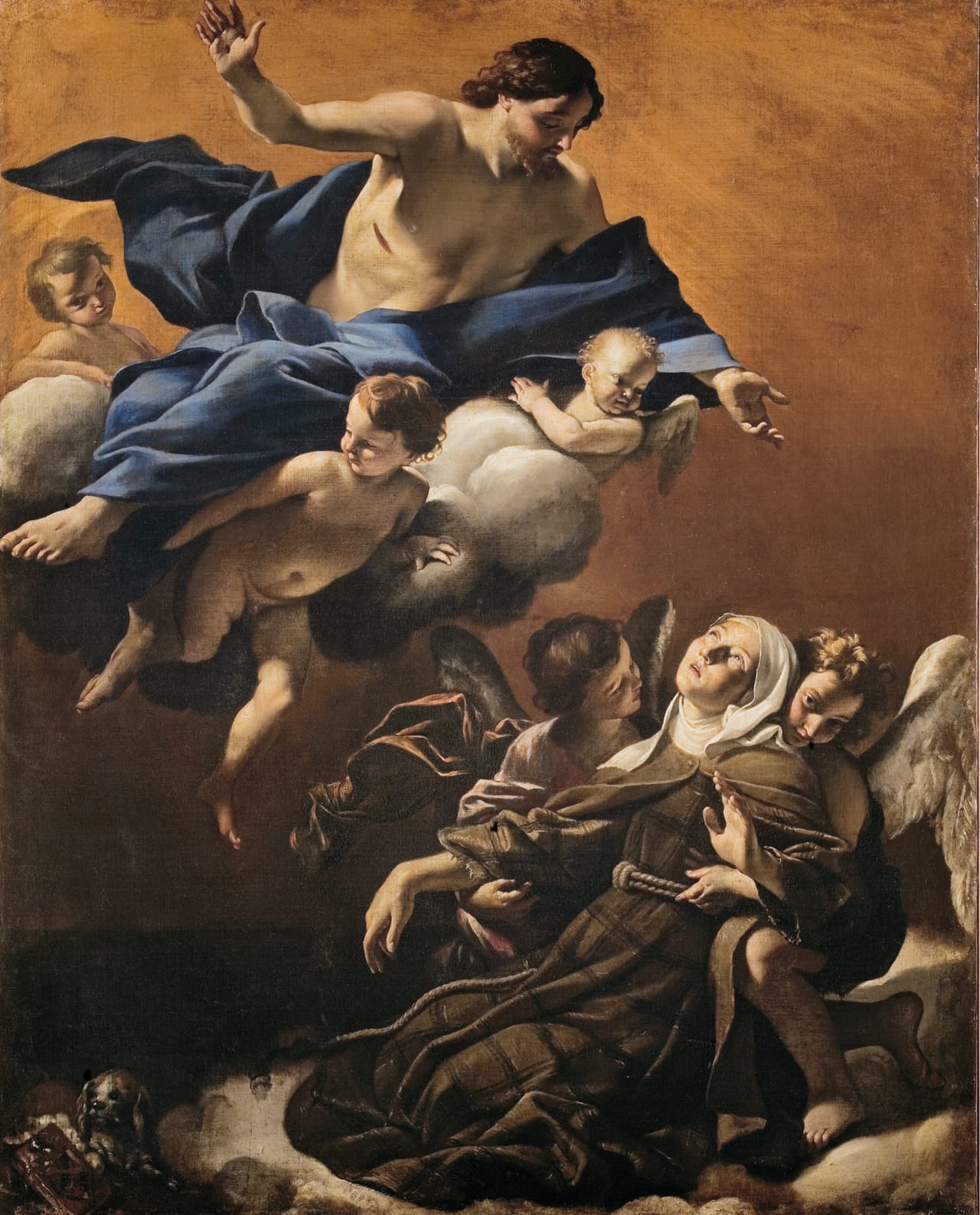
Margaret lived at the side of a man, and her position was a precarious one. This is the thread the hagiographers would load with moral weight, until she became the “Magdalene” of the Franciscan order 1. Told without the filter of judgment, it is the story of a woman who chose a life outside the rules, and who would pay dearly for that freedom once he was gone.
The legend of the dog
One day the man did not come home. His dog came back alone and began to tug at her until she followed. The animal led her into the woods, all the way to the body 2. This episode sits at the heart of her legend. When you come across her image in a church or among the sacred art of the local villages, it is often that little dog that tells you you are looking at her. The discovery in the woods also opens the second act of her life, the moment death crashes into her story and forces her to rethink everything.
Arriving in Cortona and choosing penance
Cast out by the man’s relatives and with no place left in her own family 2, Margaret came to Cortona and found a welcome there. Here her life took the turn that would make her famous. She became the penitent the Franciscan tradition would remember as its “Magdalene” 1. Her bond with the Franciscans would shape the rest of her story, and even now her name runs alongside that of Saint Francis in Cortona.
A conversion that became public
Margaret’s conversion soon became something that concerned the whole town. It is the root of a devotion born from the initiative of a woman on her own. The saint the people of Cortona pray to still carries the memory of a presence close to the everyday life of the community.
Why Cortona feels so close to her

Cortona perches nearly five hundred metres above the Valdichiana, a town of stone suspended between Tuscany and Lake Trasimeno 3. In a place like this, where everyone knows everyone, Margaret’s presence has worked itself into daily life for generations. The town venerates her with a devotion that grew from the ground up, carried by the people of Cortona themselves. Her figure stays bound to the penitent who chose silence. It is the story of a radical conversion, and at the same time an account of how a community decides who it wants to protect, and who it wants to be protected by.
Where to find her today, between basilica and climb
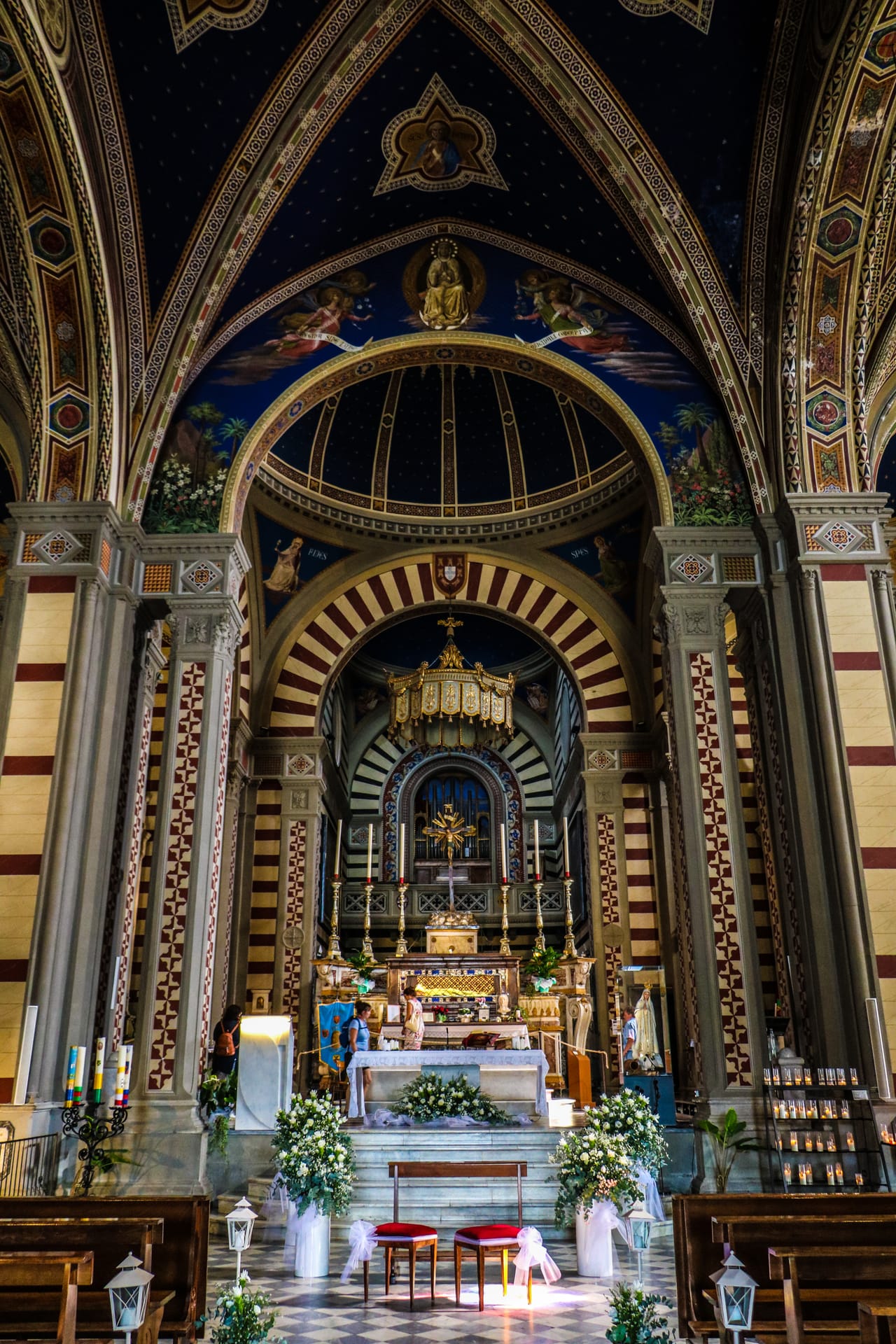
Margaret’s story has a place you can still reach on foot. The basilica that bears her name stands at the top of the town. To get there you climb a steep rise, the same one that now follows the Stations of the Cross. Walking up that slope, you retrace, without meaning to, the path that leads to her. Visitors who come to Cortona for the art or the landscape almost always end up meeting her, because her name is everywhere, from the churches to the signs above the town’s shops.
What remains, after her
Margaret died in Cortona in 1297 4. The devotion of its people has stayed with her ever since, kept alive by those who made the climb. The woman who had lived outside the rules is, from that day on, the one Cortona looks to whenever it raises its eyes toward her hill.
Fonti
Footnotes
-
The Iconography of Saint Margaret of Cortona. openpublishing.psu.edu ↩ ↩2 ↩3 ↩4
-
Margherita da Cortona. diocesi.arezzo.it ↩ ↩2
-
Cortona — dati (Wikidata). wikidata.org ↩
-
Margherita da Cortona (1247-1297). causesanti.va ↩