
Guide
Teatro Signorelli Cortona on the Big Screen
Under the seven-arched loggia that opens onto Piazza Signorelli, the Teatro Signorelli has been part of Cortona’s cultural life for over a century and a half. If you’re tracing the Cortona of Under the Tuscan Sun, this neoclassical front is one of the first stops you’ll recognise on sight, even before you remember why it looks so familiar.
A nineteenth-century theatre at the heart of Cortona
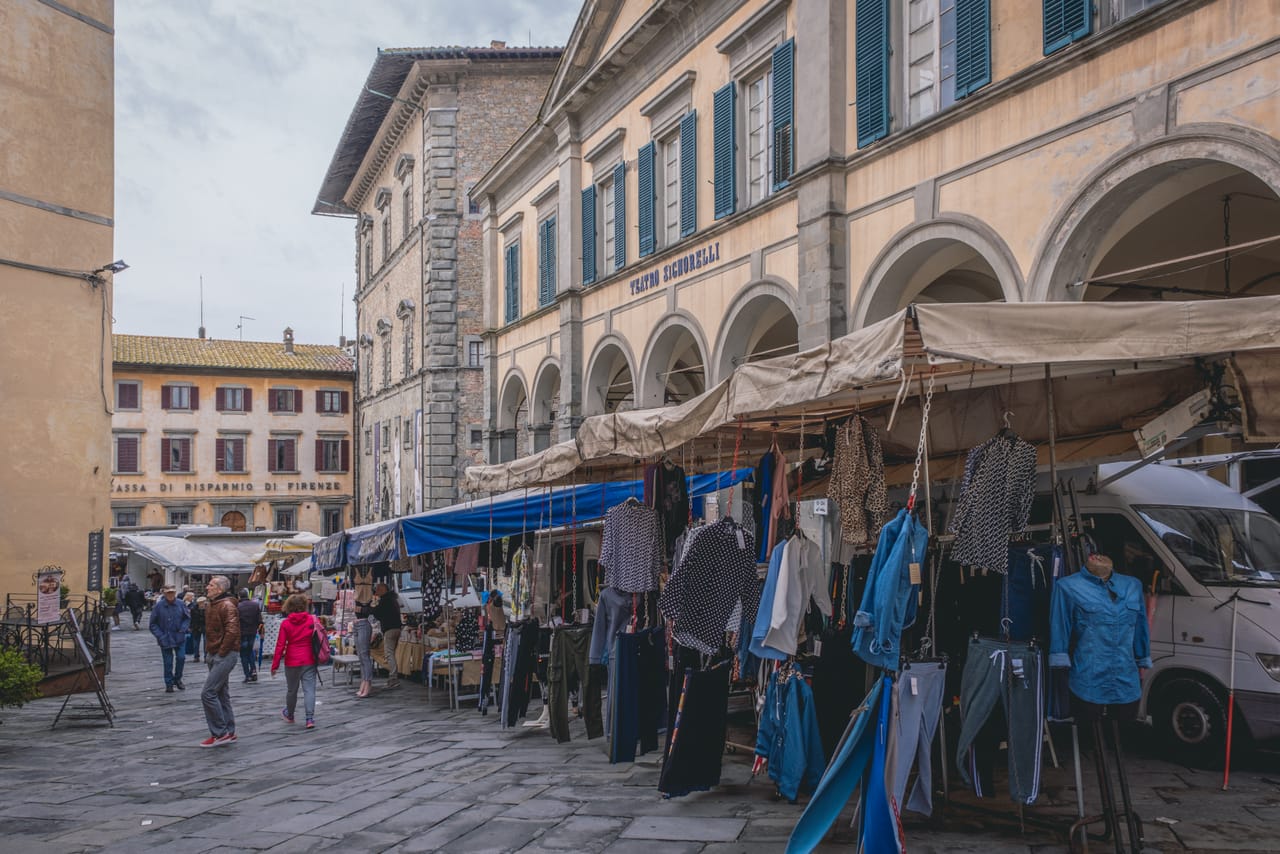
Long before any curtain rose, this corner of the old town was a place of prayer. The church of Sant’Andrea stood here until 1780, and in 1855 the Loggia del Grano was pulled down too to make room for the new building.1 Carlo Gatteschi drew up the plans in 1854, in pure neoclassical style, and the theatre opened its doors in 1858.21 The outer loggia has seven arches; inside, two rows of eight pillars carry the lunette vaulting, while four tiers of boxes wrap around the stalls, seating 480 in all.21 It was the largest single project undertaken in Cortona’s historic centre in the second half of the nineteenth century, and the building still belongs to the Accademia degli Arditi today.32 The town’s love of theatre runs deeper still: back in 1646 the Teatro del Biscione had already opened, Italian-style with three tiers of boxes, inside what is now Palazzo Casali.1
The short version. Designed by Carlo Gatteschi in 1854 and opened in 1858, the Teatro Signorelli stands on Piazza Signorelli, on the site of the former church of Sant’Andrea. It is owned by the Accademia degli Arditi and seats 480 across the stalls and boxes.21
From stage to screen, the hall where Cortona goes to the pictures
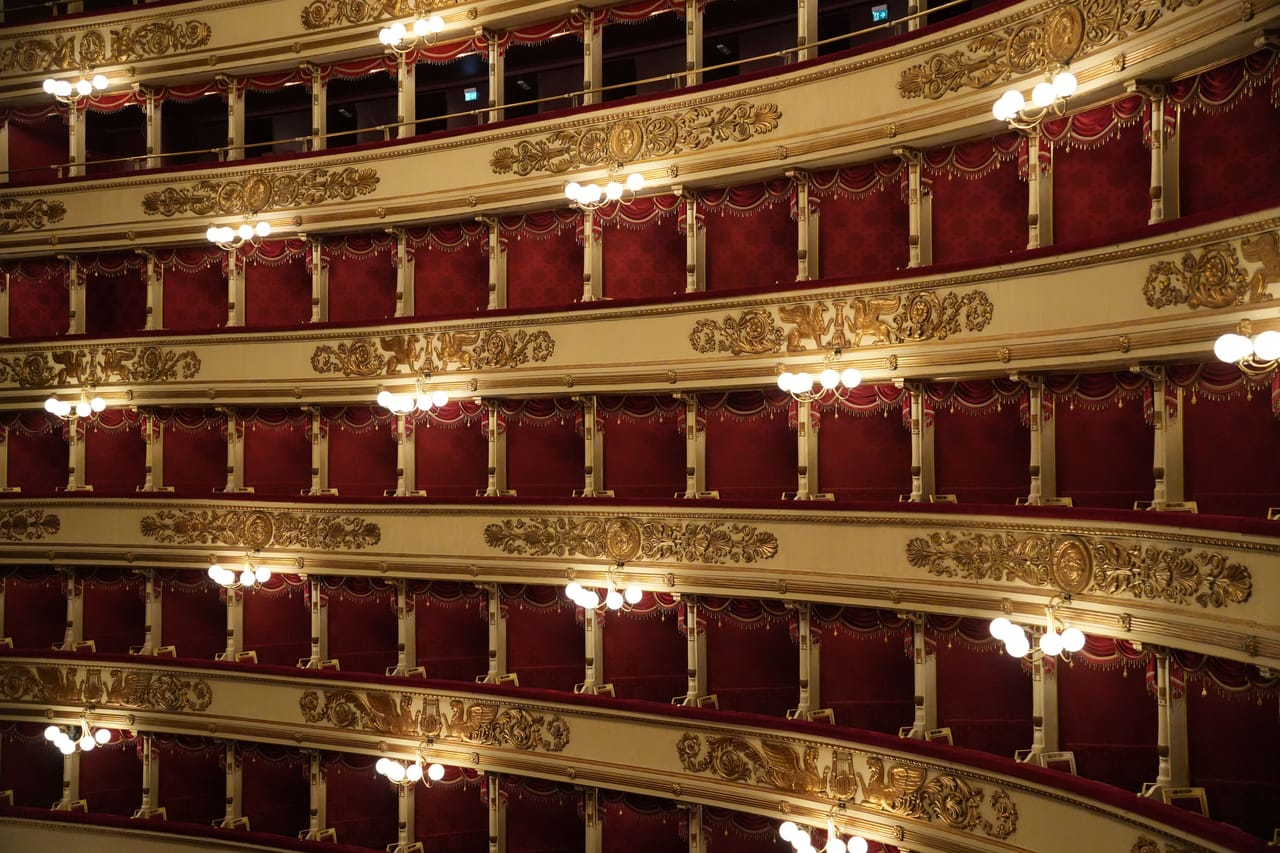
The Signorelli’s life as a cinema goes back a long way, and for many years the hall has doubled as cinema, café and conference venue all at once.2 This is where Cortona genuinely comes to catch a film, seats worn in, the everyday hum of a local picture house. The programme changes constantly, so it’s worth checking the official listings before you turn up, since there’s no fixed schedule of screenings at the moment.4
Frances Mayes and Cortona
The writer who tied her name to Cortona is the thread running through all of this, and Frances Mayes’s bond with Cortona reaches through the town’s houses, its squares and its stages, of which the Signorelli is one of the most elegant.
How to enjoy the Teatro Signorelli today, at a slow traveller’s pace
Piazza Signorelli is one of those spots that rewards you for slowing down. A few ways to enjoy the theatre even without a ticket:
- stop under the seven-arched loggia and take in the neoclassical front from the square, unhurried;
- check the theatre’s official listings for an evening performance or a screening, so you experience the hall the way the locals do;
- carry on on foot to the film’s other locations in the old town and to the church where the wedding is filmed, all just a few minutes away;
- come back to the square in the late afternoon, when the low light sets the stone of the façade glowing and hands you the best photographs.
Sleeping a stone’s throw from the theatre
After an evening film at the Signorelli, there’s no finer way to end the day than strolling back to a quiet room, the car left where it is until morning. Hotel Villa Santa Margherita sits just steps from Cortona’s historic centre, and in the evening the town stays an easy walk away.
Fonti
Footnotes
-
Il Signorelli di Cortona. orchestradellatoscana.it ↩ ↩2 ↩3 ↩4 ↩5
-
Il teatro Signorelli di Cortona. flore.unifi.it ↩
-
Cinema - Teatro Signorelli Cortona. teatrosignorelli.it ↩